
Reviewed · WALKING TOURS
Palermo: NO Mafia Walking Tour
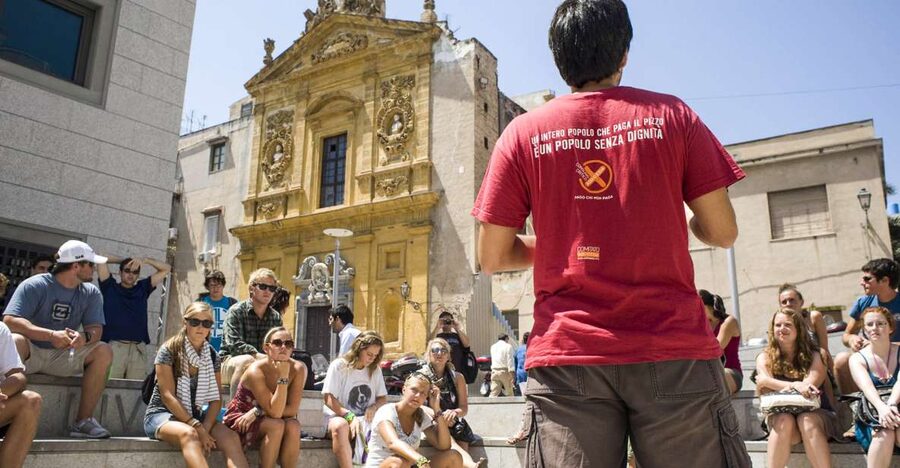
Palermo’s No Mafia Walking Tour does more than point out famous buildings. It uses the city streets to explain how Cosa Nostra affected ordinary life, politics, business, and public memory, then turns your attention to the people pushing back. The result is a city walk with a serious purpose, not a Mafia movie sightseeing trip.
I like two things right away: the tour rejects Mafia mythology, and your €40 helps support Addiopizzo, the anti-extortion organization behind the experience. I also like that you pass major Palermo sights along the way, including Teatro Massimo, the cathedral, Il Capo market, and the City Hall area.
The main consideration is the pace and subject matter. Three hours on foot can feel long in Palermo’s heat, and this is a serious account of violence, intimidation, and murder rather than a light city stroll. Wear comfortable shoes and come ready to listen.
Key points to know before booking
- The story is about resistance, not Mafia glamour: You learn how extortion worked and how citizens challenged it.
- The route links major sights with recent history: Teatro Massimo, Palermo Cathedral, Il Capo, and Piazza della Memoria all enter the story.
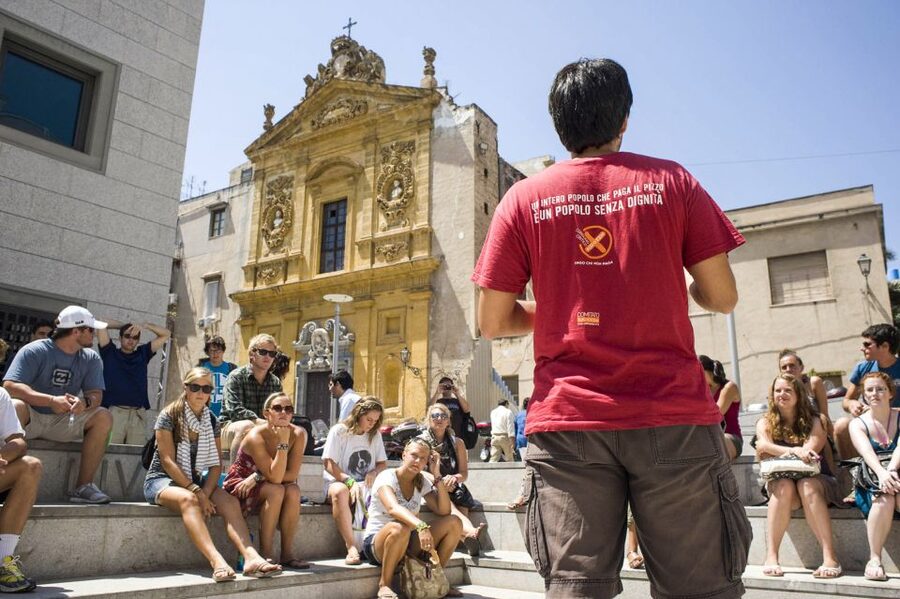
- Orange window stickers carry a message: They identify businesses that reject extortion and support the Pago chi non paga ethical shopping campaign.
- Guides make or break a talk-heavy tour: Guides such as Valeria, Attilio, Marinella, Salvatore, Giuseppe, and Ermes have been praised for clear, engaging presentations.
- Your ticket has a civic purpose: A contribution to Addiopizzo is included in the $40 price.
- You get practical Palermo help too: The guide can suggest places to eat Sicilian specialties and ideas for continuing your visit.
Why this Palermo walk is different
A standard Palermo sightseeing walk may focus on Norman churches, grand palaces, markets, and Baroque fountains. This one uses many of the same streets, but asks harder questions: Who controlled local businesses? How did extortion affect daily life? Why did some citizens decide to resist? What can shoppers do to support that resistance?
That change in focus matters. You are not simply hearing a list of Mafia bosses or famous crimes. You are given a wider picture of how organized crime became tied to parts of Sicilian society and how the anti-Mafia movement developed from ordinary civic action.
The tour also corrects the movie version of the Mafia. Popular films and television often turn gangsters into stylish antiheroes. This walk puts the emphasis where it belongs: fear, corruption, economic pressure, violence, and the damage done to families and communities.
I would choose this tour early in a Palermo stay. It gives you a useful frame for the streets you will keep seeing afterward. A shop with an orange sticker, a memorial plaque, or a government building can carry more meaning once you understand the events behind it.
Other walks around Palermo:
- Palermo Original Street Food Walking Tour by Streaty
★ 5.0 · 2,105 reviews - Palermo: Street Food and History Walking Tour
★ 4.9 · 1,294 reviews - Palermo: Private Custom Walking Tour with Local Guide
★ 4.7 · 661 reviews
Starting among Palermo’s major landmarks
The exact meeting point can vary with the option you book, so check your confirmation carefully. Once the walk begins, expect a route through Palermo’s historic center rather than a bus ride or a series of indoor visits.
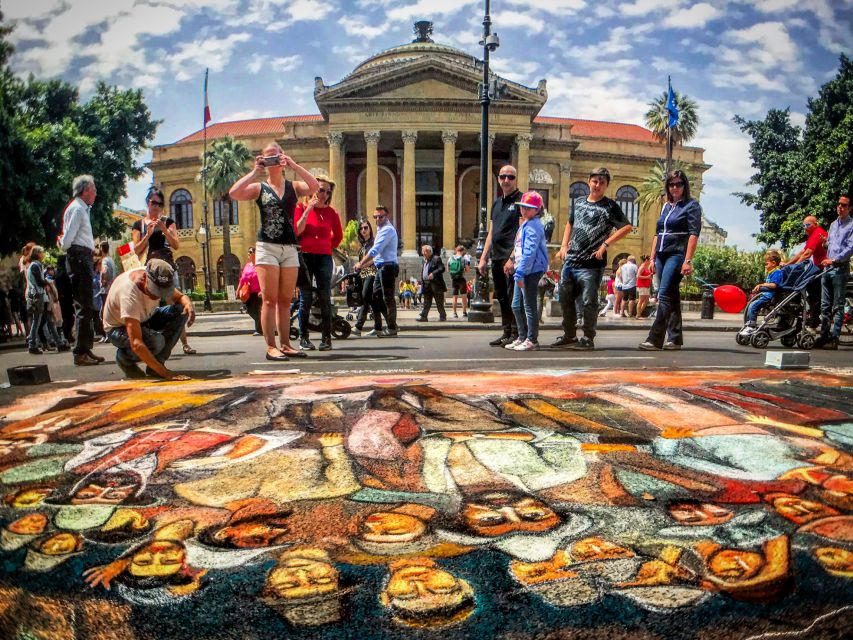
Teatro Massimo is one of the first major landmarks connected with the route. Its scale and fame make it an easy place to orient yourself in the center, but the tour does not treat it as just a photo stop. The guide uses the surrounding streets and public spaces to begin the larger story of Palermo.
This is a useful arrangement for you. You get an introduction to the city’s architecture while learning that Palermo’s past cannot be separated neatly into art on one side and politics on the other. The same central streets have carried commerce, civic life, official power, and criminal influence.
Your guide may be Linda, Valeria, Giuseppe, Ermes, Salvatore, Attilio, Marinella, Laura, Claudio, or another member of the team. The individual guide is important because much of the value comes from spoken explanation. Strong guides have been praised for clear English, humor, patience with questions, and visible commitment to the anti-Mafia cause.
Il Capo market and everyday Palermo
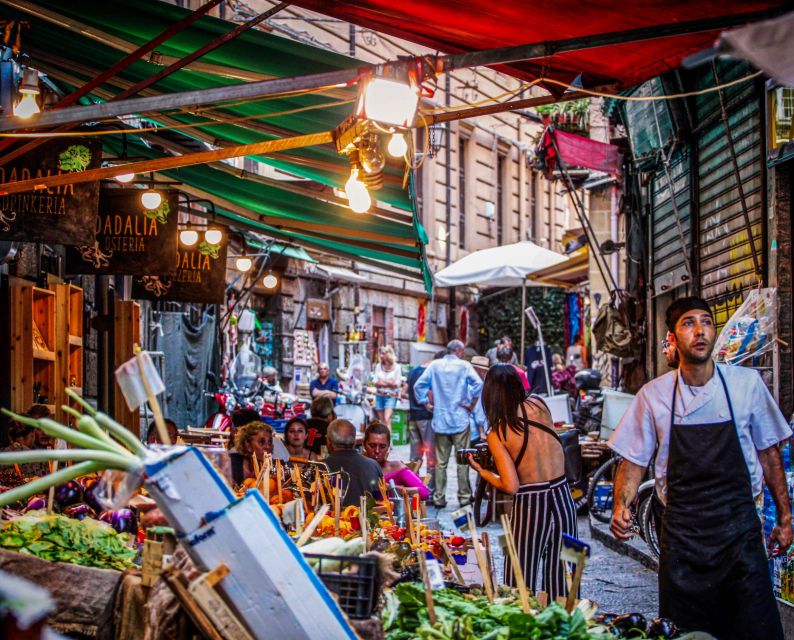
The walk includes Il Capo, one of Palermo’s traditional open-air markets. This gives the tour a useful change of setting. Instead of hearing about Mafia influence in an abstract lecture room, you are in a working part of the city where buying, selling, and neighborhood life remain visible.
The market also helps connect the subject to ordinary economic activity. The tour is not saying that every stall or street has a criminal story. Rather, it shows how questions about protection, pressure, business, and civic choice belong to the daily life of a city.
You should expect a lot of listening here. The sights are a backdrop for the guide’s explanation, and the route is not designed as a food tour. You may receive recommendations for Sicilian specialties later, but food tastings are not included.
If you like tours that keep moving while giving you context, Il Capo is a strong part of the route. If you prefer frequent stops inside monuments, this may feel less satisfying because entrance tickets to museums and historic buildings are not included.
Piazza della Memoria and the cost of resistance
Piazza della Memoria is a key stop. It serves as a memorial to prosecutors and judges killed by the Mafia, giving the tour a place for remembrance rather than spectacle.
This is where the subject becomes especially human. Names and public memorials shift the focus away from the Mafia as a faceless legend. You are reminded that judges, prosecutors, police officers, journalists, business owners, and other citizens faced real threats while trying to protect the rule of law.
The guide’s presentation matters here. The strongest version of this tour is not just a list of dates and names. It explains how violence affected institutions and why anti-Mafia work demanded courage over many years. Guides such as Attilio and Marinella have been praised for holding attention across the full three hours, while Valeria has been noted for connecting historical events with the wider social and political setting.
Bring questions. The format allows time for discussion, and several guides are described as patient and willing to explain difficult points. You should still remember that the route has a timetable. A very talkative group may need to keep moving so the tour can finish on time.
Same base, a different kind of day:
- Palermo: Hop-on Hop-off Bus Tour 24-hour Ticket
★ 3.9 · 2,410 reviews - Segesta, Erice and Salt Pans Full-Day Excursion from Palermo
★ 4.2 · 1,791 reviews - Palermo: Teatro Massimo Opera House Guided Tour
★ 4.5 · 1,573 reviews - From Palermo: Monreale and Cefalù Half-Day Trip
★ 4.2 · 1,354 reviews
The orange stickers along the Cassaro
One of the most practical details on the walk appears along the Cassaro, where you can see businesses displaying orange stickers. These indicate owners who have said no to paying extortion and joined the Pago chi non paga campaign, meaning I pay who does not pay.
This turns a civic idea into something you can recognize on the street. You are not merely hearing that resistance exists. You are shown how participating businesses identify themselves and how customers can support them.
For me, this is one of the tour’s best features because it gives you a choice after the walk. You can use your spending to support businesses that reject extortion. The experience is not limited to learning what happened in the past. It asks what responsible visitors can do in the present.
Do not expect every orange sticker to come with a long explanation at the shop door. The guide provides the wider meaning, while you observe the campaign in the city itself. That makes the stop simple but memorable.
Piazza Beati Paoli, the cathedral, and City Hall
The route continues through places such as Piazza Beati Paoli, Palermo Cathedral, and the City Hall area. These stops broaden the tour beyond famous Mafia cases.
Palermo Cathedral brings you back to the city’s long architectural story, while City Hall points toward government and public administration. The contrast is useful. Palermo is not presented only as a city of crime or resistance. You see the layers of religion, civic authority, markets, tourism, and everyday life that make up the historic center.
Piazza Beati Paoli adds another local reference point to the walk. Your guide uses these locations to connect Palermo’s streets with the myths, legends, institutions, and social pressures that shaped public ideas about power.
This is also where expectations matter. The tour is not a procession of crime scenes. One guide described it as a recent-history experience rather than a visit to Mafia activity sites, and that is a fair way to picture it. The locations support the narrative, but the guide’s explanation is the main attraction.
Three hours on foot: what the pace feels like
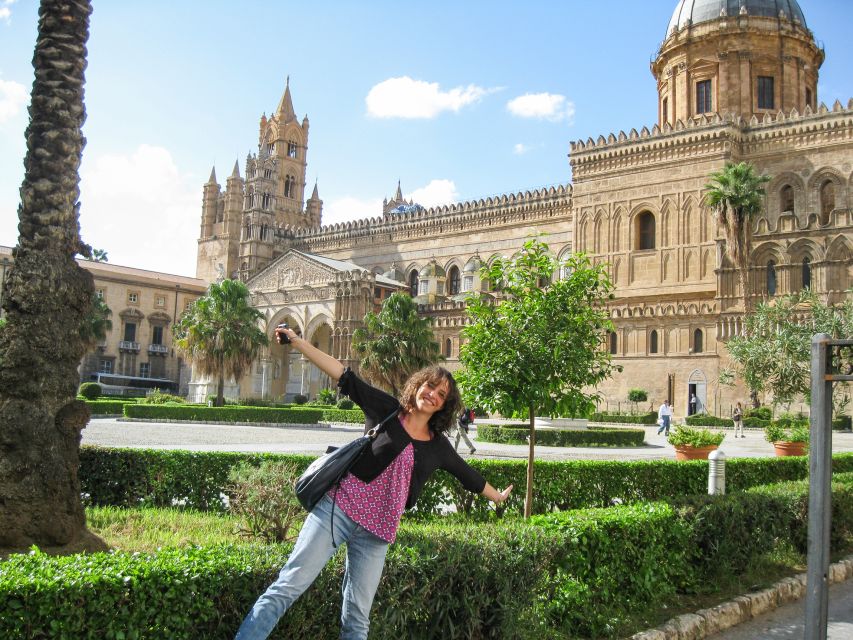
The tour lasts three hours, so plan around it. You will be outdoors, walking through the old center, and stopping to listen. Comfortable shoes are specifically recommended.
Weather will affect your experience. Palermo can be hot, and the route includes exposed public spaces. One guide has been praised for offering places to sit in the shade during the talk, but you should not assume that every stop will have shade or seating. Bring water and dress for the conditions, even though those items are not listed as formal requirements.
A small-group option is available. That can make a real difference on a subject built around questions and conversation. Group size can affect how easily you hear the guide, how often you can ask something, and how quickly the walk moves through narrow streets.
The tour is offered in English, Italian, Spanish, and French. Polish is not listed among the available languages, so Polish speakers should plan on using one of the four stated options. English-language guides have been praised for clear speech, but the subject includes political and historical ideas, so this is not the best activity if you want only simple sightseeing commentary.
What the $40 price includes
At $40 per person, this is more expensive than a basic free walking tour, but it is not priced like a full-day excursion. The value comes from three parts.
First, you get three hours with a live guide rather than a short orientation. Second, the walk combines Palermo’s main central sights with a focused subject that is difficult to understand from a guidebook alone. Third, part of the price supports Addiopizzo, giving the booking a direct connection to the anti-extortion movement.
The price does not include entrance to museums or monuments. That is important because you should not book this expecting interior visits to the cathedral, Teatro Massimo, or other attractions. The route is about seeing these places from the streets and hearing their context.
I think the price is fair if you want history, civic issues, and local perspective. If you mainly want photographs of Palermo’s architecture, you can find cheaper walks. If you want to understand how the city’s recent past still affects daily life, this tour offers more substance than a standard sightseeing loop.
Who will get the most from this experience
I would recommend it to first-time visitors who want more than a checklist of churches and fountains. It suits adults, older teenagers, students of modern Italian history, and anyone curious about how organized crime affects society beyond film stereotypes.
It can work well for families too. A teenager has been able to stay engaged for the full tour, helped by the guide’s storytelling and the changing city setting. Still, parents should know that the material includes murder, intimidation, corruption, and social harm.
You do not need to be an expert on Cosa Nostra. In fact, the tour is useful if your knowledge comes mostly from movies, television, or general headlines. The guide builds the subject through Palermo’s streets and explains the anti-Mafia movement in plain terms.
I would be less likely to recommend it if you dislike long spoken presentations, cannot comfortably walk for three hours, or want a tour built around interior monuments. The route is accessible in the everyday sense of moving through city streets, but specific accessibility details are not provided, so contact the operator if that is important for you.
Practical booking advice for Palermo
Book this near the start of your stay if you can. The guide’s advice about food and further sightseeing can help shape the rest of your time, and the route introduces several central areas you may revisit.
Check the meeting point for your chosen option because it may vary. Wear comfortable shoes, arrive ready for outdoor walking, and allow the full three hours rather than trying to fit another timed attraction immediately afterward.
Free cancellation is available up to 24 hours before the tour for a full refund. You can also reserve now and pay later, which helps if your Palermo plans are still changing.
Should you book the No Mafia Walking Tour?
I would book it if you want to understand Palermo as a living city, not just admire its buildings. The strongest parts are the clear civic message, the orange Pago chi non paga stickers, Piazza della Memoria, and the guides’ ability to make recent history personal without turning it into entertainment.
Choose it especially if you are tired of polished Mafia myths and want the Sicilian view of the damage caused by Cosa Nostra and the work required to resist it. Skip it only if you want a light, architecture-only walk or cannot manage three hours outside.
For $40, you get a serious city lesson, major Palermo sights, and a contribution to Addiopizzo. That is a worthwhile use of half a day, and it may change the way you see the rest of Sicily.
FAQ
How long does the Palermo No Mafia Walking Tour last?
The tour lasts three hours and takes place on foot through Palermo’s historic center.
How much does the tour cost?
The listed price is $40 per person.
Which languages are available?
The tour is offered in English, Italian, Spanish, and French.
What sights are included on the route?
The route includes Teatro Massimo, Il Capo market, Piazza della Memoria, the Cassaro, Piazza Beati Paoli, Palermo Cathedral, and the City Hall area.
Does the tour enter museums or monuments?
No. Entrance to museums and monuments is not included.
What is the Pago chi non paga campaign?
It is an ethical consumer campaign supported by businesses that reject Mafia extortion. Participating shops display orange stickers, and the name means I pay who does not pay.
Does the booking support an anti-Mafia organization?
Yes. A contribution to the Addiopizzo charitable organization is included.
What should I bring?
Bring comfortable shoes for the three-hour walk. The tour is outdoors, so you should also prepare for the weather.
Just added in Palermo
- Sicily: Etna Volcano & Taormina Tour★ 4.4 · 199 reviews
- Palermo: Pizza and Gelato Cooking Class with Dinner and Wine★ 4.9 · 951 reviews
- Palermo: Walking Tour of Historic Markets and Monuments★ 4.9 · 478 reviews
- Palermo: UNESCO World Heritage Sites Guided Walking Tour★ 4.8 · 548 reviews
- Palermo, tour tra monumenti unici e mercati colorati★ 4.9 · 271 reviews
- Palermo: Small Group Night Street Food Tour★ 4.8 · 589 reviews
- Palermo: Full-Day Snorkeling Boat Tour with Lunch and Wine★ 5.0 · 196 reviews
- Palermo Sicilian Street Food Tour: Small Group with a Local★ 4.8 · 259 reviews
Walking Tours, compared.
Guided Walking Tour & Last Supper Visit with Ticket
Read our review →
Rialto Bridge & Offbeat Unusual Venice Walking Tour
Read our review →
Private 3 hrs Venice Tour: St Mark’s, Walking tour & Boat tour
Read our review →
Skip the line: Uffizi and Accademia Small Group Walking Tour
Read our review →Browse the lists this tour appears in