
Reviewed · CRUISES & BOAT TOURS
Padua to Venice Boat Cruise of the Brenta Riviera
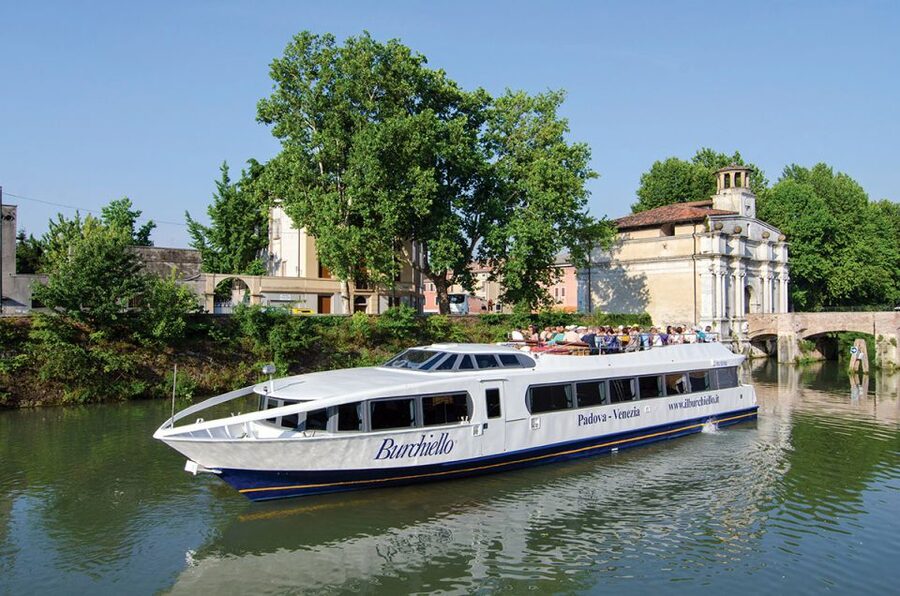
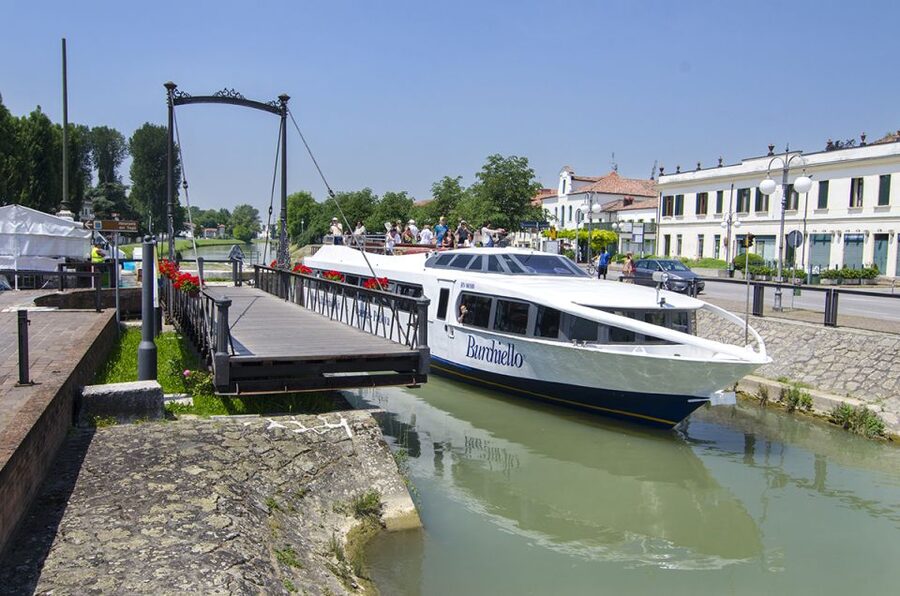
The best part of this full-day cruise is the changing view. You leave Padua by the old Portello stairway and glide past country villas, small towns, locks, low bridges, and finally the Venice Lagoon. It is a calm way to connect two famous cities while seeing the Veneto in between. The route follows the old Burchiello course, once served by elegant river boats pulled by horses, oars, or wind.
I like two things in particular: the three villa visits give the cruise real substance, and the arrival at Venice by water feels far more memorable than simply arriving by train or bus. I also like the steady commentary, delivered in several languages, with guides such as Laura explaining the canals, buildings, bridges, and local history as you go.
The main drawback is the pace. This is a long, carefully timed day, and some villa visits can feel short, especially Villa Foscari. You also need to plan your own way back to Padua, and lunch is not included.
Key points to know before booking
- Follow the historic Burchiello route: Depart from the Burchiello Stairway at Portello in Padua and cruise toward Venice San Marco.
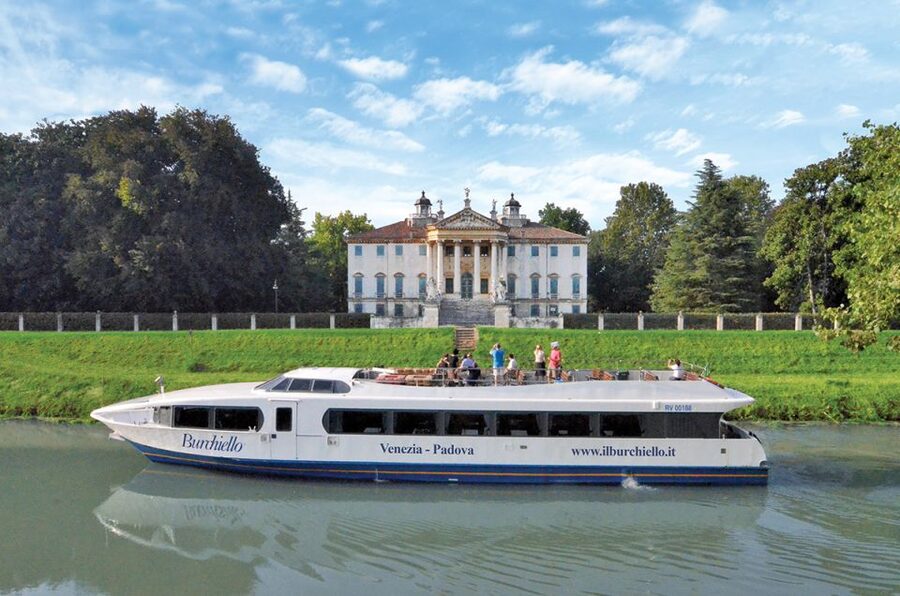
- See three very different villas: Villa Pisani, Villa Widmann, and Palladio’s Villa Foscari each offer a different view of Veneto’s old ruling class.
- Expect locks and low bridges: The boat passes through five locks and nine swing bridges, with some bridges so low that you must leave the upper deck.
- Plan for a full day: The combination of cruising, guided tours, and a restaurant stop makes this a substantial outing rather than a short boat ride.
- Lunch costs extra: You stop at the historic Burchiello restaurant in Oriago, but the meal is not part of the ticket.
- Pack light: Large bags require advance booking and space is limited. Small backpacks, cameras, and handbags do not need a luggage reservation.
Why this route is more than a boat ride
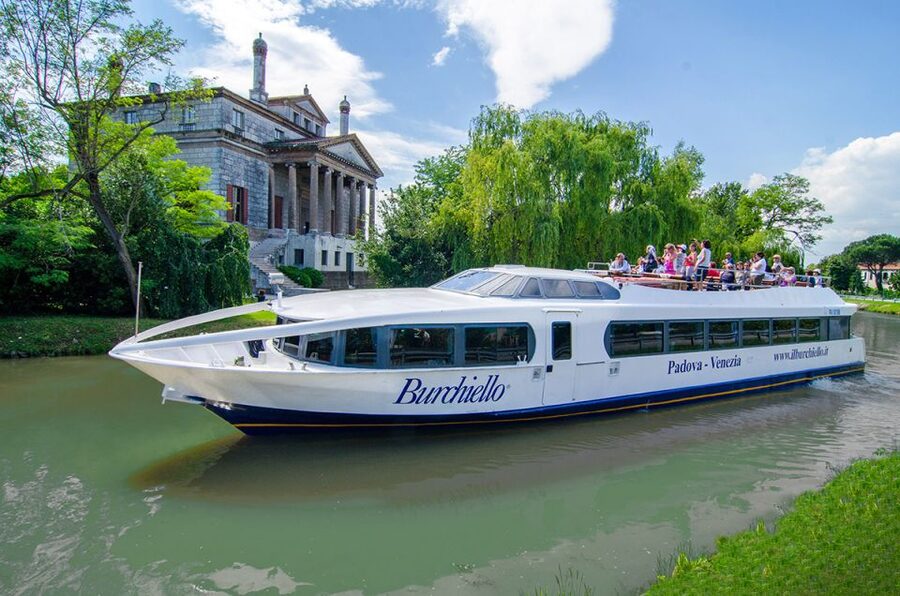
The Brenta River links Padua with the Venetian Lagoon, but the waterway was once much more than a transport route. Venetian nobles built grand country residences along it, close enough to Venice for business and politics but far enough away for gardens, parties, and summer life.
The old Burchiello boats carried people between Padua and Venice in comfort. Their wooden hulls had elegant cabins and several balconies, and the journey could be powered by wind or oars. On parts of the route, horses pulled the boat along the riverbank.
Today’s boat is a modern cruise vessel with an open-air deck. You get the same basic sense of movement through the countryside without the old travel hardships. The route is slow enough to let you look closely at the riverbanks, but the day is organized around fixed villa visits and scheduled locks, so it is not a hop-on, hop-off cruise.
I would choose this outing if you want a day with both scenery and culture. If you only want a quick transfer from Padua to Venice, it is too long. The value comes from the complete route, the villa admissions, and the guide’s explanations.
Other days out people book in Italy:
- Vatican: Museums & Sistine Chapel Entrance Ticket
★ 4.5 · 144,003 reviews - Vatican Museums & Sistine Chapel Tour with Optional Basilica
★ 4.3 · 67,413 reviews - Colosseum, Roman Forum & Palatine Guided Tour
★ 4.7 · 63,148 reviews
Leaving Padua from the Portello Stairway
The boat departs from the historic Burchiello Stairway at Portello, in the heart of Padua. This starting point connects the cruise to the older river route rather than treating the boat as a simple sightseeing ride.
The first major sight is Villa Giovanelli at Noventa Padovana. You view it from the water rather than taking a full guided tour inside. That early stretch gives you an idea of what makes the Brenta Riviera special: the villas are not isolated museum pieces, but part of a long line of historic homes facing the river.
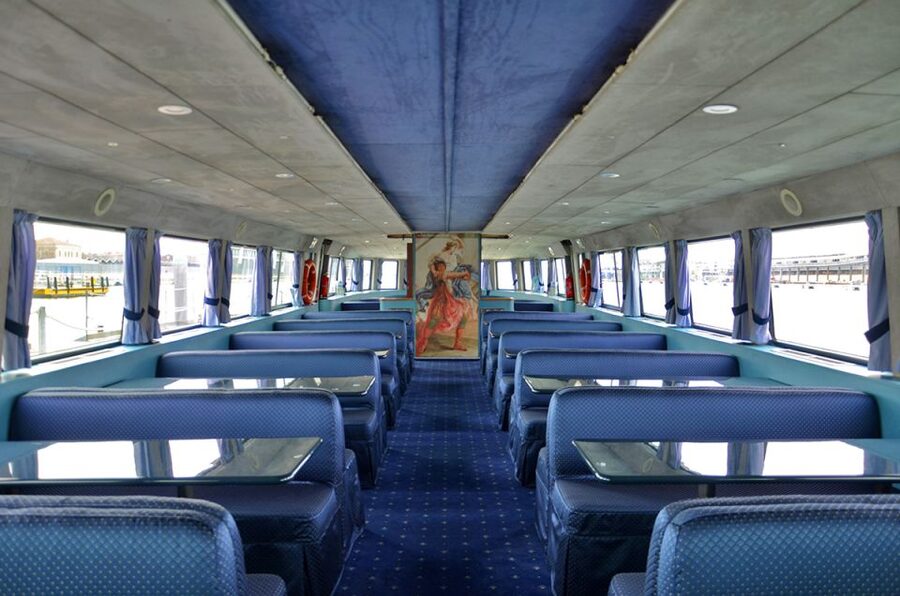
The open deck is the best place for views when the weather cooperates. You will want a camera ready, but remember that the river has several very low bridges. At those points, the crew may ask everyone to move inside or lower their heads. This is not a minor detail. One part of the cruise can feel airy and open, while another requires you to sit in the passenger cabin for safety.
The boat’s indoor area matters on a rainy day. One outing took place in heavy rain, yet the guide kept the program moving and the villa visits still worked. You should not count on perfect weather, so bring suitable clothing and think of the open deck as a bonus rather than a guarantee.
Villa Pisani and the grandest first stop
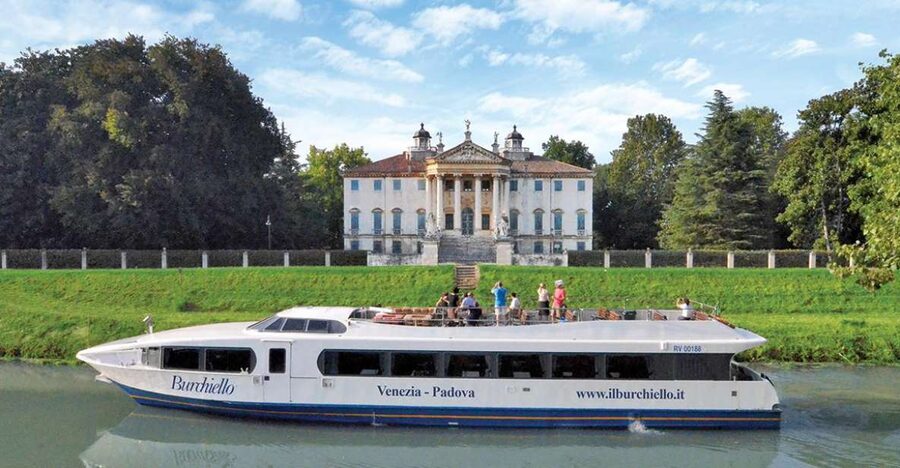
At Stra, you leave the boat for Villa Pisani. This is the largest and most imposing of the three villa visits, surrounded by a monumental park with a long pool and grand stables.
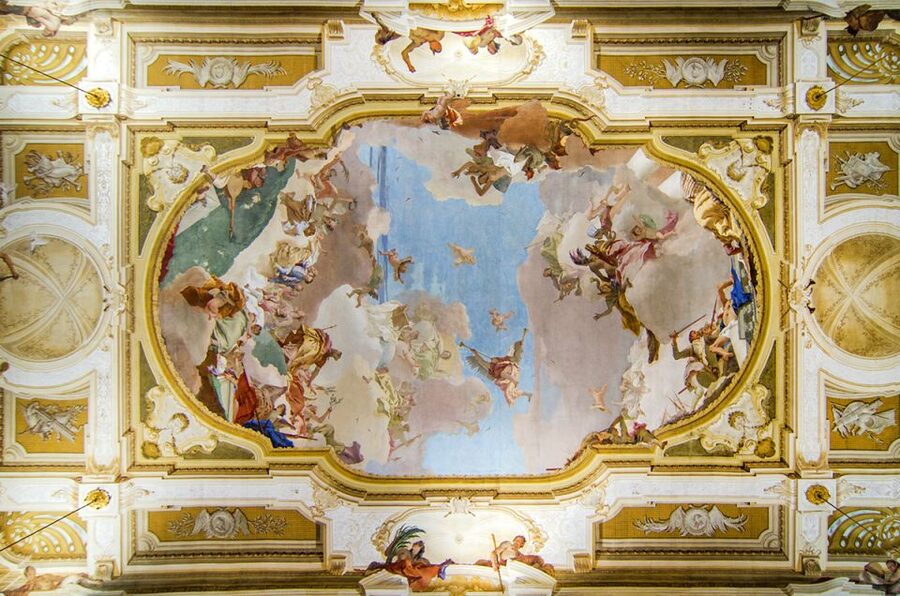
The guided visit takes you through frescoed rooms and gives the villa’s scale some context. Villa Pisani was built for a powerful Venetian family, and it feels more like a palace than a quiet country house. The park adds another layer to the visit, though the exact amount of free time depends on the day’s schedule.
This is an important stop because it sets the scale for the entire river route. From the boat, you see one villa after another. Inside Villa Pisani, you get a clearer sense of the wealth and social order that created them.
The practical catch is time. This cruise has to keep moving through the locks and bridges, so you are not free to linger wherever you wish. If you like detailed museum visits, you may want more time here. If you prefer a broad introduction to several sites, the shorter stop lets you see more of the river.
Dolo, Mira, and the locks in between
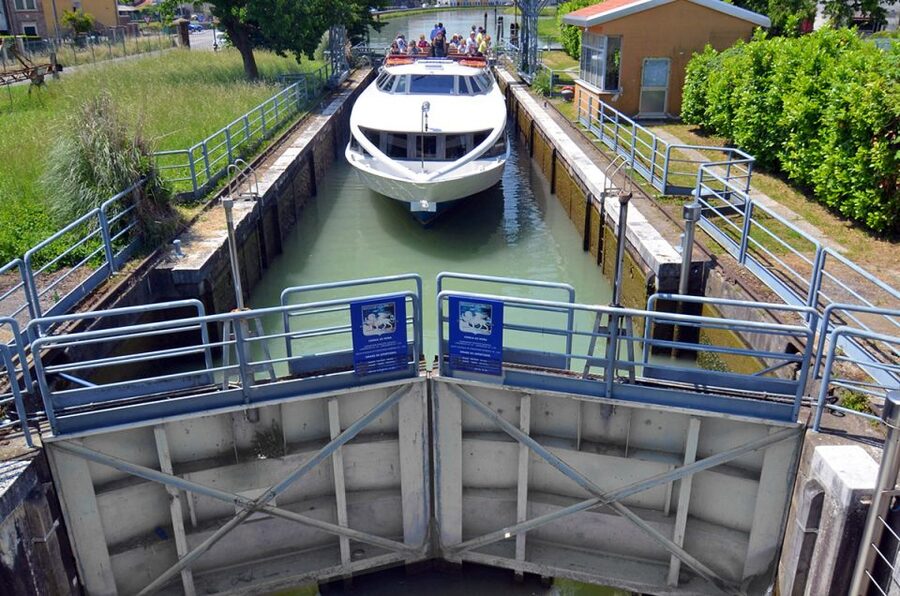
After Villa Pisani, the boat continues toward Dolo. The guide points out villas along the river and explains what you are seeing. The commentary is especially useful here because many of the buildings are viewed from a distance. Without explanation, you might notice grand facades but miss their role in the old river network.
The boat passes through the Dolo Lock and continues toward Mira. Locks are one of the most distinctive parts of this journey. Rather than simply moving along a flat waterway, the boat is raised or lowered between sections of the canal. The cruise passes through five locks in all.
You also pass nine swing bridges. These bridges help connect the towns along the Brenta, but they create a practical limit for the boat. The upper deck is not available for every stretch, and the crew’s instructions should be taken seriously.
I like this part of the route because it turns a quiet cruise into a working water journey. You are watching the boat operate within the canal system, not just floating past scenery. The drawback is that the view can be interrupted by bridge passages and indoor sections, especially if the weather is poor.
Same base, a different kind of day:
- Milan: Cathedral and Duomo’s Terraces Entrance Ticket
★ 4.6 · 61,054 reviews - Venice: Doge’s Palace Reserved Entry Ticket
★ 4.6 · 42,716 reviews - Vatican Museums, Sistine Chapel & St Peter’s Basilica Guided Tour
★ 4.5 · 39,149 reviews - Rome: Colosseum, Palatine Hill and Roman Forum Guided Tour
★ 4.8 · 32,814 reviews
Villa Widmann, a smaller and more intimate visit
Just after the Mira Lock, the boat stops at Villa Widmann. This 18th-century mansion belonged to a noble family of Persian origin, giving it a different cultural background from the larger Venetian palaces along the river.
The guided tour helps you compare it with Villa Pisani. Villa Widmann is still grand, but the experience feels more focused. You see the mansion as a residence rather than only as a huge ceremonial complex.
This middle stop breaks up the day well. By this point, you have been on the boat for a while, so stepping ashore gives you a chance to stretch and see another interior. The three villas are not identical, which is important. The program would feel repetitive if each stop offered the same rooms and story. Instead, Pisani, Widmann, and Foscari each bring a different scale and style.
The schedule can feel tight here too. You will want to listen carefully during the guided tour, but you may not have much spare time for a slow independent look. The guide normally divides the group into smaller sections for villa visits, which helps with the explanations but does not turn the stops into open-ended visits.
Lunch at the Burchiello restaurant in Oriago
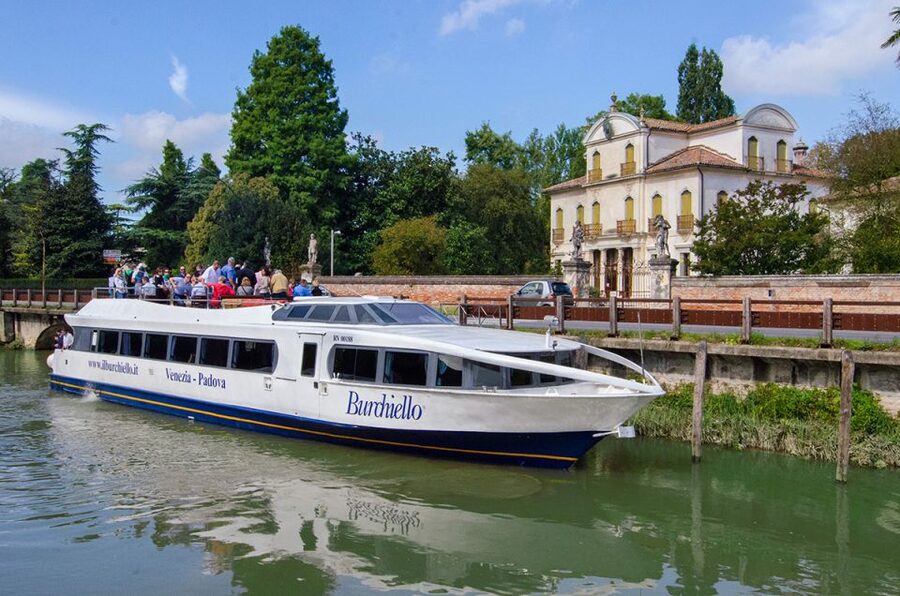
The next stop is Oriago, where you leave the boat for lunch at the historic Burchiello restaurant. Lunch is not included in the cruise price, so allow for a separate meal cost.
This is a useful pause in an otherwise continuous day. You get off the boat, eat on land, and return to the river with time to reset before the final villa and lagoon crossing. A meal at this point also fits the rhythm of the outing better than trying to eat a packed snack while watching the banks pass.
The restaurant stop is not a free lunch break in the sense of choosing any place you like. The program directs you to the historic Burchiello restaurant, so you should expect the timing to follow the cruise schedule. If you have dietary needs or want a very particular meal, check arrangements before booking.
You might want to bring water and a small snack for the boat, especially if you prefer to eat lightly. Small bags are allowed, but large travel bags need to be reserved in advance and are stored inside the passenger cabin without guard service.
Malcontenta and Palladio’s Villa Foscari
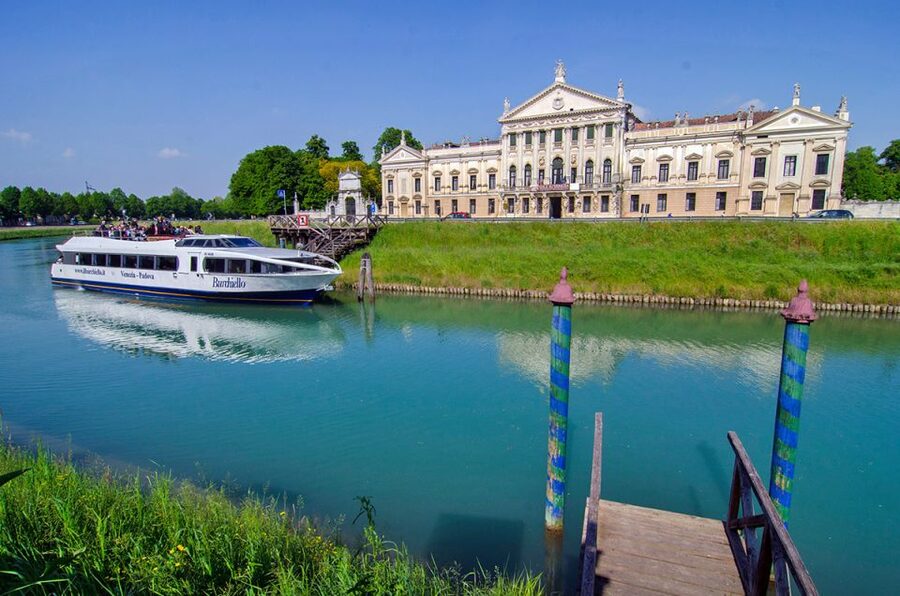
The final villa visit is Villa Foscari at Malcontenta. Designed by Andrea Palladio, it is a UNESCO World Heritage Site and sits close to the lagoon. Its position explains much about the old Venetian system: this was a country residence, but it remained within easy reach of Venice for its powerful owner.
For many people, Villa Foscari will be the architectural high point. Palladio’s work gives the building a more disciplined and formal look than the decorative interiors of the other villas. The location beside the lagoon also makes it feel tied directly to Venice rather than only to the mainland river towns.
This is the stop where you most need to watch the clock. The schedule can allow less than 30 minutes inside, depending on the day. That is enough for an introduction, but not enough for a slow study of every room or architectural detail.
If Palladio is your main interest, you may find this frustrating. Still, the visit gives the cruise a strong final cultural stop, and the guide’s explanation helps you understand why Villa Foscari matters even when your time inside is limited.
Crossing the lagoon into Venice
After Malcontenta, the boat continues through the Moranzani Lock and out toward the Venetian Lagoon. The character of the journey changes. The river towns and villas fall behind, and the approach to Venice opens into a wider water setting.
This final section is one of the most satisfying parts of the day. After hours of canals, bridges, and villa facades, you arrive at Venice from the water, with the city appearing as the destination rather than as a backdrop.
The cruise docks at San Marco, at Riva degli Schiavoni near the Pontile della Pietà landing stage. That is a useful arrival point because you are close to the vaporetto network and can continue into Venice without a long transfer.
The guide may also explain how to use Venice’s water buses and point you in the right direction. Take advantage of that help. Arriving at San Marco is exciting, but it can also be confusing if you do not know which vaporetto stop or route serves your next destination.
What the $157.47 price really covers
At $157.47 per person, this is not a cheap transportation ticket. It is a full-day cultural program that combines the river cruise, an onboard guide, admission to three villas, and guided visits at each one.
The value is strongest if you would otherwise pay separately to visit Villa Pisani, Villa Widmann, and Villa Foscari, then arrange transport between them. The boat handles the route and gives you historical context along the way. The guided commentary is one of the main reasons to choose this over a self-guided drive or regional bus journey.
The price does not include lunch or your return to Padua. Since the cruise finishes at San Marco, you should treat this as a one-way Padua-to-Venice experience. The supplied meeting information contains a conflicting note saying the activity ends back at the meeting point, but the detailed route and final docking instructions place the arrival in Venice. Confirm the exact end point when booking, and do not assume a return boat.
The booking allows cancellation up to 24 hours before departure for a full refund, and you can reserve now and pay later. The tour is offered in English, French, German, and Italian.
Who will enjoy this day most
I would recommend the cruise to anyone who likes architecture, old estates, waterways, and guided history. It also suits people who want to see more of the Veneto than the usual Padua and Venice centers.
The day works especially well for:
- First-time visitors who want an introduction to the Brenta Riviera.
- People who enjoy historic houses but do not want to arrange three separate visits.
- Anyone who prefers a gentle boat journey to a busy road transfer.
- Visitors interested in Palladio and Venetian country architecture.
- People who appreciate steady, multilingual commentary.
It is less suitable if you need flexible timing, dislike organized sightseeing, or want long stretches of independent exploration. The activity is also not suitable for people with mobility impairments, and the combination of boarding, disembarking, bridges, and villa visits requires reasonable physical ease.
Packing and practical advice
Bring a small bag, sunscreen, a hat, and a light rain layer. The open deck gives the best views, but you may need to move indoors under low bridges or during bad weather.
Large luggage is not automatically accepted. Suitcases, trolleys, large backpacks, sports bags, and similar items must be reserved as an extra. The expected maximum size is 75 by 50 by 30 centimeters, and larger luggage may count as two bags. Unbooked large bags are accepted only if space remains and may cost €30. Pre-booked items cost €20 each.
Handbags, cameras, and small backpacks do not need a luggage reservation. Stored luggage stays in the passenger cabin and is not guarded, so do not leave valuables inside.
Give yourself enough time to reach the Burchiello Stairway at Portello in Padua. Starting times vary, so check the departure time carefully rather than treating this as a casual afternoon outing.
Should you book the Brenta Riviera cruise?
Book it if you want a slow, informative route between Padua and Venice, with three significant villas included and a memorable water arrival in San Marco. The cruise offers more than scenery: locks, swing bridges, river towns, and the old Burchiello route give the day a clear sense of place.
Skip it if you want complete freedom, a short transfer, or detailed time inside each villa. The pace is fixed, lunch costs extra, and you must arrange your return to Padua separately.
For the right kind of visitor, the $157.47 fare is fair because it combines transport, admissions, guiding, and a full day of sightseeing. Pack light, watch the bridge instructions, and think of the journey itself as the main attraction.
FAQ
Where does the cruise begin?
It begins at the Burchiello Stairway at Portello in Padua.
Where does the cruise finish?
The detailed route finishes at San Marco in Venice, at Riva degli Schiavoni near the Pontile della Pietà landing stage.
Is the return journey to Padua included?
No. The return to Padua is not included, so you need to arrange it yourself.
How long does the experience last?
It lasts one full day. The exact starting time varies, so check availability when booking.
Which villas are included?
The program includes Villa Pisani, Villa Widmann, and Villa Foscari.
Are villa entrance tickets included?
Yes. Entry and guided tours at all three villas are included.
Is lunch included?
No. The boat stops for lunch at the historic Burchiello restaurant in Oriago, but lunch is paid separately.
Which languages are available?
The live guide service is available in English, French, German, and Italian.
Can I bring luggage?
Large luggage is allowed only when reserved in advance, subject to available storage space. Handbags, cameras, and small backpacks do not require a reservation.
Are there low bridges along the route?
Yes. The cruise passes through nine swing bridges, including some very low bridges. You may need to leave the upper deck or keep your head down while passing beneath them.
Just added in Italy
- Highlights and hidden gems of Milan Bike Tour★ 5.0 · 491 reviews
- Milan Gourmet Tour: A Premium Tasting Experience by Do Eat Better★ 5.0 · 241 reviews
- Private Milan Food Walking Tour of Brera★ 5.0 · 217 reviews
- Leonardo3 The World of Leonardo: Tickets for the Interactive Exhibition★ 4.0 · 220 reviews
- Da Vinci’s Last Supper and Santa Maria delle Grazie Church Tour★ 4.5 · 218 reviews
- Learn to Cook Italian Recipes with an Italian Chef★ 5.0 · 283 reviews
- La Scala Theatre and Museum guided experience★ 4.5 · 664 reviews
- La Scala Theatre and Museum Tour in Milan With Private Guide★ 3.5 · 384 reviews
Cruises & Boat Tours, compared.
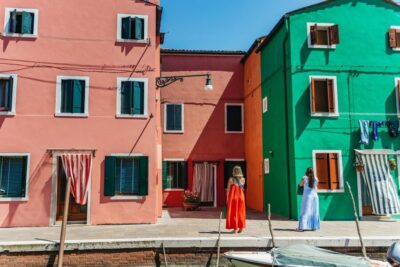
Boat Trip: Glimpse of Murano, Torcello & Burano Islands
Read our review →
Burano, Torcello & Murano Boat Tour w/Glassblowing
Read our review →
Como & Bellagio with Private Lake Como Cruise
Read our review →
Murano and Burano Boat Tour with Glass Factory Visit
Read our review →
Murano & Burano Islands Guided Small-Group Tour by Private Boat
Read our review →
Murano & Burano Panoramic Boat Tour w/ Glassblowing
Read our review →
Browse the lists this tour appears in