
Reviewed · TOURS IN MILAN
Milan: “Museo Teatrale Alla Scala” Guided Tour
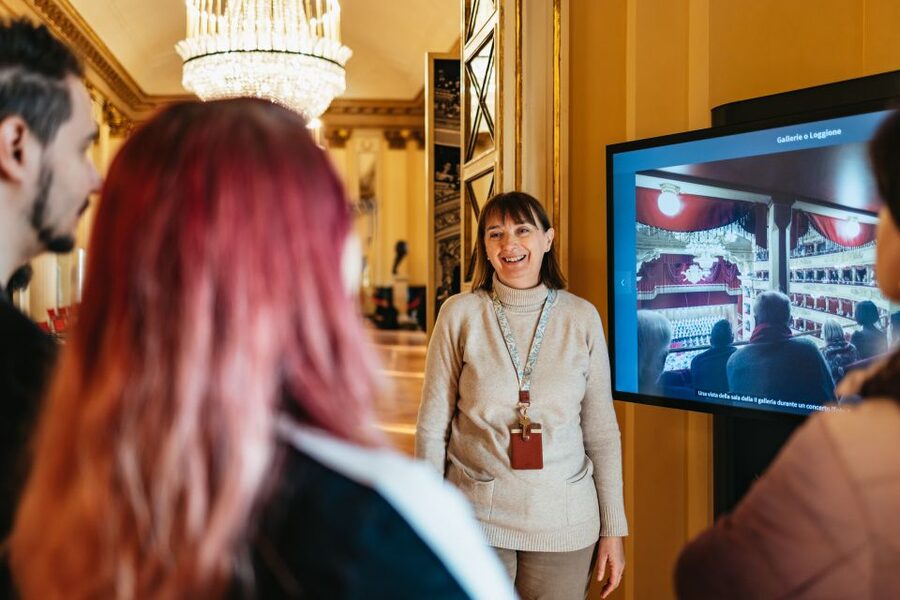
La Scala is easy to underestimate from the street. Inside, it opens into an elegant opera house where Verdi, Maria Callas, Pavarotti, and Rossini helped shape musical history. The tour connects the polished theater with the working world behind it, then carries you into a museum filled with costumes, instruments, paintings, and stage designs.
I like the 90-minute length, which gives you enough time for real context without swallowing half your day. I also like the guides’ personal enthusiasm. Fabio, Simone, Lorella, Chiara, and Giorgio are among the guides praised for making the building’s architecture, performers, and backstage life easy to follow.
The main caution is access. Rehearsals or private events can limit the visit to the museum, so you should not book this expecting a guaranteed look into the auditorium. At $44, the tour offers good value when theater access is available, but the price feels less compelling if your visit is museum-only.
Key points to know before booking
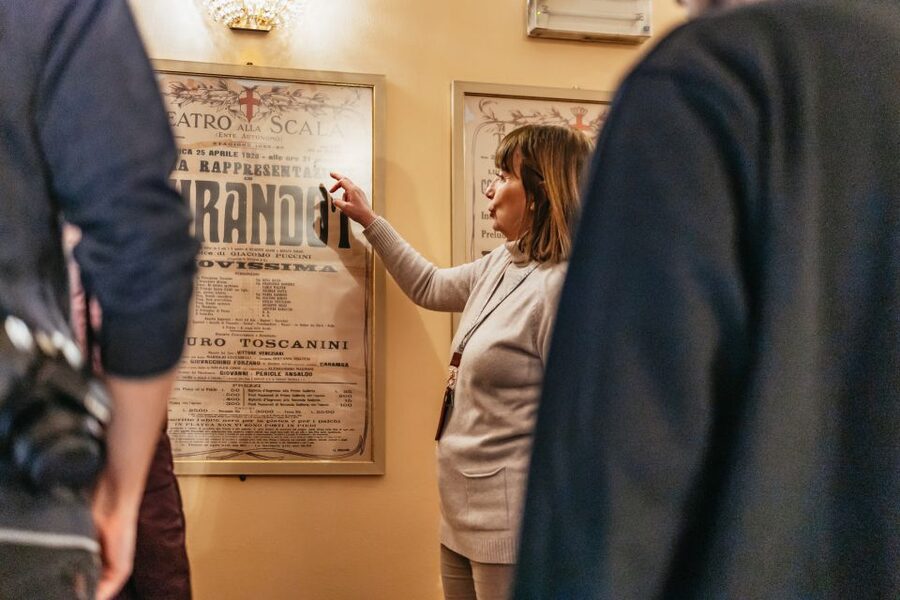
- See La Scala from the inside: Enter one of Milan’s most famous opera houses and learn how its theater spaces are used.
- Expect a story-led visit: Guides explain performers, architecture, neighborhood history, and backstage work rather than simply pointing at objects.
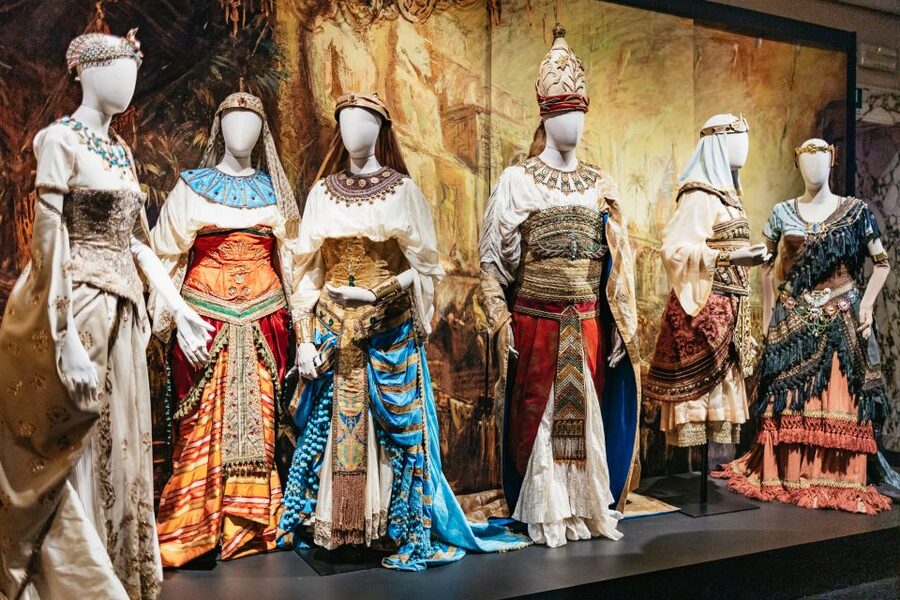
- The museum adds real depth: Costumes, musical instruments, sculptures, paintings, and set designs give the theater’s past a physical presence.
- Rehearsals are possible, not promised: You may glimpse an orchestra, opera, or ballet rehearsal from a theater box.
- Small groups can feel personal: Some departures have had only two to five people, allowing more questions and tailored explanations.
- Plan for the bag rules: Large backpacks and oversize luggage must go into the cloakroom.
Why La Scala is worth more than a quick photo
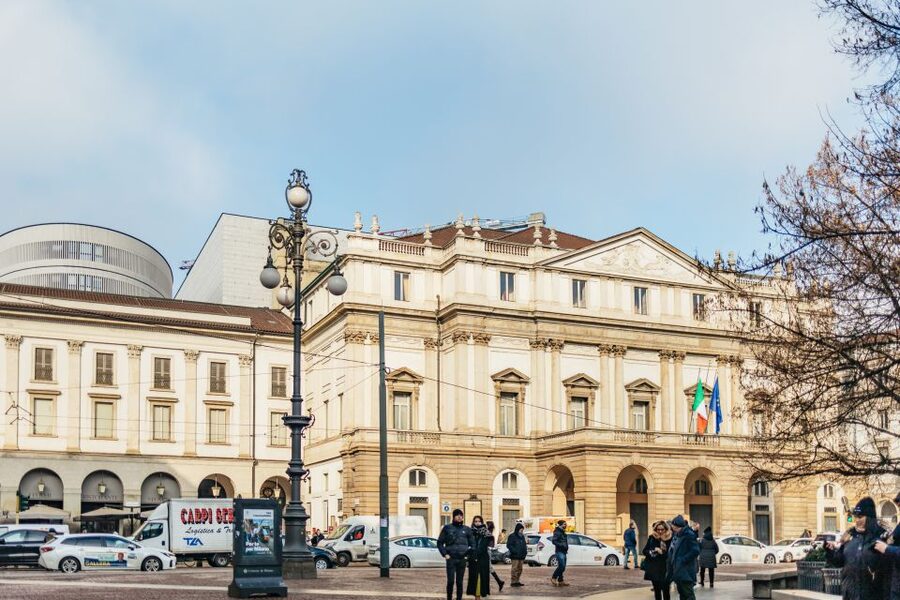
Milan’s Duomo and Galleria Vittorio Emanuele II get most of the attention in this part of town. La Scala is only a few steps away, but its plain exterior can make it seem less important than it is. The guided visit corrects that first impression.
This is not just a tour of a pretty room. You learn how the theater became linked with opera, ballet, composers, singers, conductors, patrons, and the wider cultural life of Milan. That background matters because many of the museum objects would otherwise be easy to glance at and forget.
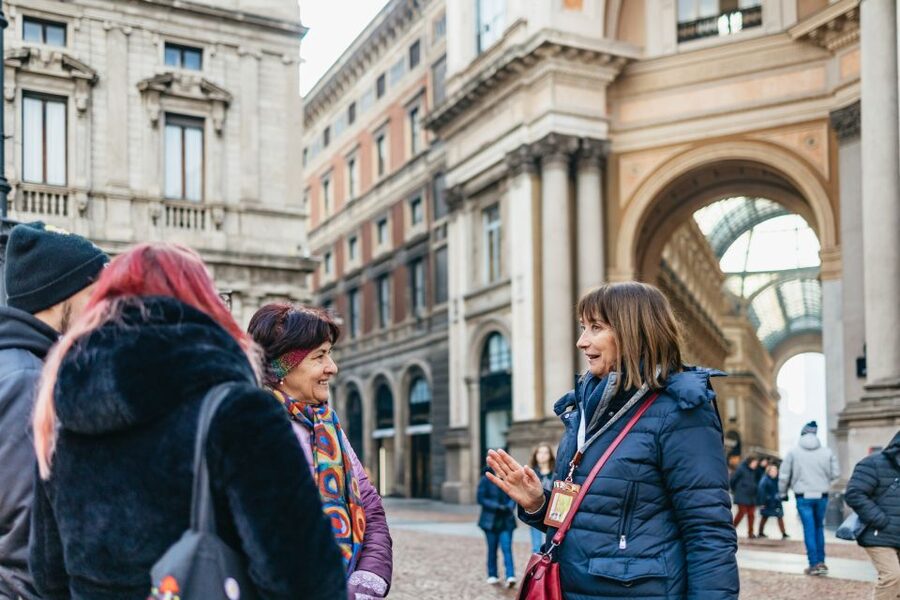
I especially like the way the tour can begin outside. The guide may explain the surrounding square, the neighborhood, and why the theater looks relatively restrained from the street. That short introduction gives you a better sense of La Scala as part of Milan, not an isolated attraction dropped into the city center.
The famous names help anchor the story. Giuseppe Verdi, Gioachino Rossini, Luciano Pavarotti, and Maria Callas are not presented as a random list of celebrities. Their connection to the stage helps explain why La Scala carries such weight in the opera world.
A few more things to do in Milan
- Milan: Da Vinci’s Last Supper Guided Tour
★ 4.7 · 10,143 reviews - Milan: City Sightseeing Hop-On Hop-Off Bus with Audio Guide
★ 4.0 · 6,256 reviews - Milan: Guided Walking Tour & Last Supper Visit with Ticket
★ 4.7 · 5,409 reviews
Inside the theater: elegant, intimate, and still in use
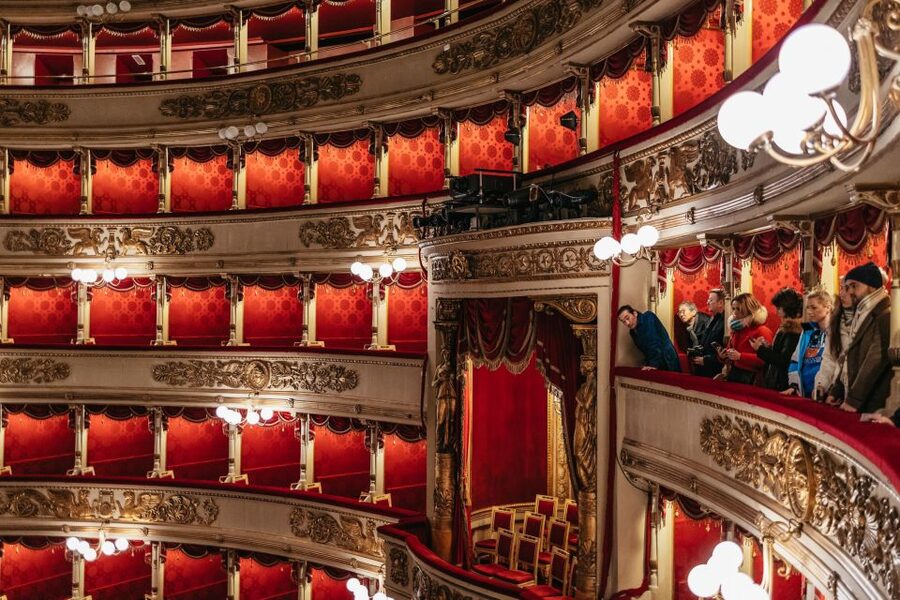
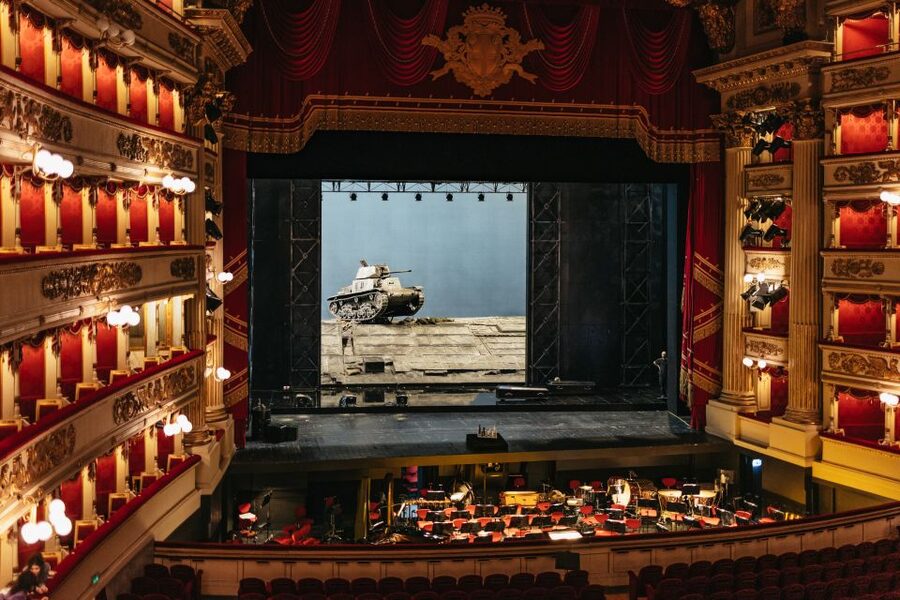
The theater interior is the emotional high point when access is available. From the outside, you might expect a grand but formal monument. Inside, the design feels more intimate, with the auditorium arranged around the stage in a way that makes the relationship between performers and audience easier to understand.
The tour may include a view from one of the theater boxes. This is a useful detail, not just a good photo stop. From a box, you can appreciate the shape of the auditorium and see how the theater’s design puts attention on the stage while keeping the room socially important.
Several people who visited with guides such as Lorella, Fabio, and Simone found that the explanations brought the interior to life. The strongest guides do not recite dates without context. They explain how the building works, how performances have changed, and how singers and musicians shaped its reputation.
You might also hear about backstage operations and current seasons. That balance between past and present is one of the tour’s strengths. La Scala is not treated like a frozen museum piece. It remains a working theater, and that is why rehearsals, private events, and access restrictions affect what you can see.
The auditorium can also be viewed during a rehearsal if timing and theater access allow it. Several visitors had the good fortune to watch an orchestra, opera, or ballet rehearsal for a few minutes from a box. One visitor received a voucher to return later after a rehearsal prevented access during the main visit. That sort of arrangement may happen, but it is not something you should count on when booking.
The La Scala Museum: objects that make the stories clearer
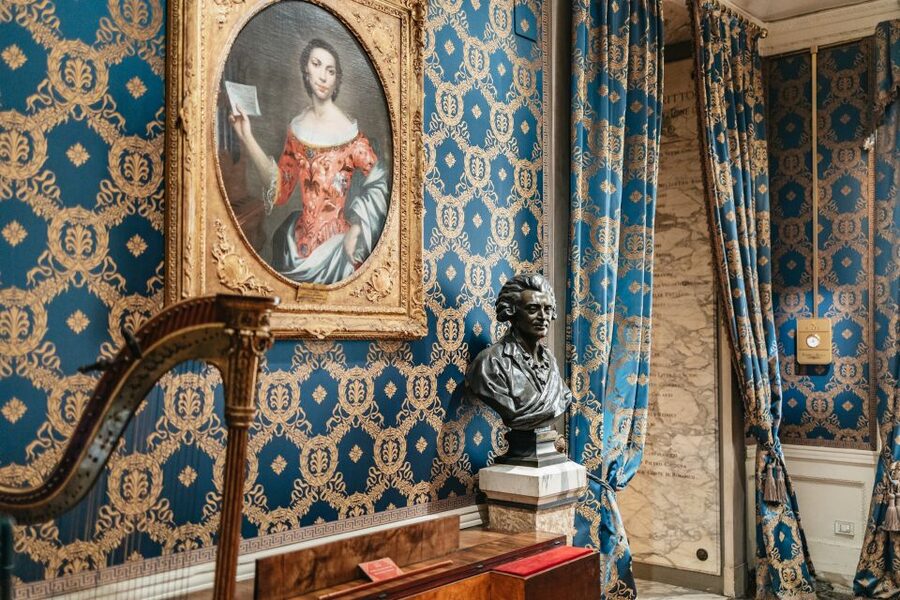
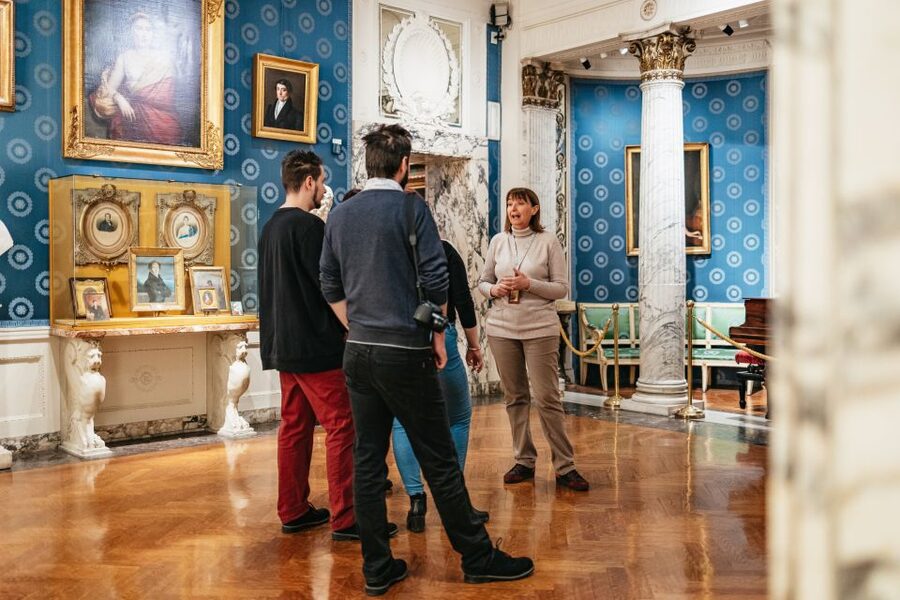
The museum is where the tour becomes more tangible. Its collection includes costumes, musical instruments, set designs, paintings, sculptures, and private artifacts connected with the theater and its performers.
A guided explanation helps you understand why each item matters. A piano associated with Liszt, for example, becomes more than an old instrument when the guide connects it to the musical figures and performance traditions surrounding La Scala. Costumes and ballet displays show how much visual design contributes to a production that audiences often remember mainly for its music.
Set designs are particularly useful for anyone curious about how an opera or ballet creates a complete world on stage. You get a sense of the planning behind the scenery, not just the finished performance. The museum also offers a quieter way to appreciate La Scala if the theater itself is closed for rehearsal or a private function.
I would give the museum more time than a casual visitor might expect. It is not enormous, and the full tour lasts only 90 minutes, but the objects reward careful looking. The guide can explain the people behind the artifacts, the history of particular productions, and the connection between musical instruments and the theater’s wider story.
For families, the museum may work better than a long lecture in the auditorium. A seven-year-old is unlikely to remember every name, but costumes, instruments, and stage models give younger visitors something concrete to look at. Giorgio received praise for keeping a family group with children aged 10 and 7 interested throughout the 90 minutes.
The guide can make or break the 90 minutes
The most consistent strength of this experience is the guiding. The subject is specialized, and a self-guided walk through the museum would give you only part of the picture. A good guide explains what you are seeing, why it matters, and how the theater fits into Milan’s cultural life.
English, Italian, French, German, and Spanish tours are available. Fabio was praised for clear English and a lively approach to history. Simone was noted for his command of theater history and for answering questions with care. Lorella and Chiara were appreciated for their enthusiasm and attention to detail.
Names matter here because the tone can vary with the individual guide. Some guides focus more on architecture, others on opera singers, backstage work, or the museum collection. If you have a strong interest in one area, ask questions early. Small groups have sometimes allowed the guide to adjust the visit to the group’s interests.
A small departure can feel close to private. Groups of two, four, or five have taken the tour with plenty of time for questions. Even a larger group receives headsets, which are included so you can hear the guide clearly. That is important in a theater environment where distance and background noise can make a soft-spoken guide difficult to follow.
The tour also seems suitable for people who know little about opera. You do not need a music degree or a shelf of Verdi recordings. The best explanations start with the building and its people, then add musical details as the tour develops.
Same base, a different kind of day:
- Milan: Cathedral and Duomo’s Terraces Entrance Ticket
★ 4.6 · 61,054 reviews - Milan: Science and Technology Leonardo da Vinci Museum Entry
★ 4.5 · 7,169 reviews - Milan Cathedral: Duomo Terraces Ticket (No Church Access)
★ 4.6 · 6,111 reviews - Milan: Milan Cathedral Direct Entrance – Terrace Excluded
★ 4.5 · 5,782 reviews
Rehearsals and access limits: what you should expect
A glimpse of a rehearsal can be the most memorable part of the visit. Seeing musicians or performers working in the actual theater gives you a sense of La Scala as a living institution rather than a decorated historical room.
But access depends on the theater schedule. Rehearsals, private events, or other activities may mean that the visit is limited to the museum. This is the most important practical limitation, and you should accept it before paying.
The experience details do not promise a performance or rehearsal. If you need a guaranteed look at the auditorium, check the current conditions before booking. If a rehearsal happens to be under way, you may be able to watch briefly from a box or another permitted area. Several visitors found this unexpected opportunity especially memorable, but it remains a bonus.
This uncertainty does not make the tour poor. The museum still offers costumes, instruments, sculptures, paintings, and set designs, and a guide can still explain La Scala’s performers and traditions. It simply means the experience has two possible shapes: a theater-and-museum visit, or a museum-centered visit.
What the $44 price really buys you
At $44 per person, this is not the cheapest museum stop in Milan. You are paying for entry to both the theater and museum, a live guide, and headsets. You are also paying for interpretation, which is the part that turns a collection of opera objects into a coherent visit.
The price makes the most sense for visitors who would otherwise buy an expensive opera ticket simply to see the building. A guided tour gives you access to the theater’s design and history without requiring a performance booking. It also lets you ask questions, which a brief entry visit cannot provide.
Value depends on your interests. If you enjoy opera, ballet, music, architecture, or cultural history, I think the cost is reasonable. If you have little interest in any of those subjects, La Scala may not hold your attention as well as Milan’s art museums or historic churches.
The price feels strongest when you get a small group and a guide who tailors the discussion. It feels less strong if theater access is restricted and you mainly see the museum. That is not a reason to avoid the tour, but it is a reason to keep expectations realistic.
Timing, meeting point, and practical details
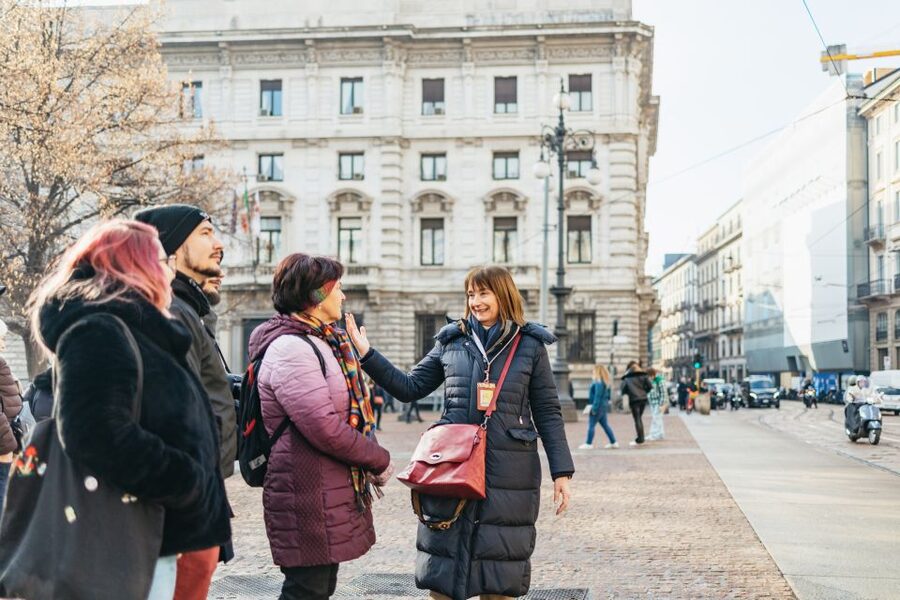
The meeting point is in front of the entrance to the La Scala Theatre Museum. Look for the guide holding the Hidden Experiences purple flag or board. Since the theater is close to the Duomo and Galleria Vittorio Emanuele II, it is easy to combine this visit with central Milan sightseeing.
The tour lasts about 1.5 hours. I would schedule it when you are not rushing to a train, museum reservation, or restaurant booking. The visit involves listening closely, looking at objects, and moving through a historic theater, so it works better as a focused cultural stop than as something squeezed between two fast attractions.
Wheelchairs and strollers are permitted, and the theater and museum are described as accessible. Oversize luggage is not allowed. Large bags and backpacks must be left in the cloakroom, so arrive with only what you need for the visit.
Hotel pickup and drop-off are not included. You make your own way to the theater, which is not a serious drawback given the central location. Private groups are available if you want a more tailored visit or prefer not to join a shared departure.
Free cancellation is available up to 24 hours before the tour for a full refund. You can also reserve now and pay later, which is useful if your Milan schedule is still shifting.
Who will enjoy this La Scala tour most
You should consider booking if you fit one of these profiles:
- You want to see La Scala without buying a performance ticket.
- You enjoy opera, ballet, classical music, or theater design.
- You prefer a guide who can explain the people and objects behind a major cultural site.
- You are visiting Milan for a short time and want a focused 90-minute activity near the Duomo.
- You are traveling with older children or teenagers who respond better to stories and visual objects than to a traditional museum visit.
- You are comfortable with the possibility that theater access may be limited.
The tour is less suited to you if you want a long backstage visit, a guaranteed rehearsal, or unrestricted access to every room. It is also not the best choice if you dislike guided sightseeing or have no interest in the performing arts.
Should you book the La Scala Theatre and Museum tour?
I would book this tour if you want context, not just entry. The museum contains plenty to see, but the guide is what connects the instruments, costumes, famous performers, architecture, and current theater work into one understandable story.
The strongest reason to go is the chance to see La Scala as both a historic opera house and a working venue. If a rehearsal is taking place, you may get a brief view from a theater box. If access is restricted, you still receive a guided museum visit, but you should regard that as the fallback rather than the full promise.
At $44, it is a fair buy for music lovers, architecture fans, families, and anyone who considered attending an opera but found the ticket cost too high. Book it with flexible expectations, arrive ready to ask questions, and you will get a useful and memorable look at one of Milan’s most important cultural spaces.
FAQ
Where does the La Scala Theatre and Museum tour meet?
Meet in front of the entrance to the La Scala Theatre Museum. Look for a guide holding the Hidden Experiences purple flag or board.
How long does the tour last?
The guided visit lasts about 1.5 hours.
What is included in the price?
Entry to La Scala Theatre and Museum, the guided tour, and headsets to hear the guide clearly are included.
Is hotel pickup included?
No. Hotel pickup and drop-off are not included, so you must make your own way to the meeting point.
Which languages are available?
Live tours are available in English, Italian, French, German, and Spanish.
Can I see a rehearsal during the tour?
You might see an orchestra, opera, or ballet rehearsal if one is taking place and access is permitted. Rehearsals and private events can also limit the visit to the museum.
Is the tour wheelchair accessible?
Yes. The theater and museum are described as accessible to wheelchairs and strollers.
Can I bring a large backpack or suitcase?
Oversize luggage is not allowed. Large bags and backpacks must be checked in the cloakroom.
Are private tours available?
Yes. A private group option is available.
Can I cancel the booking?
Yes. You can cancel up to 24 hours in advance for a full refund. Reserve now and pay later is also available.
Just added in Milan
- Highlights and hidden gems of Milan Bike Tour★ 5.0 · 491 reviews
- Milan Gourmet Tour: A Premium Tasting Experience by Do Eat Better★ 5.0 · 241 reviews
- Private Milan Food Walking Tour of Brera★ 5.0 · 217 reviews
- Leonardo3 The World of Leonardo: Tickets for the Interactive Exhibition★ 4.0 · 220 reviews
- Da Vinci’s Last Supper and Santa Maria delle Grazie Church Tour★ 4.5 · 218 reviews
- Learn to Cook Italian Recipes with an Italian Chef★ 5.0 · 283 reviews
- La Scala Theatre and Museum guided experience★ 4.5 · 664 reviews
- La Scala Theatre and Museum Tour in Milan With Private Guide★ 3.5 · 384 reviews
Tours in Milan, compared.
Cathedral and Duomo’s Terraces Entrance Ticket
Read our review →
Science and Technology Leonardo da Vinci Museum Entry
Read our review →
City Sightseeing Hop-On Hop-Off Bus with Audio Guide
Read our review →
Milan Cathedral: Duomo Terraces Ticket (No Church Access)
Read our review →
Milan Cathedral Direct Entrance – Terrace Excluded
Read our review →
Guided Walking Tour & Last Supper Visit with Ticket
Read our review →
Fast-Track Milan Cathedral and Terraces Guided Tour
Read our review →Browse the lists this tour appears in