
Reviewed · CYCLING TOURS
Milan: Highlights and Hidden Gems E-Bike Tour
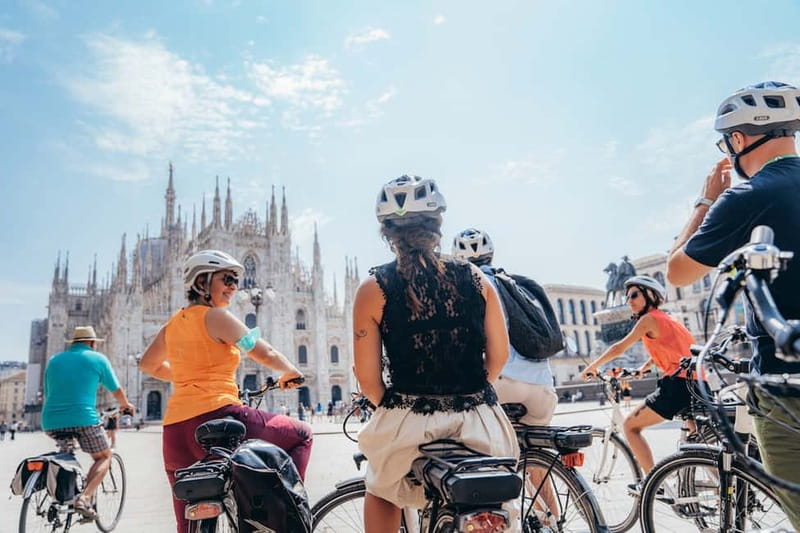
Milan makes sense from a bicycle. In 3.5 hours, you can move from the canals near Centrale Station to the Duomo, Sforzesco Castle, Sempione Park, and the modern towers around Gae Aulenti without spending half your day underground. I especially like the old-and-new route and the easy push of the electric bikes. You get a quick look at Milan’s grand center, its new districts, and a few quieter corners.
I also like the guides’ attention to safety. Matteo, Stefano, Giacomo, Thomas, and Mattis are praised for clear directions, frequent stops, and careful checks on the group. The catch is simple: this is still city cycling. You need good road skills, alertness around tram tracks and cobblestones, and a minimum height of 155 cm. The pace can feel slow in a larger group, but that is part of keeping everyone together.
Key points to know before you book
- Covers about 15 kilometers: The route links Milan’s central sights in a way that would take much longer on foot.
- Electric assistance helps, but does not replace cycling: Milan is fairly flat, yet you still pedal and ride on roads open to traffic.
- A strong first-day orientation: You see the Duomo, Castle, Navigli, Sempione Park, Gae Aulenti, and other central areas in one outing.
- Safety receives real attention: Guides use hand signals, check behind them, and stop to explain buildings and city history.
- The starting point is convenient: The shop is 450 meters from Milan Centrale and close to Caiazzo metro station on the green M2 line.
- Best for confident cyclists aged 14 and over: The tour is not suitable for anyone with mobility limitations or weak road-riding skills.
Why an e-bike is a smart way to see Milan
Milan’s central sights are spread farther apart than a first-time map suggests. The Duomo, Sforzesco Castle, Navigli, Sempione Park, and Gae Aulenti all belong on a short city visit, but walking between them can eat up much of your day.
An e-bike connects the dots quickly. You still see the streets at ground level, but you cover enough distance to understand how the city changes from one district to the next. The motor assistance takes the sting out of long stretches, and riders describe the bikes as easy to use and generally well maintained.
Do not mistake electric assistance for an effortless sightseeing bus. You will pedal, steer, brake, and make decisions around cars, pedestrians, tram tracks, and uneven paving. The tour is rated easy to intermediate, with good riding skills required.
Milan is relatively flat, so the motor is not working against steep hills. Its main value is helping the group keep moving and making a three-hour route manageable for a broad range of active adults. One route covered roughly 15 kilometers, or more than nine miles, with a bathroom and coffee stop in the middle.
Other rides around Milan:
- Milan: Hidden Gems Guided Bike Tour
★ 4.8 · 1,040 reviews - Milan: Highlights and Hidden Gems Guided Bike Tour
★ 4.7 · 498 reviews - Highlights and hidden gems of Milan Bike Tour
★ 5.0 · 491 reviews
Starting near Centrale Station and the Navigli area
The tour begins near Milan Centrale Train Station, at a bike shop on the east side of the station. Your guide waits outside with a yellow sign marked tour. The closest metro stop is Caiazzo on the green M2 line, and the station itself is about 450 meters away.
This is a handy meeting point if you have arrived by train, are staying near Centrale, or want to use the tour as your first look at Milan. Allow a little time to find the correct station exit and shop. Hotel pickup is not included, so you make your own way there.
The opening area has canals and aperitivo spots, giving you an early look at a different side of Milan. It is not the postcard center of the Duomo. That is useful. You begin in a part of the city shaped by transport, nightlife, and everyday Milanese life before moving toward the major monuments.
At the shop, you receive the e-bike and helmet. The guide should explain the route and basic safety points before the group sets off. Pay close attention here, especially if you have never used an electric bicycle. You want to know how the assistance feels before reaching busier streets.
The Stock Exchange and Milan’s public face
One early stop is the Milan Stock Exchange, a fitting place to consider the city’s role as Italy’s financial and commercial center. The route does not treat Milan as only a museum city. Instead, it places the old monuments beside the offices, public spaces, and modern buildings that keep the city moving.
That contrast is one of the tour’s main strengths. A guide can explain how Milan’s identity includes fashion, finance, design, architecture, and politics, not just churches and palaces. You get context while looking at the city itself, rather than trying to piece it together from isolated stops.
The ride between stops also matters. You pass through ordinary streets and elegant squares, seeing how the monumental center connects to working neighborhoods. Since the group stays on public roads, the route gives you a more immediate sense of city traffic than a private coach would.
The tradeoff is that traffic affects the pace. A guide may need to wait for the group, stop often, or take a slower line through a busy intersection. That can make the ride feel less exciting, but it is safer and gives you time to stay oriented.
The Duomo, Vittorio Emanuele Gallery, and city center
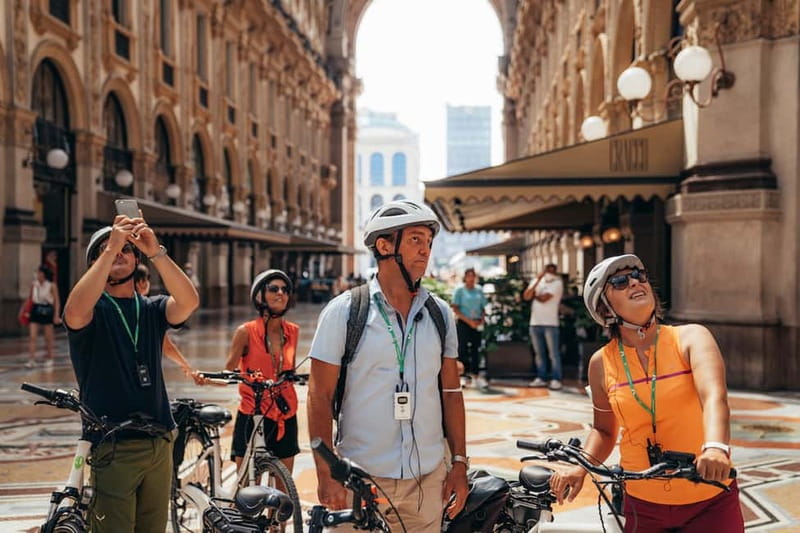
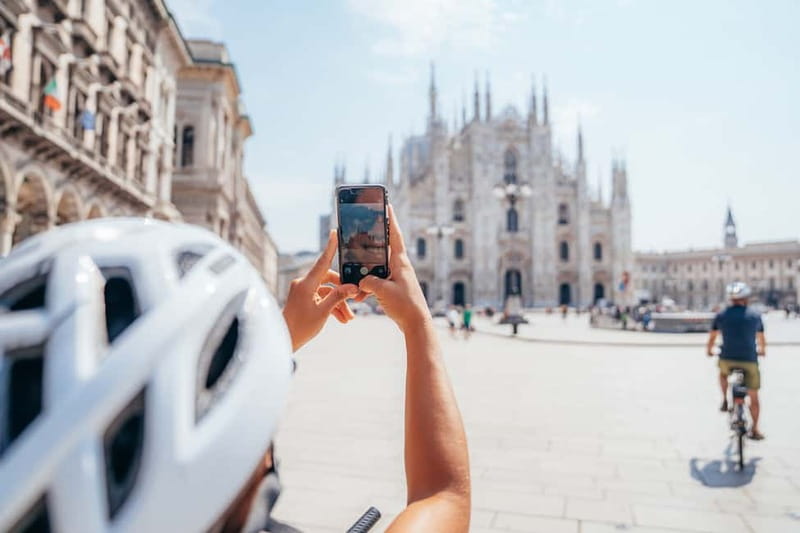
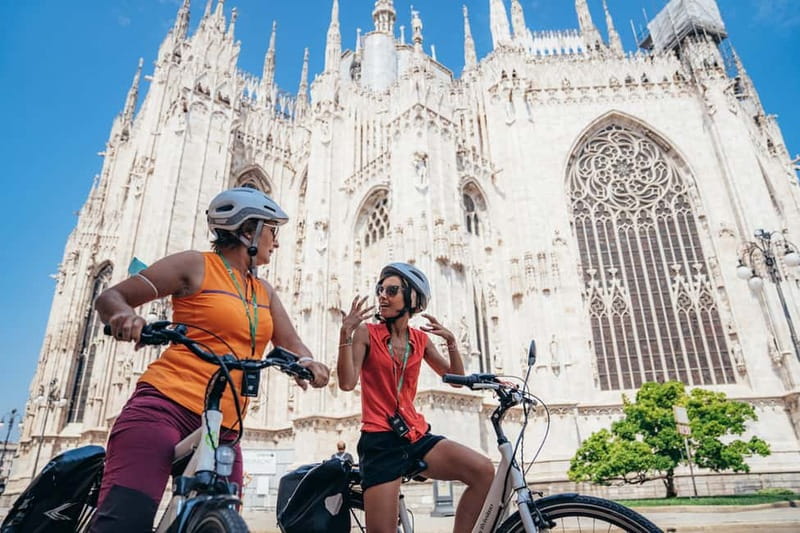
The Duomo is the obvious center of Milan, and the e-bike tour brings you into its orbit without requiring you to spend the entire day there. You should expect time to look, take photographs, and hear the guide explain its place in Milan’s story. This is an exterior city tour, not a ticketed visit inside the cathedral.
Nearby, the Vittorio Emanuele Gallery adds another layer to the city center. Its grand architecture and elegant public space show Milan’s 19th-century confidence. The contrast with the Stock Exchange and newer districts helps you see the city as a sequence of changing eras rather than one preserved historic quarter.
The guide’s commentary is especially valuable at stops like these. A large monument can be impressive but hard to understand on your own. A local guide can point out why a square matters, connect a building to Milan’s development, and add present-day details that you would likely miss from a quick photograph.
The central streets can be crowded with pedestrians, and sudden foot traffic is one of the hazards of cycling here. You need to stay behind the guide and keep your hands ready on the brakes. The route is designed for sightseeing, but it still takes concentration.
Other electric-bike rides around Milan:
- Rome EBike Tour: Appian Way, Catacombs & Roman Aqueducts
★ 5.0 · 1,766 reviews - Rome: Top Highlights & Hidden Gems Tour by Cannondale E-Bike
★ 4.9 · 1,760 reviews - Rome: Appian Way, Catacombs, & Roman Aqueducts E-bike Tour
★ 4.9 · 1,421 reviews - Rome City Small Group Bike Tour with quality Cannondale EBike
★ 5.0 · 1,380 reviews
Sforzesco Castle and Sempione Park
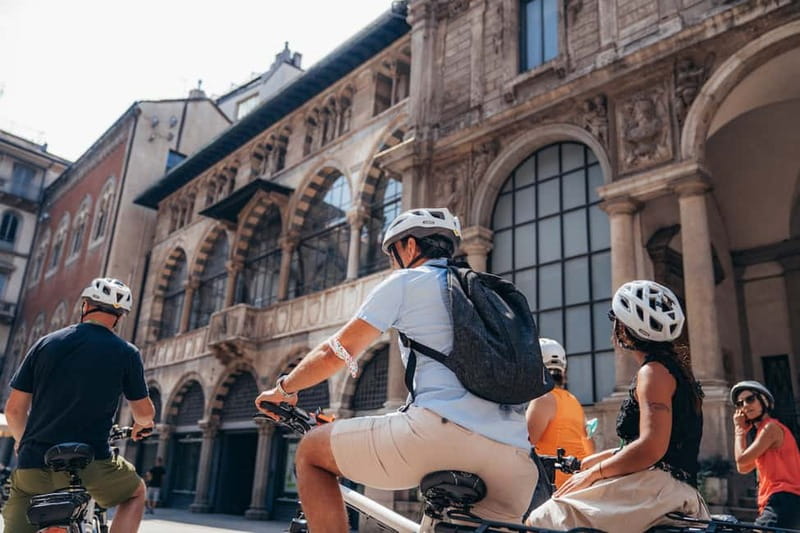
From the center, the route continues toward Sforzesco Castle, one of Milan’s major symbols. The castle offers a strong visual change from the Duomo. Its broad walls and historic setting introduce Milan’s political and military past, while the surrounding public spaces make it feel connected to daily city life.
You will not have time for a full museum visit during this tour. The value is seeing the castle in its urban setting and understanding how it fits into the city plan. If the castle interests you, note where it is and return later for a slower visit.
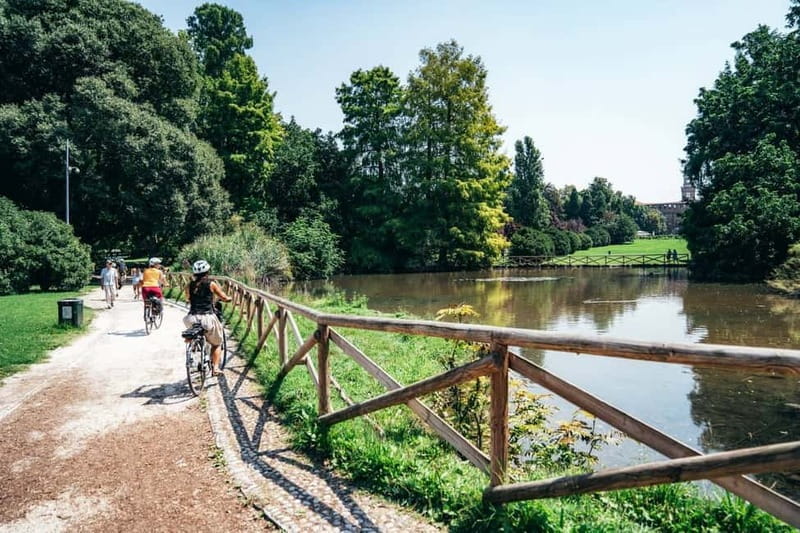
The ride then moves through Sempione Park, the large green area behind the castle. This is one of the route’s welcome breathing spaces. After busy central streets, cycling through the park gives the group a calmer stretch and a chance to enjoy Milan’s public side.
The park also helps explain why the tour is more than a checklist of monuments. You are not simply stopping at famous façades. You are watching the city shift from dense stone streets to open paths and gardens, then back toward newer architecture.
Paving can be uneven, and the route may include bumps or tram tracks elsewhere in the city. Keep your speed under control. Comfortable shoes, water, and clothing suited to the weather are sensible choices.
Gae Aulenti and Milan’s modern skyline
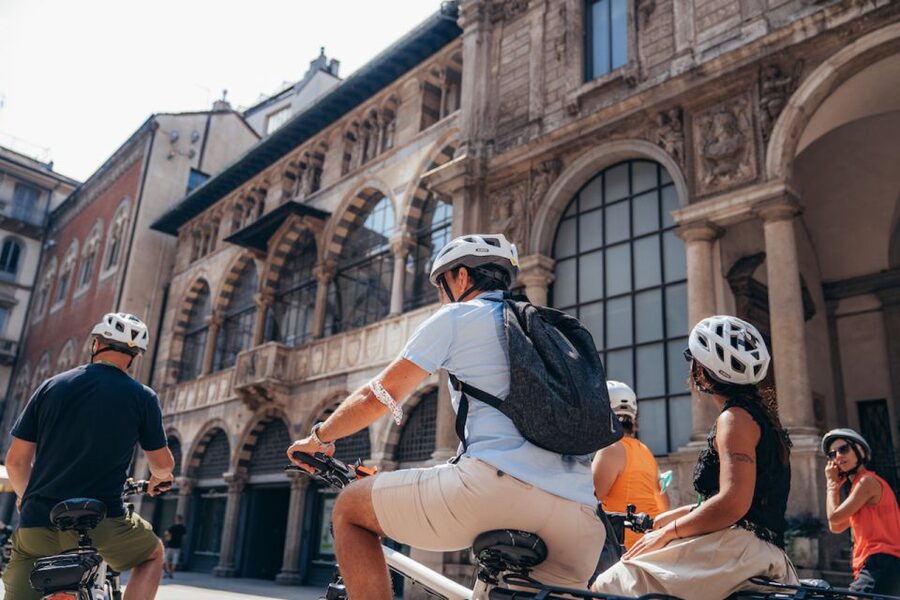
The tour makes room for Milan’s newer districts, particularly the area around Gae Aulenti. Here, the city’s 21st-century ambitions are easy to see in broad public spaces, contemporary buildings, and a very different architectural mood from the Duomo or Castle.
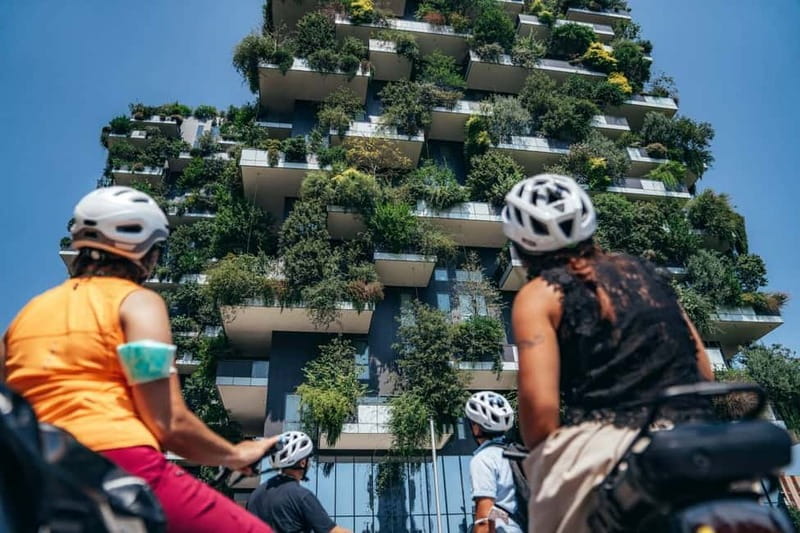
The Vertical Forest, known in Italian as Bosco Verticale, is one of the memorable sights in this part of the route. Its planted balconies make the building look unlike the stone landmarks downtown. The guide can help connect this newer architecture with Milan’s continuing growth and changing idea of what a city should be.
This portion is a good reason to choose the e-bike route over a traditional old-town walk. You see more than the standard historic core and get a clearer picture of Milan as a modern European city. The tour moves between centuries in a single morning or afternoon.
The newer district also offers a useful contrast in pace and space. Wide squares and contemporary buildings replace narrow streets and historic façades. You may find the route especially interesting if architecture, urban design, or modern Milan matters as much to you as churches and castles.
Navigli and the city’s canal character
The route includes Milan’s popular Navigli district, known for its canals and aperitivo atmosphere. This area gives you another version of Milan, one connected to water, evening social life, restaurants, and bars rather than grand civic monuments.
The canals are a strong photo stop, but the bigger value is the change in mood. Milan can feel formal around the Duomo and financial district. Navigli feels more relaxed and social, with the water providing a clear visual anchor.
Because it is popular, the area can be busy, especially around dining hours. Follow the guide closely and expect slower movement near pedestrians. The bike lets you reach Navigli efficiently, but it does not turn a crowded canal path into an open road.
The tour may not leave enough time for a full aperitivo or meal. Treat this as an introduction and return later if the canals appeal to you. The ending point is back at the original meeting place, so you can plan another Milan activity afterward.
What the guide adds to the ride
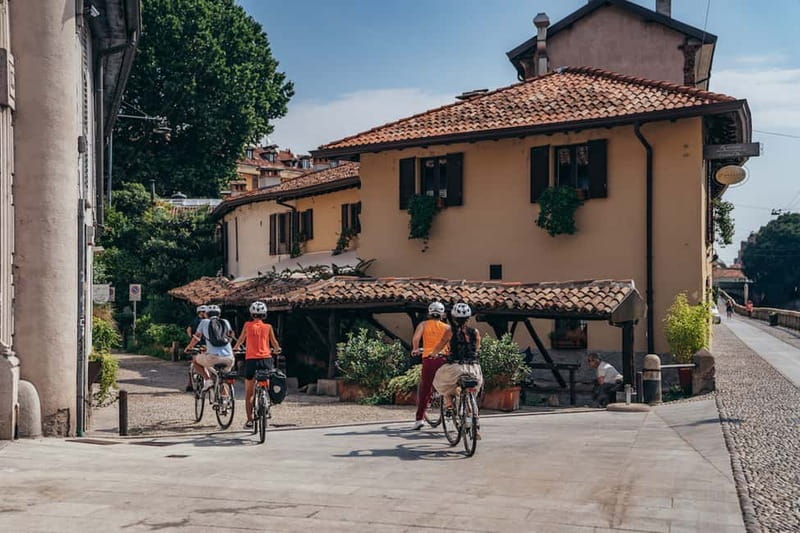
The guide is the difference between transportation and a city tour. A licensed English-speaking guide leads the group, explains Milan’s past and present, and uses stops to add stories about architecture and local life.
Several guides named in the feedback receive particularly strong praise. Matteo is described as careful with safety and clear about the route. Stefano is noted for his easy manner, local insight, and willingness to offer help with onward directions. Giacomo is praised for his warmth and ability to adapt when weather changed the plan. Thomas is described as patient, professional, and attentive when a rider needed assistance. Mattis is also noted for looking after the people in his group.
The practical details matter more than grand speeches. Good guides look back often, use hand signals, warn about rough roads, and keep the group together. That is exactly what you want when you are riding in unfamiliar traffic.
The guide may also shape the final length of the tour. The advertised duration is 3.5 hours, but an outing can run closer to four hours if the guide adds explanations or the group needs extra pauses. Keep some flexibility in your schedule.
Group size, pace, and cycling conditions
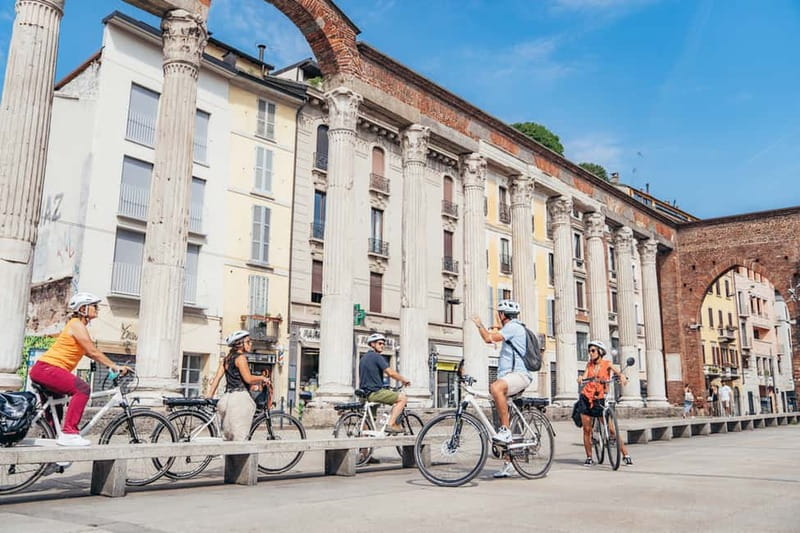
A larger group can make the ride feel orderly but slow. One comment put the ideal group size into question when about ten riders made progress feel very gradual. That is not necessarily a flaw. A slower pace gives less confident cyclists more room, but experienced riders may wish for more speed.
You should be comfortable riding on roads open to traffic. The group may encounter tram tracks, cobblestones, bumps, pedestrians, and cars. Guides provide safety direction, but they cannot remove the normal demands of cycling in a large Italian city.
The minimum height is 155 cm, and children under 14 cannot join. The activity is not suitable for people with mobility impairments. These rules are practical, not minor fine print. You need to mount and control the bike, remain alert for the full route, and manage unexpected changes in surface or traffic.
The tour runs in rain or shine. Bring water and wear comfortable shoes. If rain is forecast, use a waterproof layer and expect the conditions to affect comfort and speed. A past outing shifted to an alternative walking plan because of rain, but you should confirm the plan for your own date rather than assume a walking replacement is guaranteed.
Is the $39.86 price good value?
At $39.86 per person, this is a reasonable way to cover a large part of Milan in half a day. The fee includes the licensed guide, e-bike, and helmet, but not hotel transfers, food, drinks, or admissions to attractions.
The strongest value comes from the distance covered and the guide’s local explanation. A self-guided walk costs less, but you would need to plan the route, navigate traffic, rent equipment, and connect the city’s old and new districts yourself. Public transport can also move you around cheaply, but it will not give you the same street-level view.
The tour is less useful if you already know Milan well or mainly want time inside museums and monuments. It is also not the right bargain for someone who dislikes cycling in traffic. You are paying for access to a broad overview, not for a slow, private visit at every sight.
Free cancellation up to 24 hours before the start and the option to reserve now and pay later reduce the risk of booking ahead. The tour is guaranteed with at least two participants, though availability and starting times should be checked for your date.
Who should book this Milan ride?
I would choose this tour for a first visit, a short stay, or the first full day in Milan. It gives you a useful mental map, so later walks to the Duomo, Castle, Navigli, or Gae Aulenti make more sense.
It suits adults and older teenagers who ride confidently and want a brisk overview without spending hours underground. It can also work well for older active adults. Riders aged 67 and 72 found the route physically manageable, but they still needed to watch for uneven cobblestones and pedestrians.
I would skip it if you have poor balance, rarely cycle, dislike traffic, or need step-free assistance. The electric motor helps with effort, not with steering or road awareness.
FAQ
Where does the Milan e-bike tour start?
It starts at a bike shop near Milan Centrale Train Station. The guide waits in front of the shop with a yellow sign marked tour. Caiazzo metro station on the green M2 line is the nearest metro stop, and Centrale Station is about 450 meters away.
Where does the tour end?
The ride ends back at the original meeting point near Centrale Station.
How long does the tour last?
The scheduled duration is 3.5 hours. Some outings may take longer, particularly when the guide adds extra explanations or the group needs additional stops.
What sights does the route include?
The route includes the Navigli district, Milan Stock Exchange, Duomo, Vittorio Emanuele Gallery, Sforzesco Castle, Sempione Park, Gae Aulenti, and the Vertical Forest area, along with other central squares and neighborhoods.
Do I need to be an experienced cyclist?
You need good riding skills and must be comfortable cycling on roads open to traffic. The tour is rated easy to intermediate, but you may encounter cars, tram tracks, cobblestones, bumps, and pedestrians.
Can children join the tour?
Children under 14 cannot join. Riders must also be at least 155 cm tall, and the activity is not suitable for people with mobility impairments.
Should you book it?
Book this Milan e-bike tour if you want to see the city’s major sights and newer districts in one outing, with a guide who keeps the route moving and explains what you are looking at. The mix of Duomo, Castle, canals, parkland, and modern architecture gives you a better sense of Milan than a monument-only walk.
Skip it if you want a museum visit, a private pace, or a traffic-free ride. For confident cyclists, especially those with only a day or two in town, the $39.86 price buys a useful orientation and a lot of city under your wheels.
Just added in Milan
- Highlights and hidden gems of Milan Bike Tour★ 5.0 · 491 reviews
- Milan Gourmet Tour: A Premium Tasting Experience by Do Eat Better★ 5.0 · 241 reviews
- Private Milan Food Walking Tour of Brera★ 5.0 · 217 reviews
- Leonardo3 The World of Leonardo: Tickets for the Interactive Exhibition★ 4.0 · 220 reviews
- Da Vinci’s Last Supper and Santa Maria delle Grazie Church Tour★ 4.5 · 218 reviews
- Learn to Cook Italian Recipes with an Italian Chef★ 5.0 · 283 reviews
- La Scala Theatre and Museum guided experience★ 4.5 · 664 reviews
- La Scala Theatre and Museum Tour in Milan With Private Guide★ 3.5 · 384 reviews
Cycling Tours, compared.

Rome EBike Tour: Appian Way, Catacombs & Roman Aqueducts
Read our review →
Top Highlights & Hidden Gems Tour by Cannondale E-Bike
Read our review →
Appian Way, Catacombs, & Roman Aqueducts E-bike Tour
Read our review →
Rome City Small Group Bike Tour with quality Cannondale EBike
Read our review →
Tuscany Bike Tours Through the Chianti Hills with Wine Tasting
Read our review →
Browse the lists this tour appears in