
Reviewed · ALBEROBELLO, MATERA & THE TRULLI TOWNS
Matera: Caves and Rock Churches Walking Tour in English
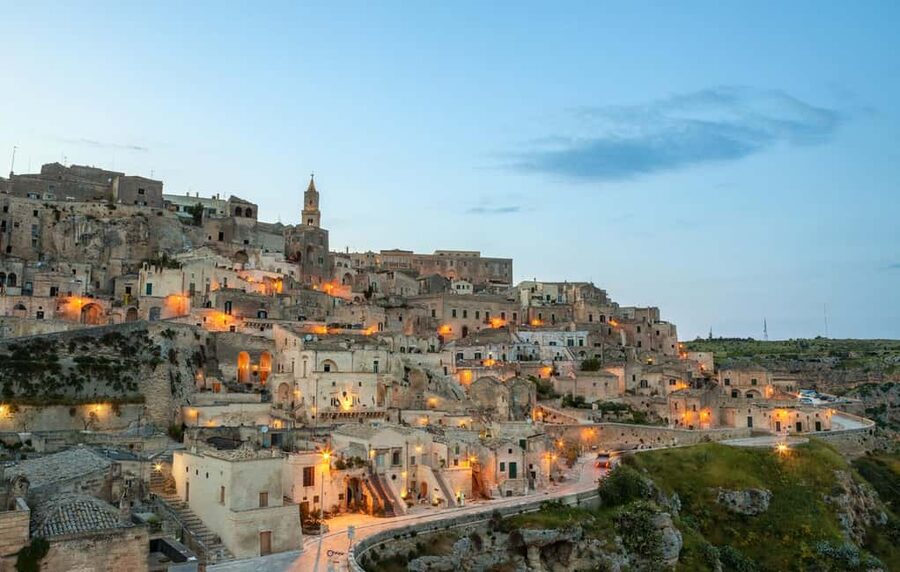
Matera’s Sassi make far more sense once you understand how people lived inside the rock. This 2.5-hour walking tour begins at Piazza S. Pietro Caveoso, then leads through cave homes, viewpoints, stairways, and the rock church of St. Mary of Idris.
I like two things here: Gaetano Campanile brings local stories into the history, and the tour explains practical details such as rainwater collection, not just dates and old stones. The $28 price is also fair for a long guided walk in English.
The main consideration is the hill. You will climb stairs, though the pace is described as leisurely. Wear proper shoes and expect uneven streets rather than a flat city stroll.
Key points at a glance
- See how cave homes worked: Step inside an old house carved from the rock and learn how families shared limited space.
- Understand Matera’s water system: The tour explains how rainwater was gathered and stored, a basic fact of daily life in the Sassi.
- Visit St. Mary of Idris: This rock church is one of the tour’s central cultural stops.
- Hear local stories from Gaetano: His talks include family stories and oral history passed down by former Sassi residents.
- Start in the heart of the old districts: Meeting at Piazza S. Pietro Caveoso puts you right beside the dramatic Sassi scenery.
- Walk at a manageable pace: The route includes stairs, but the guide adjusts his pace for mixed ages and abilities.
Why Matera is best understood on foot
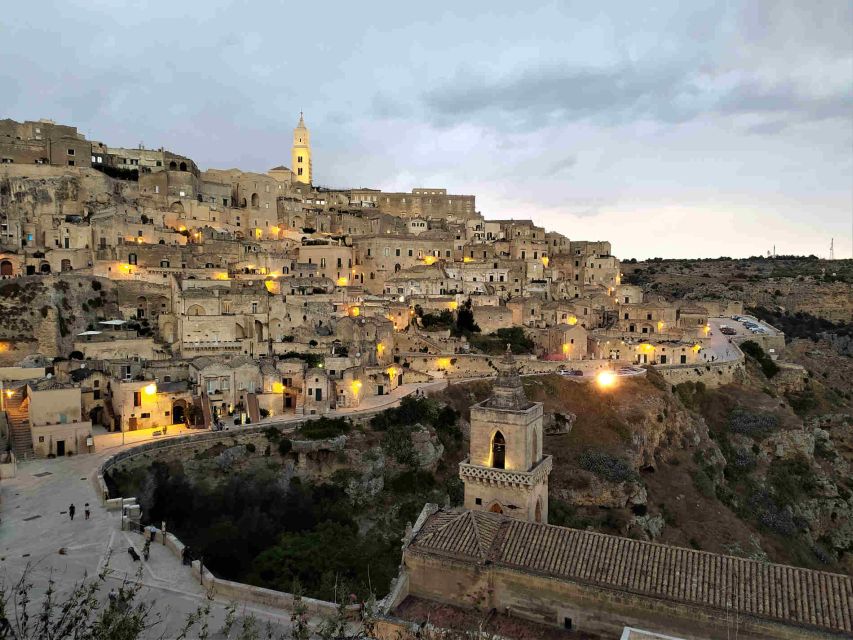
Matera is easy to admire and surprisingly easy to misunderstand. From a viewpoint, the Sassi can look like a sea of stone houses, churches, steps, and shadowy openings. A guide helps you see that this was once a working neighborhood, not a stage set.
The Sassi are the old districts of Matera, built into and around the rock. Families lived in cave houses, collected water, raised children, and made daily life work in a place with little space and few modern services.
This tour focuses on that human side. You are not simply pointed toward a fine view and given a few dates. You learn why the caves were useful, how homes were arranged, and how the city’s fortunes changed over time.
The story is especially striking because Matera was once labeled the shame of Italy. Poor conditions and overcrowding brought national attention, and many residents were moved from the Sassi. Today, Matera is a UNESCO site and one of Italy’s most unusual cultural destinations.
That change is a major part of the walk. It gives the scenery a sharper meaning. The same caves that now attract photographers were once ordinary homes, and in some cases difficult places to live.
Other old stone towns within reach of Matera:
- Matera: Sassi Tour with Cave House and Rupestrian Church
★ 4.7 · 6,618 reviews - Discover Matera, the ancient city – English tour
★ 5.0 · 1,771 reviews - Guided Tour of Matera Sassi
★ 4.5 · 1,312 reviews
Starting at Piazza S. Pietro Caveoso
The meeting point is in Piazza S. Pietro Caveoso, in front of the church. This is a useful place to begin because you are already close to the old districts and their steep lanes.
Look for Gaetano at the church. He is the named local guide for the English tour, and his background as a historian shapes the walk. You can expect explanations that connect buildings and streets with the lives of the people who used them.
The starting point also helps you get oriented. Matera can feel confusing at first because paths rise, fall, narrow, and cross one another. Beginning with a guide means you spend less time trying to work out where you are and more time noticing what is around you.
If you are arriving by car, the suggested multi-level car parks are on Via Pasquale Vena and Via Rocco Scotellaro. Parking is not included, so allow time to leave the car and reach the piazza before the start.
The tour returns to the same meeting point. That is useful if you have parked nearby or want to continue exploring the Sassi independently after the walk.
Inside Matera’s cave houses
The cave house is the most important practical stop. Matera’s rock dwellings are not just empty chambers. They show how several parts of family life once had to fit into one compact space.
Inside, you can see the relationship between the natural rock and the built environment. Walls, ceilings, and rooms were shaped by what the stone allowed. The point of the visit is not only to see an unusual interior, but to understand how families adapted to it.
Gaetano’s explanations add a personal layer. He has drawn on stories connected with people whose families lived in the caves, so the talk can move beyond general history. That helps turn an abstract account of poverty, family life, and relocation into something easier to picture.
You will also hear about the rainwater collection system. In a dry environment, storing water was essential. The tour explains how this system supported the population and why water management was central to life in the Sassi.
This is one of the strongest reasons to take the walk early in your stay. Once you understand the water system and the layout of the houses, you start spotting details on your own. Doorways, openings, cisterns, and rock-cut spaces are no longer just attractive shapes.
The rock church of St. Mary of Idris
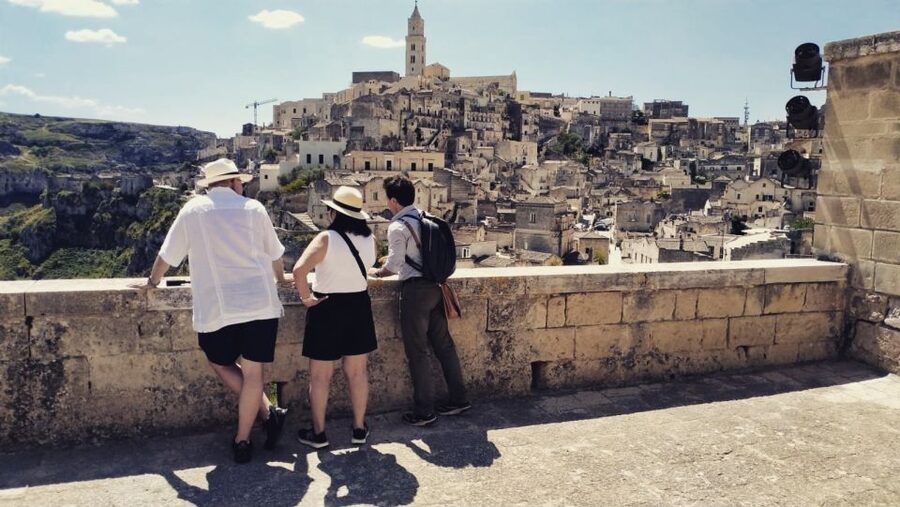
The visit to St. Mary of Idris gives the tour a different focus. Instead of looking at a home, you see a place of worship carved from the rock.
Rock churches are a key part of Matera’s character. They show how religious life developed alongside domestic life in the same stone surroundings. St. Mary of Idris is also tied closely to the dramatic form of the Sassi, making it an important stop for both history and views.
The church is included as part of the walking route, but exact time spent at each stop can vary. The pace is relaxed, and the guide may spend more time on a question or on a subject that interests the group.
That flexibility is useful. Some people want the social history of the Sassi, while others are more interested in art, architecture, or religious sites. Gaetano’s style, according to the supplied information, is friendly and responsive to the group’s interests and ability.
You should not expect a silent visit focused only on taking photographs. This is a guided explanation of why the church matters within Matera’s wider story.
Other walks around Matera:
- Matera’s Sassi Walking Tour – History & Culture
★ 5.0 · 476 reviews - Matera: Guided Walking Tour
★ 4.8 · 333 reviews - Milan: Guided Walking Tour & Last Supper Visit with Ticket
★ 4.7 · 5,409 reviews - Naples: Street Food Walking Tour with Local Guide
★ 4.8 · 4,256 reviews
Viewpoints, stairways, and less obvious corners
The route includes some of Matera’s most striking viewpoints as well as quieter corners that you might skip alone. That mix keeps the walk from becoming a simple parade of famous photo stops.
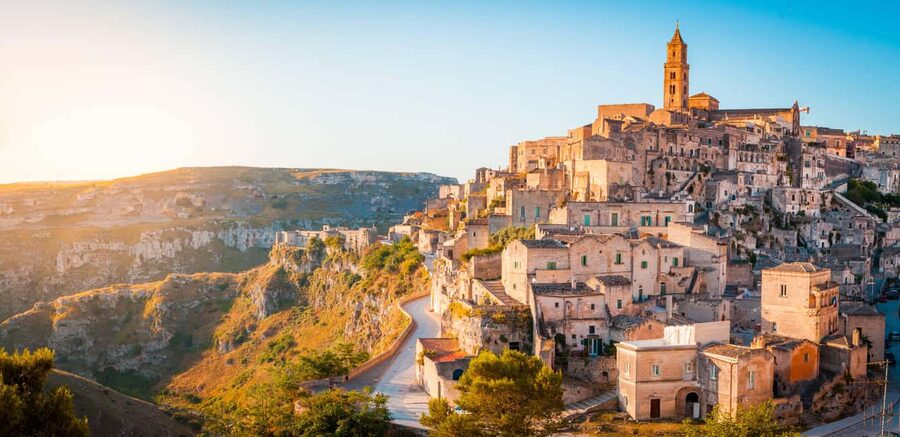
The views help you understand the shape of the city. From above or across a ravine, the Sassi appear layered, with homes and churches built into slopes and joined by steps. Then the route brings you closer, where the large picture breaks into small entrances, passages, and rock walls.
The stairways are part of the experience, but they are also the main physical issue. Matera’s old city lies on a hill, so you will climb and descend during the 2.5 hours. The pace is leisurely, and the guide has worked with groups of mixed ages and mobility, but you still need to be comfortable walking uphill and on uneven ground.
Comfortable shoes are essential. Sandals with little support would make the route less pleasant, especially if you are already tired from sightseeing.
I would also avoid treating this as a quick photo walk. The best value comes from listening while moving through the city. The scenery is impressive, but the explanation of how people lived is what gives it weight.
A guide who makes the history personal
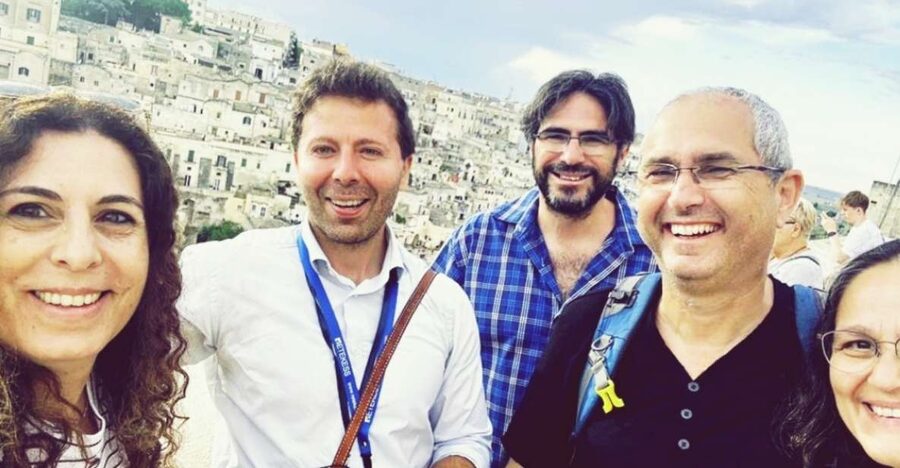
Gaetano is repeatedly praised for his English, humor, patience, and ability to tell a story. Those traits matter in Matera because the subject can quickly become a list of dates and labels.
His approach appears to combine formal historical knowledge with local memory. He can discuss the broad change from neglected district to UNESCO site, then add stories linked to individual families and former residents of the Sassi.
That combination is useful for first-time visitors. You learn the official story, but you also get a sense of how the city was experienced by ordinary people.
He is also described as willing to answer questions in detail. If you want to know how a cave was arranged, why water storage mattered, or what changed after the residents moved out, this is the kind of tour where asking is worthwhile.
The humor helps, too. Two and a half hours is a long time to listen while walking uphill. A relaxed delivery makes the history easier to follow and keeps the route from feeling like a lecture.
Additional stops may include an old cistern, ancient churches, or a workshop, depending on the route and timing. The core experience remains the Sassi, cave homes, water system, viewpoints, and St. Mary of Idris.
Is $28 good value?
At $28 per person, this is a sensible use of money if you want context rather than only photographs. You receive a 2.5-hour guided walk in English with a licensed local guide, and the route covers several parts of Matera that can be hard to interpret alone.
The value is strongest if you are new to the city. A self-guided walk can show you the same streets, but it may not explain why the houses were built as they were or how the water system functioned.
It is also good value for a short stay. If you have only one day in Matera, this tour quickly gives you a framework for the rest of your visit. Afterward, you can return to places that caught your attention or explore independently with a better sense of direction.
The price does not include extras beyond the walking tour and guide. You should also factor in transport or parking if you are arriving by car.
Who should book this walk?
I would choose this tour if you want:
- A clear introduction to the Sassi before exploring alone
- An English-speaking local guide
- Social history, not only architecture
- A relaxed walking pace with time for questions
- A better understanding of cave homes and water storage
- A route that combines viewpoints with interior sites
It suits couples, families with older children, and older adults who can manage stairs at an easy pace. The guide’s patience with mixed ages and mobility is a useful point, but the route is not step-free.
It may be less suitable if you have serious difficulty with stairs or want a completely private, highly customized itinerary. The walk is designed to cover the main character of Matera in a set period, not to avoid all slopes.
I would book it near the start of your stay. That way, the rest of Matera becomes easier to read, and you can use Gaetano’s practical suggestions for food and other places to see. His recommendations have included local stops such as a bread shop, which can add a simple, tasty detail to the day.
Booking details worth knowing
The tour is in English and lasts 2.5 hours. Starting times vary, so check availability before booking.
Meet Gaetano in front of the church at Piazza S. Pietro Caveoso. The tour ends back at the same point. Wear comfortable shoes and bring only what you want to carry during a hilly walk.
You can cancel up to 24 hours in advance for a full refund. The reserve-now, pay-later option lets you hold a place without paying immediately, which is useful if your Basilicata plans are still shifting.
Should you book the Matera caves and rock churches tour?
Book it if you want Matera to become more than a beautiful collection of stone buildings. The strongest parts are the cave house, the explanation of rainwater collection, the visit to St. Mary of Idris, and Gaetano’s local storytelling.
The one caution is physical: the Sassi require stairs. If you can handle a leisurely uphill walk and wear good shoes, the $28 cost is reasonable for a well-focused introduction to Matera’s past and present.
For most first-time visitors, I would take this tour early in the visit. It gives you the background you need to appreciate the city on your own afterward.
FAQ
Where does the Matera walking tour begin?
The tour begins in Piazza S. Pietro Caveoso. The guide waits in front of the church.
Where does the tour end?
The activity ends back at the meeting point in Piazza S. Pietro Caveoso.
How long does the tour last?
The walking tour lasts 2.5 hours. Starting times depend on availability.
Is the tour conducted in English?
Yes. The tour has a live English-speaking guide.
Which rock church do you visit?
The tour includes a visit to the rock church of St. Mary of Idris.
Will I enter a cave house?
Yes. The route includes an ancient cave house where you can learn how families lived and how rainwater was collected.
Are there many stairs?
Yes. Matera’s old city is on a hill, so the route includes stairways. The walk proceeds at a leisurely pace, but comfortable shoes are required.
Just added in Matera
- Matera’s Sassi Walking Tour – History & Culture★ 5.0 · 476 reviews
- Guided Tour, Historic Center Sassi Rock Churches and Cave House★ 5.0 · 461 reviews
- The Sassi of Matera★ 5.0 · 252 reviews
- Discover Matera: Overnight Stay, Meal, and Sassi Tour★ 5.0 · 335 reviews
- Full Private 3h Excursion to the Sassi di Matera★ 5.0 · 451 reviews
- Sassi of Matera: Eco-Bus Open Top Tour★ 4.6 · 592 reviews
- Matera: Guided Walking Tour★ 4.8 · 333 reviews
- Matera: Open Top Bus Tour with Entrance to Casa Grotta★ 4.2 · 278 reviews
Alberobello, Matera & the Trulli Towns, compared.
Sassi Tour with Cave House and Rupestrian Church
Read our review →
Polignano a Mare: Speedboat Cruise to Caves with Aperitif
Read our review →
Polignano a Mare: Cave Boat Tour with Aperitif
Read our review →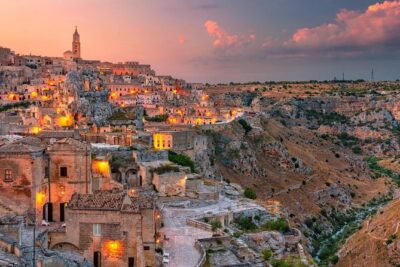
Discover Matera, the ancient city – English tour
Read our review →
Polignano a Mare: Boat Trip, Swim & Cave with Aperitif
Read our review →
Polignano a Mare boat tour emotions, caves, diving and appetizers
Read our review →
Browse the lists this tour appears in