
Reviewed · HISTORICAL TOURS
Genoa: Historic Guided Tour of Christopher Columbus’ House
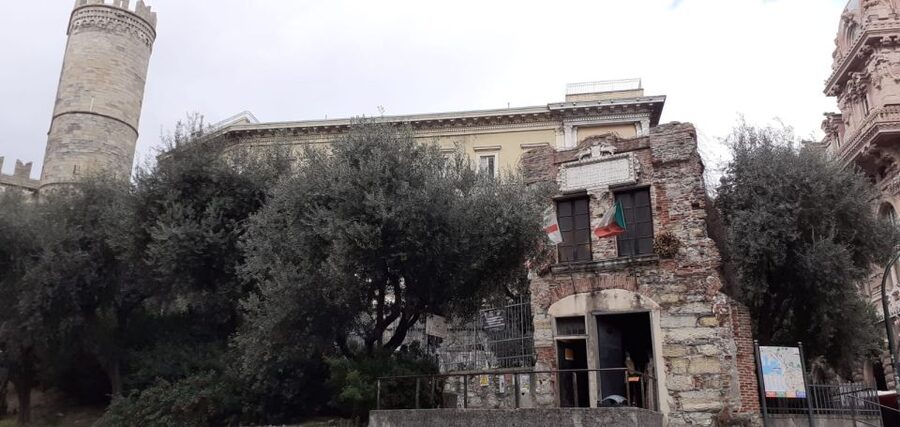
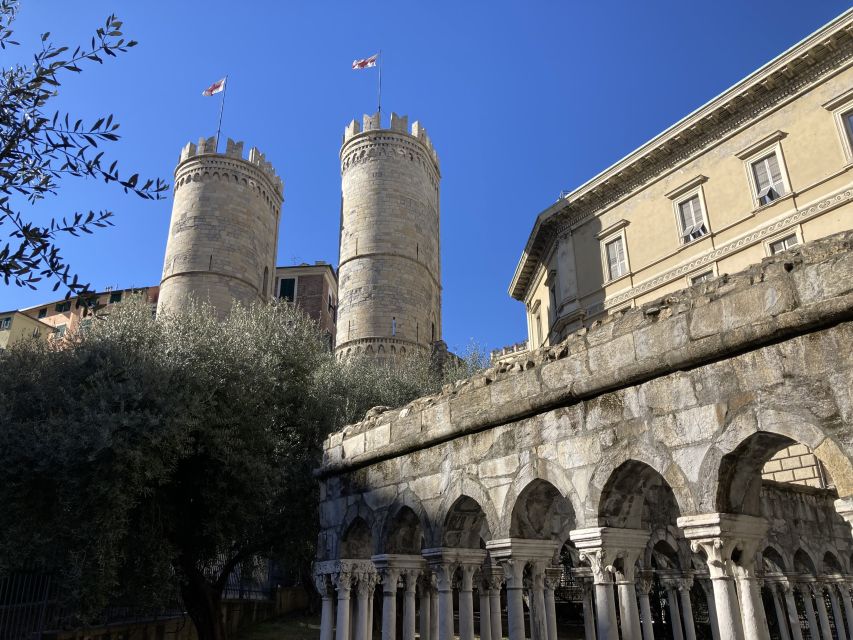
Christopher Columbus’ childhood home is a modest stone building, not a grand palace, and that is part of its appeal. Just beyond Porta Soprana, the house shows how a working Genoese family lived, with a workshop on the ground floor and private rooms above. The visit also reaches the Cloister of Sant’Andrea, giving you more than a quick look at one small building.
I like the small group limit of six, since it makes it easier to hear the guide and ask questions. I also like the local focus: guides such as Luisa and Georgia have explained the building, archaeology, and surrounding streets rather than treating Columbus as an isolated figure. The main drawback is the short and slightly unclear timing. The activity is sold as 20 minutes, the itinerary says 30, and some tours have lasted close to an hour.
Key points to know before booking
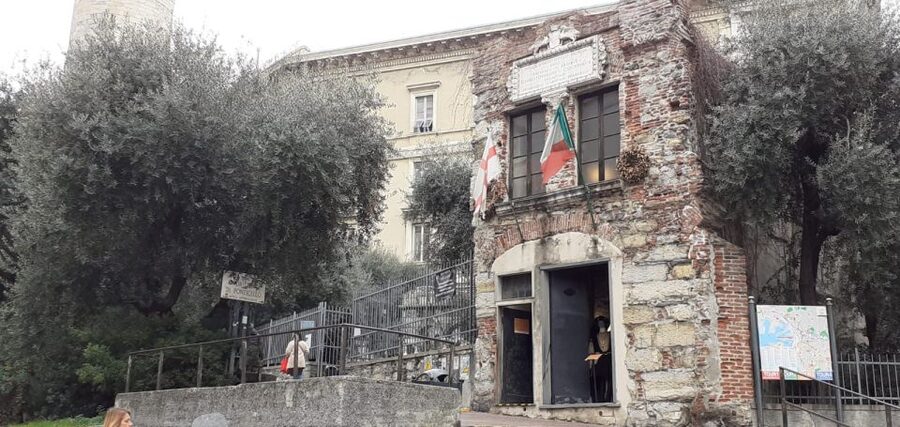
- Columbus’ early home is a working family house: The ground floor served as a workshop, while the upper level held private rooms.
- The visit includes three nearby sights: Casa di Colombo, the Cloister of Sant’Andrea, and Porta Soprana.
- A group of six keeps the tour personal: You should be able to hear the guide clearly and ask questions.
- English and Italian tours are available: The live guide explains the site in one of those two languages.
- The timing can vary: Plan for 20 to 30 minutes as a minimum, with some visits lasting much longer.
- The site is not suitable for wheelchair users: Mobility limitations may make this visit difficult.
A small house beside Genoa’s medieval gate
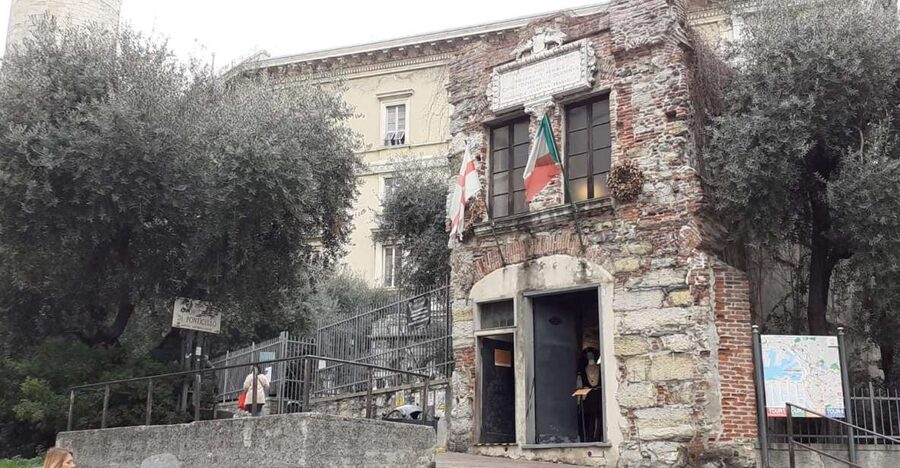
Genoa is full of grand churches, steep lanes, and imposing palaces. Casa di Colombo offers a different scale. It is tied to a famous name, but the building itself tells a quieter story about a family working and living just outside the old medieval walls.
According to archival documents, Domenico Colombo moved into the house in 1455, when Christopher was four years old. That detail gives the site its main value. You are not looking at a place associated only with the adult navigator and his voyages. You are seeing the setting linked to his early years in Genoa.
The house is near Porta Soprana, one of the city’s historic gateways. That location matters because it places the building within the old defensive edge of Genoa. The tour can help you connect the family home to the medieval city around it, rather than viewing the house as a stand-alone museum.
You should keep your expectations sensible. This is a compact historic structure, not a large museum filled with objects from Columbus’ life. The pleasure comes from the building’s layout, its connection to the city, and the guide’s explanation of what can and cannot be known about the people who lived there.
Other history to see in Genoa:
- Genoa: 2-Hour Guided Walking Tour of the Historical Center
★ 4.2 · 605 reviews - 2 Hours Private Historical Tour in Genoa
★ 5.0 · 248 reviews - Genoa Food, Wine Tasting & History Walking Tour
★ 5.0 · 212 reviews
What the workshop floor reveals
The ground floor was used as a workshop. That single fact changes the way you read the house. It suggests a family home tied to practical work, with business and domestic life stacked under one roof.
An attic with wooden beams separated the workshop from the upper floor. The private rooms were above, creating a simple division between public or working space and family space. You may find this arrangement more revealing than a collection of famous objects because it shows the physical conditions of everyday life.
The building’s structure is also part of the story. Several guides have focused on how the house was built and rebuilt, and on the way its surviving features fit into the surrounding area. If your guide takes time to explain the beams, floors, walls, or later changes, listen closely. These details help you understand the site as a real urban home rather than a symbolic Columbus shrine.
The house does not need a long visit. In fact, a short guided explanation suits it well. Without a guide, you could walk through quickly and miss why the workshop, attic, and upper rooms matter. With a good explanation, the modest building becomes a useful snapshot of medieval Genoa.
Sant’Andrea Cloister and the medieval setting
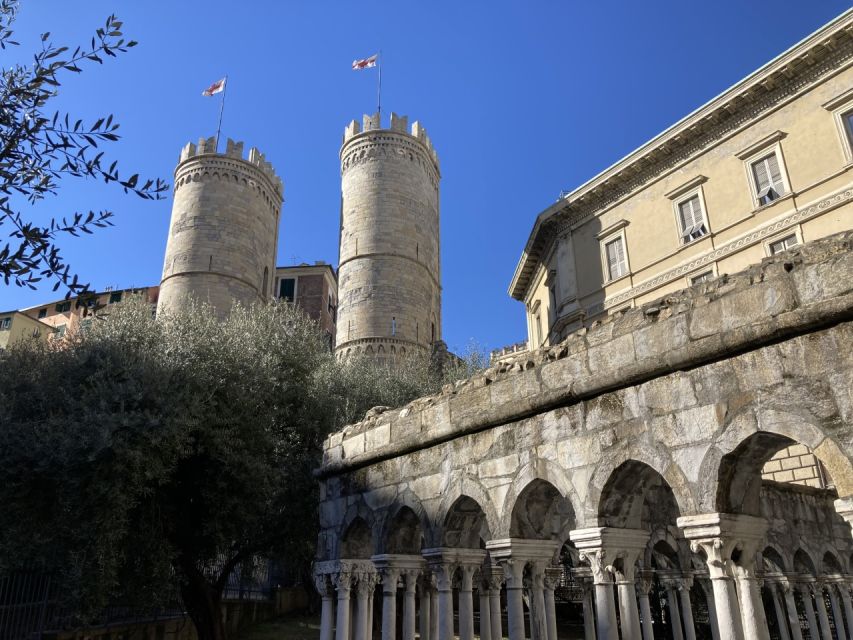
The visit continues to the Cloister of Sant’Andrea, rebuilt in the area behind the house and Porta Soprana. This is one of the strongest parts of the experience because it widens the focus from one family to the medieval quarter around it.
The cloister helps you picture the area as a layered historic zone. The house, the old gate, defensive remains, and religious architecture sit close together. Guides have pointed out details here that are easy to overlook on your own, including traces of different periods meeting in the same small section of Genoa.
This is where the tour feels most useful for a first visit to the city. You are not simply being told that Genoa is old. You are shown how its past survives in pieces: a house, a cloister, a gate, and sections of wall. The guide can explain how those pieces relate to one another.
Some visits have also included the Barbarossa Wall. The exact amount of time spent outside can vary, but the wider area is important enough that you should not rush away as soon as you leave the house. If the guide offers context about the walls or nearby medieval remains, it is worth giving the explanation your attention.
Porta Soprana puts Columbus in context
Porta Soprana is close to the house and helps anchor the visit geographically. The gate marks the edge of the older city and gives you a clear sense of how compact this historic pocket can be.
The connection is practical as well as historical. Once you understand that the house stood just outside the medieval walls, the location makes more sense. The family was living near a major city entrance, not in an isolated rural setting.
I would treat Porta Soprana as part of the tour’s setting rather than expect a long formal stop there. The guide’s explanation is likely to be brief compared with the house, but it adds useful context. You can also use the area to orient yourself for further exploration of Genoa’s medieval center after the tour.
The nearby streets are worth noticing. Even without a long walk, you can see how the historic structures fit into the modern city. That contrast is one reason this activity works well as an introduction to Genoa.
A few more things to do in Genoa
- Genoa: Cetacean Watching Cruise with Marine Biologist Guide
★ 4.3 · 745 reviews - Guided Tour of Rolli Palaces UNESCO Site, Genoa
★ 4.4 · 539 reviews - Colosseum, Roman Forum & Palatine Guided Tour
★ 4.7 · 63,148 reviews - Vatican Museums, Sistine Chapel & St Peter’s Basilica Guided Tour
★ 4.5 · 39,149 reviews
The guide makes the short visit worthwhile
The quality of this experience depends heavily on the person leading it. The strongest feedback has focused on guides who explain both Columbus and Genoese history, while also discussing archaeology and the building itself.
Luisa has been praised for a careful and thorough explanation. Georgia has led visits that extended beyond the promised short duration and included the house, cloister, and Barbarossa Wall. Other guides have brought archaeological training or a careful approach to interpreting evidence.
That last point is important. Columbus is a famous and often simplified figure, so a guide who distinguishes documented facts from later assumptions adds real value. You want someone who can explain the building without turning every detail into a dramatic legend.
The small group helps here. With no more than six people, you should have a fair chance of hearing the guide inside the compact house. A larger group could make a small building feel crowded and make questions harder to ask.
One practical note: the meeting instructions say to meet the guide inside the venue. Do not wait outside for someone to collect you. This is worth taking seriously because the meeting point can be confusing if you assume the guide will be standing at the entrance.
How long should you plan?
The advertised duration is 20 minutes, while the itinerary describes a 30-minute visit. In practice, some guides have spent close to an hour covering the house, cloister, walls, and nearby history.
For planning purposes, I would keep at least 30 minutes free, and preferably allow an hour if your schedule permits. You may finish quickly if the explanation stays close to the house, or you may receive a longer local history talk if the guide has time and the group is interested.
This variation is not necessarily a problem. A 20-minute visit can be useful if you are fitting the site between other Genoa sights. A longer visit is better if you want to understand the surrounding medieval area and ask questions.
If you have a train, timed museum admission, or restaurant reservation immediately afterward, do not schedule it too tightly. The official duration is short, but the reported longer visits make a little breathing room sensible.
Is $12 a fair price?
At $12 per person, this is an inexpensive guided stop. The value comes less from the size of the house and more from the access to interpretation in English or Italian.
You could probably look at the exterior and nearby streets without paying. What you would miss is the explanation of the house’s layout, the family’s connection to the site, the rebuilding of the cloister, and the way the medieval structures relate to one another.
For a solo visitor, couple, or small family, the price is easy to justify if you want historical context but do not want to commit to a long city tour. It also works well as a short add-on near Porta Soprana.
The value is weaker if you expect a large collection, many rooms, or a long museum visit. Casa di Colombo is small, and the tour is focused. Think of the ticket as payment for access plus a guide’s explanation, not for a full afternoon attraction.
The small group limit improves the deal. You are not paying for a large scripted walk where the guide must speak over a crowd. The format allows more direct attention, although the actual level of conversation will depend on your guide and group.
Who should book this experience?
I would recommend it to you if you enjoy historic buildings, city archaeology, and short guided visits. It is especially useful if you are already planning to see Porta Soprana and want a clearer understanding of the surrounding medieval area.
Families may appreciate the brief format, though very young children may not care much about the building’s structure or archival history. The small group can make the experience more personal, especially if your party fills most of the six available places.
It also suits visitors who want an English-language explanation without joining a long walking tour. You get a compact lesson in Genoese history and can then continue exploring on your own.
You may want to skip it if you need step-free access or use a wheelchair. The activity is specifically listed as unsuitable for people with mobility impairments and wheelchair users.
You should also reconsider it if your main interest is Columbus’ voyages, ships, or detailed maritime history. The focus here is his early life, the family home, and the medieval setting in Genoa.
Practical details that affect your visit
The tour is available in Italian and English, with a live guide. Check the starting times before booking because the short format may be offered at set times rather than as an open visit.
Your ticket is valid only on the date booked. Cancellation is allowed up to 24 hours before the scheduled time for a full refund, and you can reserve while paying later. Those terms are useful if your Genoa plans depend on train connections or changing weather.
The meeting instruction deserves repeating: go inside Casa di Colombo and look for the guide there. Do not wait outside or in a nearby part of the venue.
Wear shoes in which you are comfortable walking through historic surroundings. The activity is short, but it includes movement between the house, cloister, and nearby medieval landmarks. Since mobility access is limited, contact the provider before booking if you have any concern about stairs or uneven surfaces.
The overall rating is 4.4 from 186 reviews, which fits the experience’s character: consistently well received, but still a small and specialized attraction rather than a major Genoa museum.
Should you book Casa di Colombo?
Book it if you want a low-cost, sharply focused introduction to Genoa’s medieval heart. The combination of Columbus’ childhood home, the workshop floor, Sant’Andrea Cloister, and Porta Soprana gives you more context than the house alone.
I especially recommend it when the schedule leaves room for a guide who may continue beyond the advertised 20 minutes. The best version of this visit is not a quick look at a famous name. It is a careful explanation of how a working family home, city gate, cloister, and old walls fit together.
Skip it if you want a large museum or a long Columbus-centered attraction. For everyone else, $12 is a reasonable price for a small-group history stop that can sharpen your understanding of Genoa before you continue into the old city.
FAQ
Where does the tour begin?
The tour begins at Casa di Cristoforo Colombo, also called Casa di Colombo. Meet the guide inside the venue, not outside or in a nearby area.
How long does the tour last?
The stated duration is 20 minutes, while the itinerary describes a 30-minute visit. Some guided visits have lasted close to an hour when the guide included the cloister, nearby walls, and extra local history.
What places are included?
The visit includes Casa di Colombo, the Cloister of Sant’Andrea, and Porta Soprana. The surrounding medieval area is part of the guided explanation.
Is the tour offered in English?
Yes. The live tour guide can conduct the visit in English or Italian.
How many people are in the group?
The activity uses a small-group format limited to six participants.
What is the price?
The price is $12 per person.
Is Columbus’ entire life covered?
No. The focus is on Christopher Columbus’ early life and the house where he lived as a child. The tour also explains Genoa’s medieval setting.
Is the site wheelchair accessible?
No. The activity is not suitable for wheelchair users or people with mobility impairments.
Can I cancel the booking?
Yes. You can cancel up to 24 hours in advance for a full refund. You can also reserve now and pay later.
Just added in Genoa
- Homemade Pasta and Pesto Class with a Local Chef in Genoa★ 5.0 · 305 reviews
- 2 Hours Private Historical Tour in Genoa★ 5.0 · 248 reviews
- Genoa Food, Wine Tasting & History Walking Tour★ 5.0 · 212 reviews
- City Sightseeing Genoa Hop-On Hop-Off Bus Tour★ 3.0 · 259 reviews
- Genoese cooking lesson in the with lunch in the terrace★ 5.0 · 189 reviews
- Taste Genoa: A Full Meal Walking Food Tour by Do Eat Better★ 5.0 · 509 reviews
- Genoa: Impossible Museum Entry Ticket★ 4.2 · 226 reviews
- Levanto: Pesto-Making Class★ 4.8 · 196 reviews
Historical Tours, compared.
St. Mark Basilica Ticket, Audioguide+History Gallery
Read our review →
Venice’s Best: Basilica, Doge’s Palace, Gondola & History Gallery
Read our review →
Historic Milan Tour with Skip-the-Line Last Supper Ticket
Read our review →
Ancient History and Colosseum Underground Tour
Read our review →
Forbidden History Walking Tour & Pub Crawl with Drinks
Read our review →Browse the lists this tour appears in