
Reviewed · WALKING TOURS
Syracuse: Ortigia and Neapolis Guided Walking Tour
Syracuse makes more sense when you see its two great faces together: Neapolis Archaeological Park, with its theaters carved into stone, and Ortigia, the small island where Greek, Roman, Christian, Arab, and Spanish layers meet in the streets. This private three-hour walk links both sides of the city with a live guide and headset.
I like the small private group, which lets you ask questions and adjust the pace. I also like the way the tour joins the Temple of Athena with the Cathedral, then moves to the Greek Theater, Roman Amphitheater, Paradise Latomia, and Ear of Dionysius. The main drawback is cost: $317.20 for up to five people is fair for a full private tour, but admission tickets are extra.
Key points to know before booking
- Two sides of Syracuse in one tour: See Ortigia’s Cathedral and Temple of Athena, then visit Neapolis Park’s ancient theaters and stone quarry.
- Private guiding: Your group can ask questions freely, and guides such as Anna, Giuseppe, Marcelo, Laura, and Rosanna have led tours in several languages.
- Strong storytelling: The best guides connect Greek religious life with the later Roman, Arab, and Spanish periods.
- Entrance fees are separate: Plan for the archaeological park ticket, listed in the tour information at about 13 euros per person.
- Three hours on foot: Wear good shoes, carry water, and bring a hat. The route covers substantial ground.
- Good for families: Children of all ages can join, and the guide can involve both parents and children.
Why Syracuse works best as a two-part tour
Syracuse is not one compact sight. Its most important places are split between the mainland archaeological zone and Ortigia, an island joined to the city by bridges. Seeing only one side leaves a gap in your understanding.
The Neapolis area shows Syracuse as a Greek power with enormous public buildings and theaters. Ortigia shows how later generations reused the same city, sometimes building directly over older foundations. This tour gives you that broad view in one outing.
I find the connection between the two areas especially useful. You are not simply ticking off a Greek theater and a cathedral. You are watching the city change from pagan Greek center to Roman settlement, then to a Christian, Arab, and Spanish-influenced city.
The private format matters here. Syracuse has layers that can be hard to sort out on your own. A good guide can explain what you are looking at without turning the walk into a long lecture. You can stop to ask why a column is still visible inside a church, or how an ancient theater was used.
Other walks around Sicily:
- Syracuse: Street Food Walking Tour in Ortigia with Tastings
★ 4.9 · 293 reviews - 2,5-Hour Messina Walking Tour
★ 4.5 · 291 reviews - Milan: Guided Walking Tour & Last Supper Visit with Ticket
★ 4.7 · 5,409 reviews
Starting at Neapolis Archaeological Park
The meeting point is the Biglietteria Parco Archeologico Neapolis on Via Luigi Bernabò Brea. Your guide meets you at the ticket office holding a sign with the local partner’s name. One itinerary option also lists the Temple of Apollo as a starting location, so check the exact meeting details when booking.
The tour begins with the archaeological park, the part of Syracuse that demands the most context. The site is spread out, and its scale is easy to underestimate. You will be walking between major monuments rather than moving through a small indoor museum.
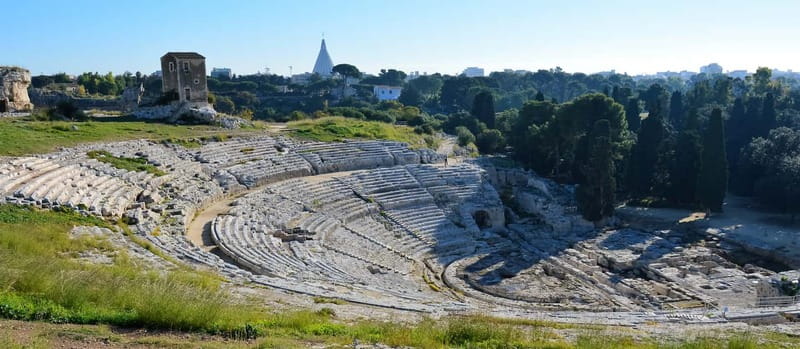
The park includes the Greek Theater, Roman Amphitheater, Paradise Latomia, and Ear of Dionysius. Each place tells a different story. Together, they show how Syracuse used stone, performance, religion, and public spectacle to express power.
The headset is a useful inclusion. Open-air sites can be noisy, and a private guide may still need to speak while you are standing several paces away or looking in another direction. You are less likely to miss an explanation while taking photographs.
The Greek Theater and its Ionian Sea views
The Greek Theater is one of the tour’s main anchors. Your guide can explain its role in Greek public life, including the connection between architecture, performance, civic identity, and religious practice.
The theater is also one of the best places for a wide view toward the Ionian Sea. Take a moment here instead of treating it as a quick photo stop. The setting helps explain why this site was more than a building for entertainment. It was part of a powerful city with a commanding position in the eastern Mediterranean.
The tour information allows about three hours for the complete experience, not three hours at the Greek Theater alone. Your guide will need to divide time among several places. If you want to linger at every monument, tell the guide early. A private group has more flexibility than a large scheduled outing, but the route still covers a lot.
Paradise Latomia and the Ear of Dionysius
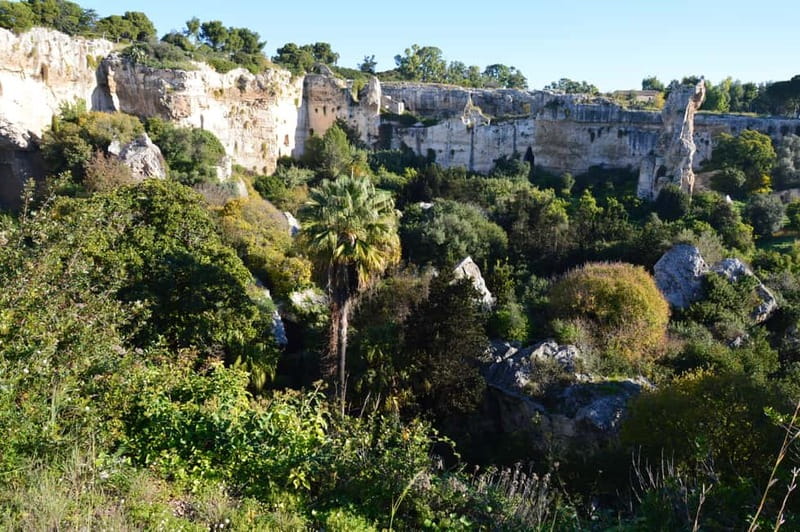
The Paradise Latomia is an ancient stone quarry, now a dramatic open space within the park. It helps you understand where much of Syracuse’s building material came from and how excavation changed the city’s underground and outdoor spaces.
The Ear of Dionysius is the best-known feature in this part of the park. Its unusual shape makes it memorable, but the guide’s explanation is what gives the site meaning. This is a place where geology, engineering, local legend, and the history of Syracuse meet.
I would pay close attention here rather than rushing through for a photograph. The point is not only the shape of the cavern. The guide can help separate what is established from what belongs to later storytelling, while placing the quarry in the larger story of the city.
The park is not a flat museum floor. You should expect outdoor walking and some uneven ground. Comfortable shoes are essential, and the advice to bring water and a hat is practical, especially in warm weather.
A few more things to do in Sicily
- Agrigento: Valle dei Templi Fast-Track Ticket & Smart Guide
★ 4.1 · 344 reviews - Agrigento: Valley of the Temples Entry Ticket & Audio Guide
★ 4.1 · 268 reviews - Colosseum, Roman Forum & Palatine Guided Tour
★ 4.7 · 63,148 reviews - Vatican Museums, Sistine Chapel & St Peter’s Basilica Guided Tour
★ 4.5 · 39,149 reviews
Two theaters, two views of public life
The experience includes the ancient Greek Theater and Roman Amphitheater. They are not interchangeable sights.
The Greek Theater reflects Syracuse’s Greek foundations and its connection to drama, ceremony, and civic life. The Roman Amphitheater points to a different tradition of public spectacle and a later period of control. Seeing both helps you compare how public buildings served changing rulers and audiences.
This is one of the strongest reasons to take a guide. Without explanation, the ruins can blur together. With a clear account of dates, uses, and architectural choices, the two structures become separate chapters in the city’s story.
The guide may also connect the monuments to Syracuse’s long sequence of Greek, Roman, Arab, and Spanish influence. Several guides have been praised for making those shifts clear, while keeping the walk lively enough for teenagers and younger children.
Crossing to Ortigia and the Temple of Athena
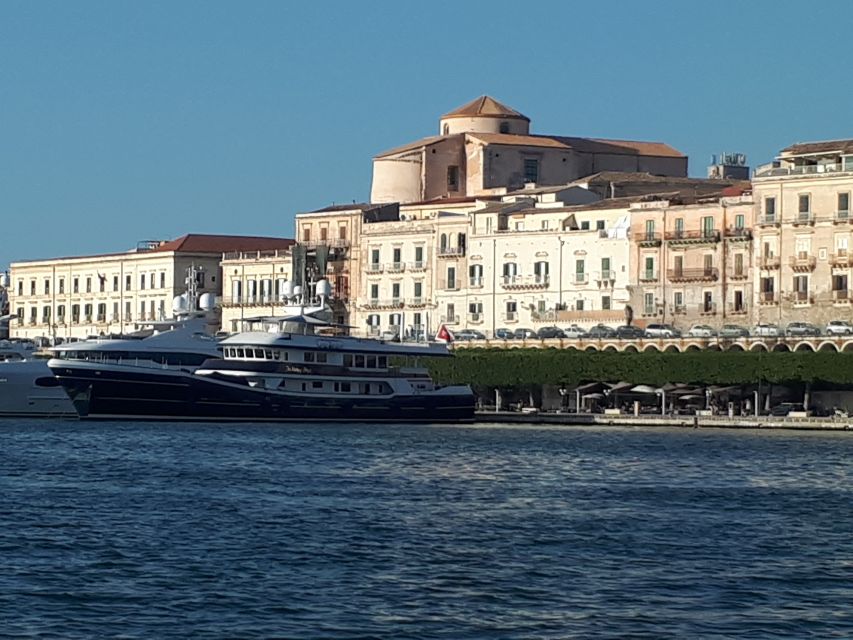
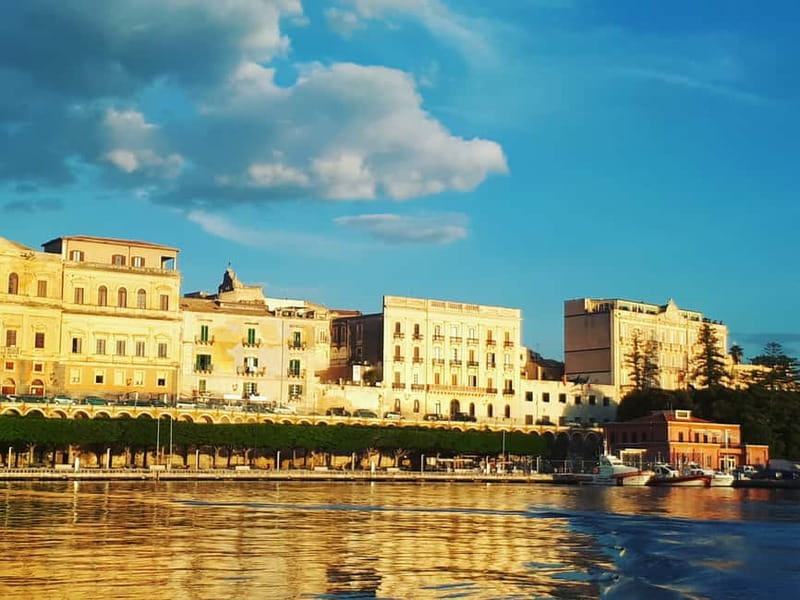
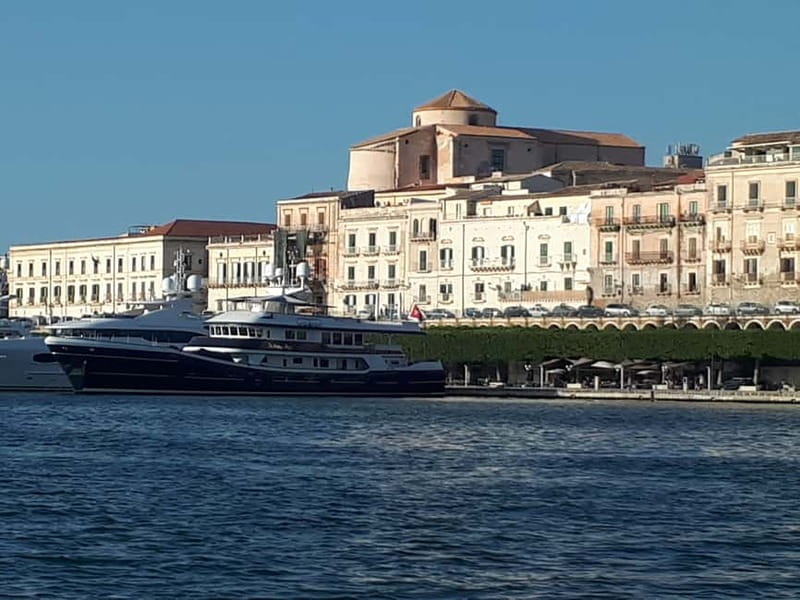
The second half focuses on Ortigia, Syracuse’s gorgeous lime-white island and historic center. The streets form a maze, and that is part of the pleasure. A guide gives you a sense of direction while pointing out details you might otherwise pass without noticing.
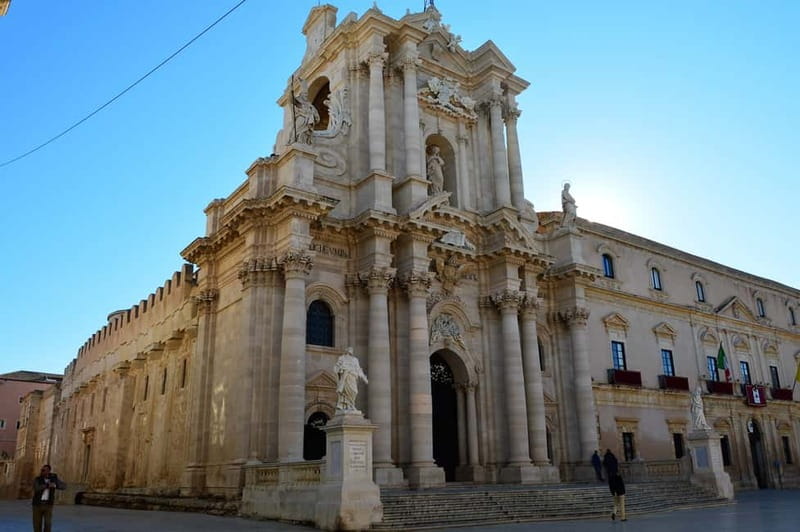
The Temple of Athena is a key stop. Its remains are incorporated into the Cathedral of Syracuse, making the building a striking example of one structure absorbing another. You are not looking at a separate ancient temple standing untouched in an empty field. You are seeing how later residents reused a sacred site.
This is one of the tour’s most valuable lessons: history in Syracuse is visible because it was built over, adapted, and preserved in layers. Greek columns and Christian architecture occupy the same building, and the guide can explain the different architectural styles rather than presenting the Cathedral as a single-period monument.
The itinerary gives about 30 minutes for the Temple of Athena stop, including a photo stop and guided visit. That is enough for an explanation and photographs, though anyone hoping for a long interior visit should ask how the time is being divided on the day.
The Cathedral of Syracuse and changing faiths
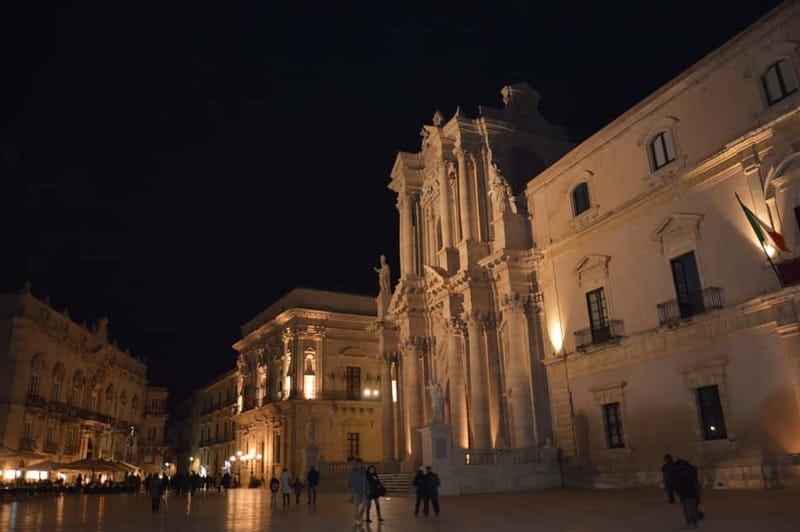
The Cathedral is the visual centerpiece of Ortigia. Its importance comes from both its beauty and its structure. The building incorporates the pagan Temple of Athena, so it offers a direct lesson in how religious buildings can change purpose while retaining older material.
Your guide will discuss its different architectural styles and the religious practices connected with the site. This makes the Cathedral more than a pretty facade. You can look for the points where Greek origins and later Christian construction meet.
I particularly like this part of the route because it turns a familiar sightseeing question into a useful one: what survives when a city changes religion and rulers? In Syracuse, the answer is often visible in the walls.
The walk through Ortigia also adds a human scale that the archaeological park lacks. After the broad stone spaces of Neapolis, the narrow lanes and pale buildings feel closer and more intimate. The guide can keep you oriented while explaining the island’s long sequence of cultural influences.
Guides, languages, and the private-group advantage
The experience offers English, French, Italian, Russian, Spanish, and German. Guides named in the tour information include Anna, Giuseppe, Marcelo, Laura, and Rosanna, though the person assigned to your booking can vary.
The most highly praised quality is clear, energetic storytelling. Anna is described as patient, professional, and strong on local history, architecture, and art history. Giuseppe is noted for interactive stories, legends, and a lively approach that worked well with teenagers. Marcelo is especially associated with archaeology and the full sweep of Syracuse’s history.
That variety matters because this is not a tour where the monuments explain themselves. A guide who simply recites dates would waste the setting. You want someone who can connect the Temple of Athena to the Cathedral, then connect the Greek Theater to the city’s wider role.
A private group of up to five is also a real benefit. You can ask about a detail, slow down for a child, or request clarification without holding up a busload of people. One account describes a group of four older walkers receiving a slower, more accommodating pace. That does not guarantee a custom itinerary, but it shows why the format can work well for mixed abilities.
Timing, walking comfort, and practical limits
The advertised duration is three hours. The route covers both the archaeological park and Ortigia, so plan for steady walking. Some past tours have lasted three and a half or even more than four hours, but you should treat that as an occasional extension, not part of the promise.
Wear comfortable shoes. Bring a hat and a bottle of water. Those simple preparations matter more here than stylish footwear or a heavy day bag.
The tour can accommodate children of all ages, and the guide is expected to involve both adults and children. It is a good choice for families who want historical context without committing to a full-day museum program. Younger children may still find three hours of ruins demanding, so carry water and use the private format to request short pauses.
The activity is wheelchair accessible, but the route includes an archaeological park and historic streets. If your group has specific mobility needs, confirm the exact path and access details before booking.
Weather can affect the experience. One tour continued through a sudden rainstorm in Ortigia, with the guide keeping the group engaged. Still, a hat and water help in sun, and a light rain layer is sensible when the forecast is uncertain.
Is $317.20 good value for up to five?
At $317.20 per group, the cost works out to about $63.44 per person for a full group of five, before entrance fees. For two people, it is about $158.60 each. That makes the tour much better value for a family or small party than for a solo visitor.
The price includes a licensed guide and headset, but not admission to the monuments, food, drinks, or transport. The archaeological park admission has been listed at about 13 euros per person, so add that to your budget.
The value comes from coverage and attention. You get the Neapolis park and Ortigia in one guided route, with the chance to ask questions throughout. A private guide can also help you make sense of the city’s complicated chronology, something that is difficult to do from signs alone.
It is less compelling if you want a cheap orientation walk or plan to visit only one area. You might prefer to explore Ortigia independently and buy your own park ticket. The private tour earns its price when you care about interpretation, want both major zones covered, or are traveling with three to five people.
Who should book this Syracuse walk?
I would choose this tour if you have limited time in Syracuse and want the main ancient sites explained in one outing. It also suits first-time visitors who want a clear framework before returning to a favorite place on their own.
Families should consider it, especially with older children and teenagers. The interactive storytelling, legends, and ability to ask questions can keep the ruins from feeling abstract.
It is also a good match for history and architecture fans. The Temple of Athena inside the Cathedral, the contrast between Greek and Roman theaters, and the succession of Greek, Roman, Arab, and Spanish influences give the tour real substance.
You may want a different plan if you dislike walking, want a slow photography-focused visit, or are trying to keep costs as low as possible. The route is full, and the entrance fee is extra. Ask about the pace if anyone in your group walks slowly.
Should you book the Ortigia and Neapolis tour?
Book it if you want Syracuse explained rather than simply photographed. The strongest part is the combination of Neapolis Park and Ortigia, where Greek foundations, Roman monuments, and later Christian architecture appear within one city.
The private format makes the $317.20 price easier to justify for up to five people. Choose it especially if you can request a guide such as Anna or Giuseppe, though assignments are not guaranteed. Bring water, wear good shoes, budget separately for admission, and confirm the exact end point because the activity information lists both Ortigia and Neapolis as possible drop-off locations while also describing the meeting point as the return point.
FAQ
How long does the Syracuse tour last?
The advertised duration is three hours. Starting times vary, so check availability when booking.
Where does the tour start?
The stated meeting point is the Biglietteria Parco Archeologico Neapolis on Via Luigi Bernabò Brea in Syracuse. Your guide meets you at the ticket office with a sign showing the local partner’s name.
Which sites are included in the route?
The route covers Neapolis Archaeological Park and Ortigia. Main sights include the Greek Theater, Roman Amphitheater, Paradise Latomia, Ear of Dionysius, Temple of Athena, and Cathedral of Syracuse.
Are entrance fees included?
No. Admission fees are separate from the tour price. The archaeological park admission has been listed at about 13 euros per person.
What languages are available?
The tour is offered in English, French, Italian, Russian, Spanish, and German.
Is this a private tour?
Yes. The booking is for a private group of up to five people.
Is the tour suitable for children and wheelchair users?
Children of all ages can join, and the guide can involve both parents and children. The activity is listed as wheelchair accessible, but you should confirm route details if your group has specific mobility requirements.
Just added in Sicily
- Taormina and Castelmola Tour from Messina★ 5.0 · 645 reviews
- 2,5-Hour Messina Walking Tour★ 4.5 · 291 reviews
- From Messina : Taormina-Castelmola, dreamlike views!★ 5.0 · 204 reviews
- Full Day Taormina and Castelmola Tour with Messina Shore Excursion★ 4.5 · 237 reviews
- Private Tour explore Vulcano Island by Kayak & Coasteering★ 5.0 · 338 reviews
- Wine tasting THE CLASSICS★ 5.0 · 287 reviews
- Stromboli: sunset trekking to Sciara del Fuoco – Ashàra★ 4.5 · 270 reviews
- Quad Tour Excursion from the Castle to the Sea★ 5.0 · 194 reviews
Walking Tours, compared.

Guided Walking Tour & Last Supper Visit with Ticket
Read our review →
Rialto Bridge & Offbeat Unusual Venice Walking Tour
Read our review →
Private 3 hrs Venice Tour: St Mark’s, Walking tour & Boat tour
Read our review →
Skip the line: Uffizi and Accademia Small Group Walking Tour
Read our review →Browse the lists this tour appears in