
Reviewed · FOOD & DRINK
Sorrento: Guided Walking Tour & Limoncello Tasting
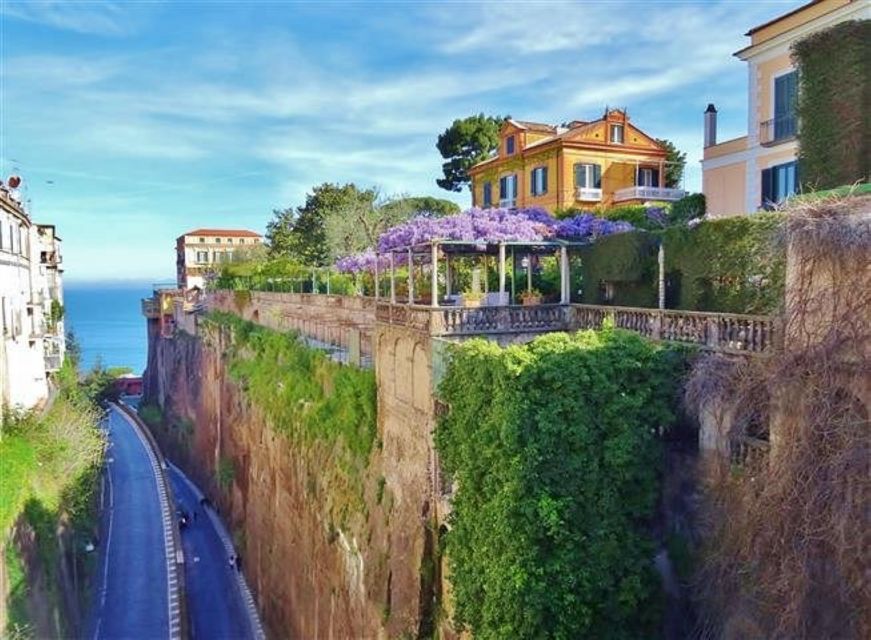
Sorrento’s best introduction may begin with a deep, overgrown valley in the middle of town. Vallone dei Mulini is a surprising first stop, where old mill buildings and the shape of the land explain why Sorrento developed as it did. From there, this two-hour walk threads through lanes, churches, craft shops, and sea views before finishing with a tasting of local liqueurs.
I like the way the tour links ordinary-looking streets to the city’s past, and I like the local focus on Sorrento inlay, a detailed woodwork tradition you might otherwise miss. Guide Mario is repeatedly praised for his clear explanations, easy manner, and affection for his home city. The main consideration is that limoncello is the closing accent, not the main event, so this suits you best if you want history and architecture as much as a drink.
Key points at a glance

- Vallone dei Mulini: Start with one of Sorrento’s most unusual sights and learn how the valley and old mills shaped the town.
- A local guide’s view: Mario, who grew up in Sorrento, gives the walk a personal sense of place and offers useful food and drink tips.
- Three kilometers at an easy pace: The walk is generally slow, with pauses for explanations, photos, and questions.
- Sorrento’s old-town details: See Via San Cesareo, Sant’Antonino Square, San Francesco Cloister, and Sedil Dominova.
- Bay of Naples viewpoint: Villa Comunale provides the tour’s clearest sea panorama and a good photo stop.
- Limoncello with context: Visit a small lemon garden, learn how the liqueur is made, and sample organic Sorrento products.
Why this is a smart first look at Sorrento

Sorrento can feel easy to understand at first. You have a main square, a busy shopping street, lanes leading toward the water, and a steady stream of people moving between hotels, restaurants, and ferries. But the town’s best details are tied to older layers: Greek and Roman roots, religious traditions, old civic buildings, lemon growing, and the steep valleys cut into the plateau.
This walk gives you that framework before you set off on your own. I especially like it for the first day of a stay, when you want to get your bearings without spending half a day on a formal museum tour. One visitor used a late afternoon time slot on arrival day and found it useful for deciding where to return later. Another practical tip is to choose an earlier time if you can, particularly during the busiest cruise-ship days.
The route covers about 3 kilometers and moves at an easy, fairly slow pace. You will stop often, so this is not a forced march through a checklist of sights. Still, the route includes some hills and steps. The town is not flat, and sections toward the port can be tiring if you have trouble walking.
Other eating and drinking in Sorrento:
- Sorrento Farm and Food Experience including Olive Oil, Limoncello, Wine tasting
★ 5.0 · 2,524 reviews - Pizza School with Wine and Limoncello Tasting in a Local Farm
★ 5.0 · 845 reviews - Sorrento: Farm Tour with Cheese Tasting & Pizza Making Class
★ 5.0 · 503 reviews
Meeting Mario at the edge of the old town
The meeting point is Piccadilly Pub on Via Fuorimura 1. Stand directly in front of the pub entrance, not across the street or to the side. The guide is identified by a red sports cap.
This detail matters because the guide arrives at the scheduled start time, not early. You are asked to arrive a few minutes ahead, but you should not expect someone to be waiting there well in advance. A few people have felt uncertain during that gap, so arrive at the exact location and allow yourself time to check the street address.
Mario is the guide most often named in the feedback, and he is a useful fit for this kind of tour. He grew up in Sorrento and speaks English. His strength is not simply naming buildings. He puts them into a time line, explains why they matter, and answers questions without making the walk feel like a lecture.
The tour ends at Campaniadamare, rather than returning to the pub. Keep that in mind when planning lunch, a ferry connection, or your next stop.
Vallone dei Mulini gives Sorrento its oddest opening
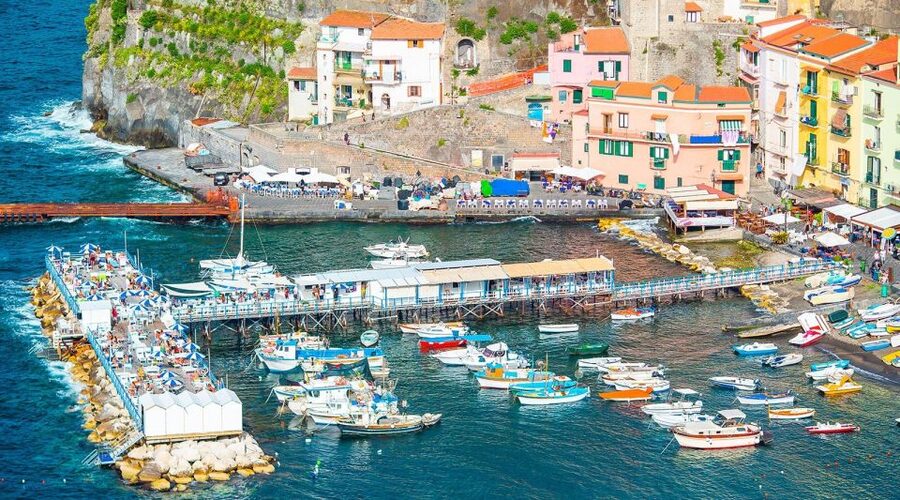
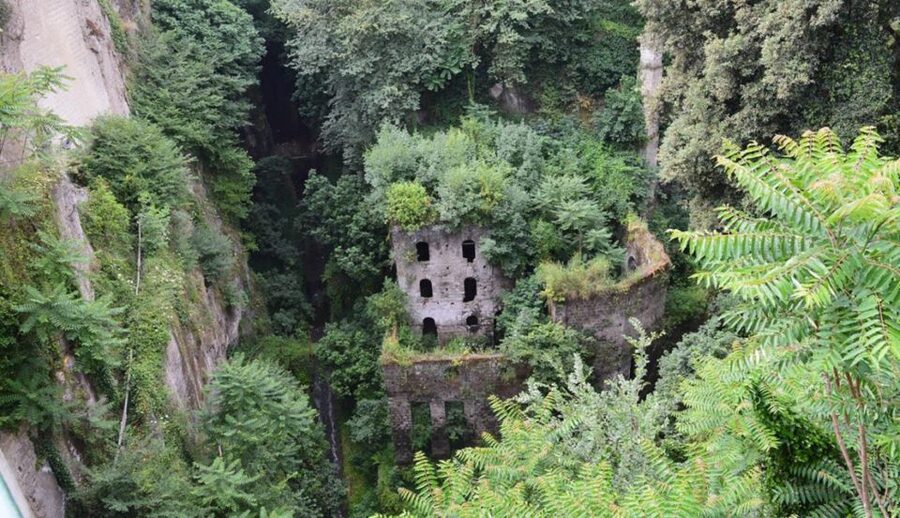
The first major stop is Vallone dei Mulini, visited for about 15 minutes. This is one of Sorrento’s most memorable views because an old industrial site sits inside a dramatic natural cut, surrounded by thick plant growth and the steep sides of the valley.
Here you hear about Sorrento’s geomorphological formation and the mills that once used the valley. The point is bigger than a quick photo. The valley helps explain how water, stone, and settlement shaped the city, and it gives you a physical sense of the town’s unusual position above the coast.
The view is generally from above rather than an extended walk down into the valley. That makes it a manageable stop, though you will want to pay attention near viewpoints and keep your camera ready. This is also where a local guide adds real value, since the remains are easy to pass without understanding what you are seeing.
Via San Cesareo and the old center
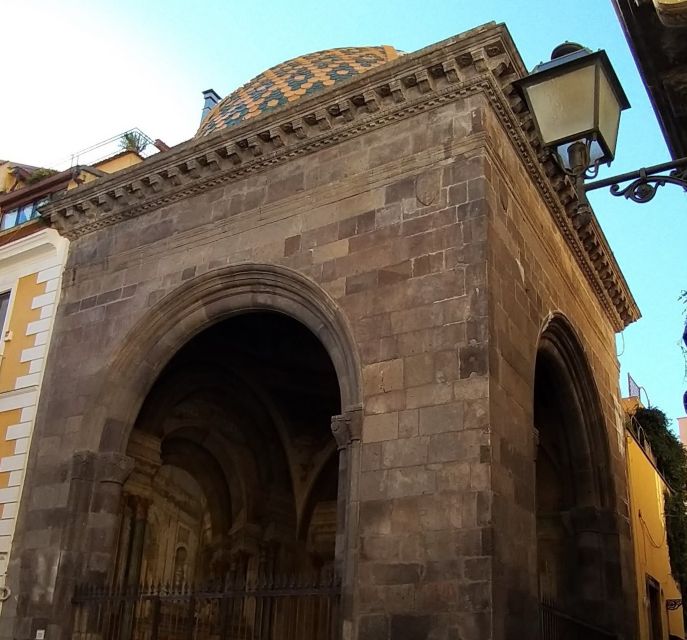
The walk then enters Via San Cesareo, described as Sorrento’s oldest street. It is narrow, traditional, and lined with small artisan shops. This is the part of the route where you get a feel for Sorrento as a lived-in town rather than just a scenic stop.
You will hear about local customs, old buildings, and the way the center developed. The street can be busy, and shop doors open directly onto the walking route, so keep your pace relaxed. The reward is detail: a craft display, a small architectural feature, or a lane you might have ignored without someone pointing it out.
The tour also explains Sorrento’s wood inlay, one of the city’s signature arts. This is a useful inclusion because inlay objects appear in shops throughout town, yet it is easy to see them only as souvenirs. The guide explains the tradition and the production method, giving you a better basis for judging what you see and buy later.
Other walks around Sorrento:
- Milan: Guided Walking Tour & Last Supper Visit with Ticket
★ 4.7 · 5,409 reviews - Naples: Street Food Walking Tour with Local Guide
★ 4.8 · 4,256 reviews - Venice Walking Tour and Gondola Ride
★ 3.5 · 3,630 reviews - Venice: Rialto Bridge & Offbeat Unusual Venice Walking Tour
★ 4.2 · 3,538 reviews
Sant’Antonino Square and local religious tradition
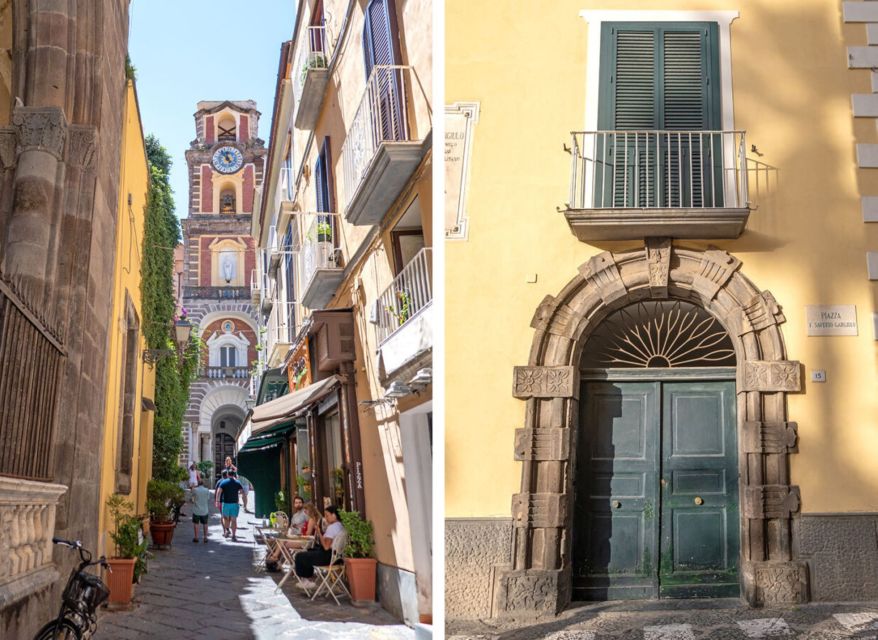
Sant’Antonino Square is named for Sorrento’s patron saint. The stop covers the story of his life and miracles, placing the square and its church within the city’s religious identity.
This section will appeal most if you enjoy the way local legends, faith, and public spaces overlap. It is not a quick photo opportunity followed by a sprint to the next stop. The guide gives you a historical and cultural frame, which helps explain why Sant’Antonino remains such an important figure in Sorrento.
If your interest is limited to food and scenery, this may feel slower than expected. The tour is clear about its priorities: it aims to explain the city’s art, history, and monuments, with the tasting as a pleasant break at the end.
The San Francesco Cloister is a quiet change of pace
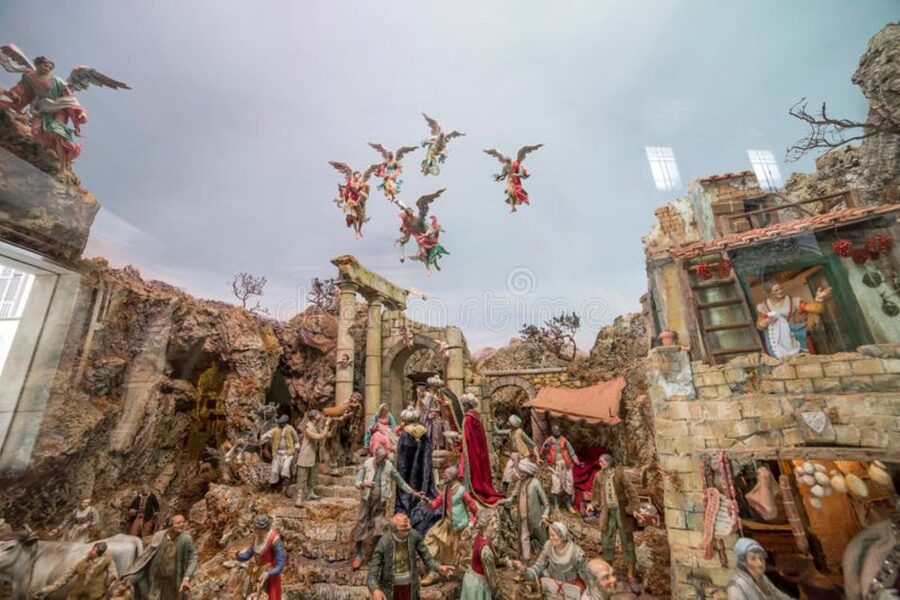
The 13th-century Chiostro di San Francesco, or San Francesco Cloister, is one of the oldest and most attractive buildings on the route. Its arcades and calm interior offer a welcome pause from the narrow central streets.
The visit is planned for about 15 minutes. That is enough time to look around, take photographs, and hear why the former Franciscan convent matters, without turning the tour into a long religious-art visit.
The cloister is a good example of the tour’s balance. You see a scenic site, a working street, a religious building, and civic architecture in a short period. The experience is strongest when you treat the route as an introduction rather than a detailed study of each monument.
Villa Comunale brings the Bay of Naples into view
Villa Comunale is Sorrento’s public park above the sea and the best photo stop on the walk. From here, you look out toward the Gulf of Naples, with the coastline and water opening up beyond the town.
I would not rush this stop. The guide allows time for photos and questions, and the view gives you a useful sense of Sorrento’s setting after the tighter streets of the old center. It also helps you understand why the town works so well as a base for seeing the surrounding coast.
Weather makes a difference here. A clear day gives you the strongest views, while rain can reduce the appeal of the viewpoint and make the stone surfaces slippery. Bring water and an umbrella or rain gear. In heavy rain, thunderstorms, or hail, the operator may cancel the activity and issue a full refund.
Sedil Dominova reveals Sorrento’s civic past

Sedil Dominova is an old meeting place and former parliament, one of Sorrento’s most distinctive civic buildings. The stop lasts about 10 minutes, but it adds an important piece to the story.
It shows that Sorrento’s history is not limited to churches and tourist streets. The town also had its own civic institutions and social structure. The guide explains how the building fits into the city’s older public life, giving you another way to read the center as more than a collection of pretty façades.
Lemon gardens and the tasting at the finish

Near the end, you visit a small lemon garden and learn how Sorrento lemons are grown and how limoncello is produced. This is where the tour connects a familiar product to its local setting.
The tasting takes place at a partner shop and includes traditional organic limoncello made with certified organic lemons from the Amalfi Coast. You may also sample limoncello cream, pistachio cream, and cantaloupe melon cream. The portions are deliberately small, roughly half a normal bar serving, since you taste several products with a high alcohol content.
That detail is worth knowing. This is not a long drinking session or a free-flowing aperitivo. It is a short tasting intended to help you compare the products and understand their qualities. You can buy bottles afterward, but purchasing is not required, and the tasting is not presented as a hard-sell stop.
Some people come mainly for limoncello and may find the tasting brief for the price. I see it as the final piece of a walking tour, not a stand-alone food activity. The value comes from learning about the lemons and production before tasting the finished drink.
The optional package may also include food and olive oil tasting. Check the selected option carefully when booking, since those items are not included in every version.
Is $41 a fair price?
At $41 per person, this is not the cheapest way to spend two hours in Sorrento. You can walk the same streets on your own for nothing, and you can buy limoncello separately. The real question is how much you value a local explanation of what you are seeing.
For that price, you get a live English-speaking guide, roughly 3 kilometers of walking, several of the city’s key historic stops, scenic viewpoints, a lemon garden visit, and a tasting. I think the value is solid if this is your first visit or if you want the town to make more sense before exploring independently.
The value is weaker if you mainly want a generous tasting, a relaxed drink, or a food tour. The liqueur samples are small, and the guide spends much more time on history and architecture than on tasting notes.
The strongest praise is directed at Mario’s local knowledge, calm pace, clear explanations, and willingness to answer questions. He also gives recommendations for food and drink, which can be useful when you are deciding where to eat later. A previous visit to Sorrento does not automatically make the tour unnecessary. The route can still reveal details you walked past before.
Practical advice before you book
Wear comfortable shoes with a good grip. Although the pace is slow, the route includes hills and steps, and rain can make the walking surfaces harder.
Bring water, an umbrella, and rain gear. Do not bring oversize luggage, bikes, or an electric wheelchair. The activity is not suitable for people with mobility impairments, heart problems, or hearing impairments.
Be on time. If you are more than 10 minutes late, the group may have moved to another part of the city and the guide may not be able to reconnect with you. If a delay or unexpected problem occurs, use the activity provider’s messaging service rather than relying on an international phone call.
The walk may change if rain, a religious event, an institutional event, or a temporary closure affects the route. The duration and general quality remain the same, with another point of interest used when needed.
Who should book this Sorrento walk?
Book it if you want a clear introduction to Sorrento’s old center, enjoy hearing local stories, and like scenic views balanced with monuments and craft traditions. It is especially useful at the start of a stay, when you can return to places that catch your interest.
Skip it if you want a dedicated tasting, a private car tour, or a route with no steps. You should also think twice if history and architecture are not part of your holiday plans.
For most visitors who want to understand Sorrento rather than simply pass through it, this is a well-shaped two-hour introduction. The small tasting at the end is a nice reward, but the real reason to book is the chance to see the city through Mario’s local perspective.
FAQ
How long is the Sorrento walking tour?
The tour lasts two hours and covers approximately 3 kilometers at an easy, fairly slow pace, with pauses for explanations and photos.
Where does the tour start?
It starts in front of Piccadilly Pub at Via Fuorimura 1. The guide wears a red sports cap and arrives at the scheduled start time.
Where does the tour finish?
The tour finishes at Campaniadamare.
What liqueurs are included in the tasting?
The tasting includes organic Sorrento limoncello. You may also sample limoncello cream, pistachio cream, and cantaloupe melon cream.
Is hotel pickup included?
No. Hotel pickup and drop-off are not included, so you must make your own way to Piccadilly Pub.
Is the tour suitable for people with mobility problems?
No. The route is not suitable for people with mobility impairments and includes some hills and steps. Comfortable shoes are recommended.
Just added in Sorrento
- The Three Tenors in Sorrento: Opera Arias, Naples and Songs★ 4.8 · 327 reviews
- Sorrento: Lemon Garden Tour with Marmalade Tasting★ 4.6 · 405 reviews
- From Sorrento: Amalfi Coast Full-Day Trip by Boat★ 4.8 · 367 reviews
- SORRENTO: Pizza School Mastering Neapolitan Delights★ 4.9 · 201 reviews
- From Sorrento: Capri Island Day Trip with Boat Cruise★ 4.7 · 469 reviews
- Sorrento: Pizza Making Class at Tirabusciò Cooking School★ 4.8 · 188 reviews
- Sorrento: Sightseeing Cruise with Limoncello Tasting★ 4.0 · 224 reviews
- From Sorrento: Path of the Gods Guided Hike with Transfers★ 4.8 · 530 reviews
Food & Drink, compared.

Tuscany & Montepulciano Day Trip with Lunch & Wine Tasting
Read our review →
Winner 2025 Rome Twilight Trastevere Food Tour by Eating Europe
Read our review →
SMALL-GROUP Wine Safaris: Tuscan Wine Tasting Tours from Florence
Read our review →
Winner 2025 Florence Sunset Food & Wine Tour by Eating Europe
Read our review →
San Gimignano, Siena, Monteriggioni, Chianti Day Trip with Lunch & Wine Tasting
Read our review →

Mount Etna Morning or Sunset Day Trip with Tasting
Read our review →Browse the lists this tour appears in