
Reviewed · WALKING TOURS
Private Florence Tour: 3-Hour Walking Tour with a Licenced Guide
Florence’s biggest sights are packed into a walkable center, but their stories are not always easy to spot. This private tour connects the Duomo, Medici landmarks, Dante’s neighborhood, Piazza della Signoria, and Ponte Vecchio into one clear three-hour route, with guide Irina bringing the streets and buildings into focus.
I like the private format, since you can ask about art, food, leather goods, restaurants, or anything else that catches your eye. I also like the stop at the Santa Maria Novella pharmacy, where the old frescoed rooms and monk-made perfumes offer something different from the usual church-and-palace circuit.
The main thing to understand before booking is that this is chiefly an outdoor walking tour. Most churches and museums are viewed from outside, so you should not book it expecting timed admission to the Duomo, Medici Chapels, or Palazzo Vecchio.
Key points to know before you book
- A smart first look at Florence: The route links the city’s major landmarks in a compact three-hour walk.
- Irina is the featured guide: She explains art, architecture, ruling families, and everyday Florence in an engaging way.
- The pharmacy is the unusual stop: You enter the historic Officina Profumo Farmaceutica di Santa Maria Novella and learn how perfume developed there.
- It is private and flexible: Only your group takes part, so the pace and conversation can suit your interests.
- The route ends at Ponte Vecchio: You finish beside the Arno, well placed to continue exploring on your own.
- Entry is limited: The churches, chapels, palaces, and museums are generally exterior stops, not included admissions.
Why this three-hour walk works well in Florence
Florence can feel confusing at first. The streets are compact, the crowds gather around the same famous buildings, and a small detail on a doorway may connect to a powerful family, a major artist, or a turning point in European culture.
This walk gives you a useful framework. You begin near Santa Maria Novella railway station and finish at Ponte Vecchio, crossing the historic center on foot. Along the way, Irina ties together the Medici family, Renaissance artists, Florentine religion, Dante, local wine, and the city’s political life.
I like this approach for a first day in town. You see the landmarks quickly, but the tour is not just a checklist. Irina uses stories, visual aids, and details that can be easy to miss when you walk alone. That makes the tour useful even if you plan to visit museums later.
The private setting matters. You can ask for more art, more family history, or more practical help with restaurants, gelato, leather goods, and the rest of your Florence plans. The pace can also be adjusted. One family found the walk suitable for elderly parents, while another tour continued during heavy rain with a change of plans.
At $219.97 per person, this is not a budget walk. The value depends heavily on your group size and priorities. For a couple or a small family, the cost buys a dedicated guide and a tailored conversation rather than a standard group script. If your main goal is to enter several museums, however, you will need to budget separately for tickets and perhaps arrange a different tour.
Other walks around Florence:
- Florence: Guided Walking Tour
★ 4.5 · 3,334 reviews - Skip the line: Uffizi and Accademia Small Group Walking Tour
★ 4.5 · 3,135 reviews - Florence: Guided Walking Tour
★ 4.6 · 1,602 reviews
Santa Maria Novella and Florence’s historic pharmacy
The meeting point is at Fratellanza Militare Firenze, beside Piazza di Santa Maria Novella. This is a practical place to begin because the square is close to the main train station and serves as a natural gateway into central Florence.
The first major sight is Santa Maria Novella, one of Florence’s most important churches. On this walk, you admire it from the outside rather than taking a full church visit. Even so, the setting gives Irina a strong starting point for explaining Florence’s religious and artistic story.
The unusual highlight comes next at the Officina Profumo Farmaceutica di Santa Maria Novella. The pharmacy was created by monks from the nearby church and is counted among the oldest pharmacies in the world. You step into its historic rooms, see frescoed interiors, smell its fragrances, and learn how perfume developed in this setting.
This stop adds welcome variety. After several grand façades, you enter a quieter interior with a direct link to monastic life, medicine, and scent. It is also a good sensory break from the usual art lecture. Allow about 20 minutes here.
Admission is listed as free, but the visit is still part of the guided route rather than an open-ended shopping stop. If you enjoy historic shops and unusual local institutions, this may be the most distinctive part of the morning.
Palazzo Antinori and the city’s wine families
The route then passes Palazzo Antinori, the historic home of the Antinori family, one of Tuscany’s best-known wine producers. You look at the palace from outside and hear stories about the family and Tuscan wine.
This is a short stop, about 10 minutes, so do not expect a wine tasting. Its value is context. Florence’s powerful families were not only patrons of painters and architects. They also built fortunes through trade, banking, agriculture, and wine.
I find these brief stops useful because they prevent the tour from becoming a parade of famous names without explanation. The Antinori palace helps connect Florence’s grand buildings to the families who lived in them and to the economic forces that shaped the city.
Medici Chapels, San Lorenzo, and the family that shaped Florence
Next comes the exterior of the Medici Chapels, the burial place of members of the family that dominated Florence for generations. The chapels are closely tied to the city’s art and power, so even a short explanation here helps you understand why the Medici name appears everywhere.
You then admire San Lorenzo, described as Florence’s first cathedral and a church sponsored by the Medici clan. The church area is one of the clearest places to see how religion, family prestige, and public life overlapped.
The itinerary does not include entry to the chapels or the church. That is an important planning detail. If you want to see the Medici tombs, sculpture, or interiors, arrange a separate visit and check opening information for your date.
Still, the exterior walk can be valuable before a museum visit. Irina can explain what you are looking at, who paid for it, and how it fits into the city’s story. On a rainy day, one tour changed plans and spent more time inside the Medici Chapel, which became a particularly rewarding part of that outing. You should not count on that adjustment, but it shows that the private format can help when weather disrupts the original route.
A few more things to do in Florence
- Cinque Terre and Pisa Tower Tour from Florence Semi Private
★ 5.0 · 1,406 reviews - From Florence: Private Chianti Hills Tour with Tasting
★ 4.3 · 809 reviews - Private Self-Guided E-Bike Ride in Tuscany with Vineyard Visit
★ 5.0 · 775 reviews - Florence Private Transportation in Rickshaw
★ 5.0 · 730 reviews
Medici Palace and a glimpse of Renaissance court life
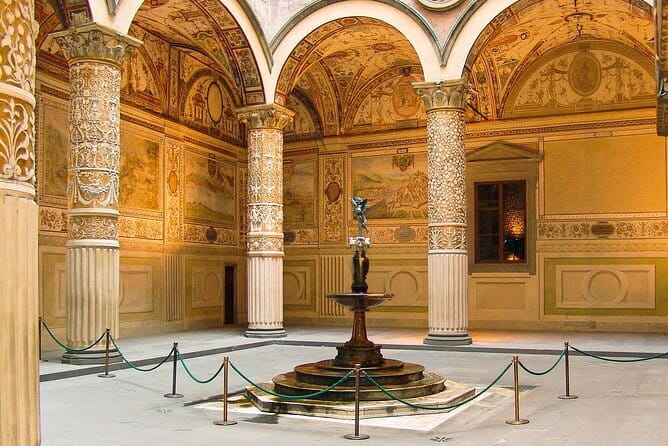
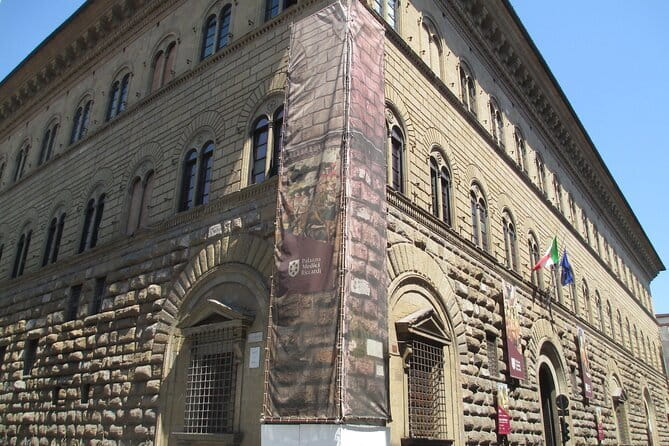
The Medici Palace was the first major residence of Florence’s ruling family. From outside, you learn about the building and imagine Michelangelo living there under the protection of Lorenzo the Magnificent.
If the gates are open, the tour may include a look into the courtyard and Medici garden. This is not guaranteed, so treat it as a possible bonus rather than a promised admission.
The palace is a strong stop for understanding the Medici as real people, not just names attached to churches and statues. The building shows how a family’s home could also function as a statement of power, taste, and political influence.
I would pay close attention here if you enjoy Renaissance personalities. The stories about Michelangelo, Lorenzo, and the young artists supported by the Medici make the period easier to picture. For children and pre-teens, personal stories can also make the history easier to follow than a list of dates.
The Baptistery and Brunelleschi’s famous dome
The walk continues to the Baptistery of San Giovanni in one of Florence’s most beautiful squares. The Baptistery is described as the oldest building in the city, and its famous Gates of Paradise provide an opening to discuss Florentine sculpture and the skill of Renaissance artists.
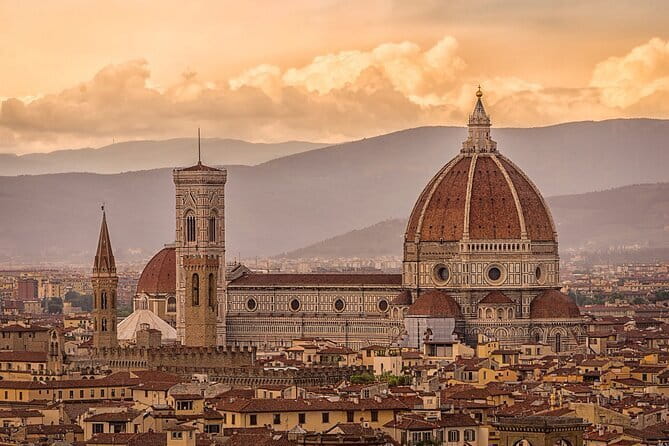
From here, you admire Santa Maria del Fiore, better known as the Duomo. The cathedral’s flower-shaped plan and Brunelleschi’s enormous masonry dome make it the visual center of Florence.
This is one of the tour’s strongest outdoor viewing points. The Duomo area can be crowded and noisy, especially around the busiest parts of the day, so having a guide point out the building’s design and construction gives you something to focus on beyond taking a photograph.
Again, the cathedral is an exterior stop. You do not climb the dome or enter the cathedral as part of the standard three-hour walk. If the dome climb is on your Florence wish list, you need a separate ticket and reservation.
The guide can still give you a useful introduction before you tackle the complex on your own. That is one reason I would take this tour early in a stay. You gain a map of the city and a clearer sense of which major interiors deserve your remaining time.
Dante’s district and the small church tied to his story
The route leaves the grandest squares for a time and enters Dante’s district. You see Dante’s tower-house from outside and enter a church said to be about 1,000 years old, the place where the father of the Italian language met the love and muse of his life.
This portion gives the walk a more personal feel. Florence is not only domes, palaces, and famous statues. It is also narrow streets, old houses, and stories tied to a single person’s life.
The Dante stop also helps explain Florence’s cultural importance. The city’s language became the basis of modern Italian in large part through Dante’s work. You may find this part especially appealing if you like literature, local legends, or the quieter corners between major sights.
The itinerary does not give the church’s name or promise a full interior visit beyond entering the old church. It is best to treat this as a brief story-filled stop rather than a long church tour.
Piazza della Signoria and Florence’s open-air sculpture collection
Piazza della Signoria is the political center of Florence and one of the walk’s most rewarding public spaces. Here you see Palazzo Vecchio, a medieval fortress that served as a government palace, Medici residence, and prison for dangerous criminals.
The square also works like an open-air museum, filled with original sculptures connected to Renaissance art. You can study the statues while Irina explains what the square meant to Florentine politics.
This is another exterior visit, with about 10 minutes specifically set aside for the piazza. The time may feel short if you want to examine every sculpture, but the guide can help you concentrate on the most important details.
Palazzo Vecchio is not entered on the standard route. If you want its grand rooms and museum displays, plan another visit. The outside alone, though, gives you a strong sense of how public power was displayed in Florence.
Ponte Vecchio and the end of the route
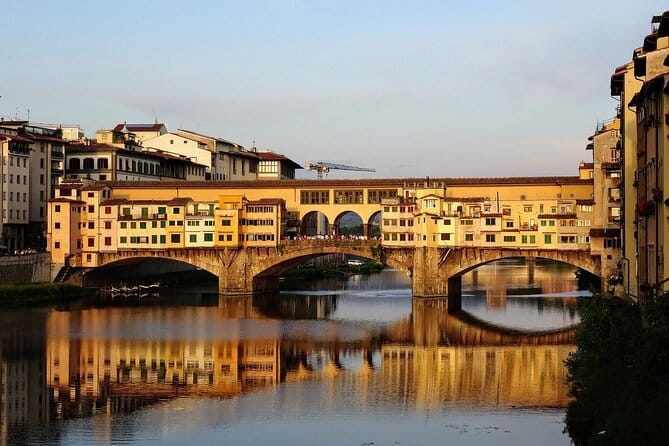
The walk finishes at Ponte Vecchio, Florence’s oldest bridge and one of the city’s best-known symbols. Its jewelry shops hang over the Arno, creating a distinctive final view.
About 15 minutes are set aside here. That is enough for an explanation, photographs, and a look at the bridge before you continue on your own. The end point is well chosen because Ponte Vecchio leads naturally toward more central sights on one side and the Oltrarno area on the other.
The finish also gives the tour a satisfying shape. You begin near the railway station, pass through Florence’s religious and political center, and end beside the river. You do not need to return to the starting point, which saves time if you plan to continue exploring after the tour.
What the reviews reveal about Irina’s guiding style
Irina receives repeated praise for explaining Florence clearly, keeping the walk lively, and answering questions across a wide range of subjects. Her style seems to combine art and history with practical help about restaurants, gelato, leather goods, and places to visit later.
Several details are especially useful. She has used visual aids on a tablet to explain artworks and interiors that you cannot enter during the walk. She has also adapted the route for rain, extreme heat, leg injuries, and mixed-age families.
That flexibility is one of the strongest reasons to choose a private tour. A fixed group may keep moving despite a sore knee or sudden rain. Here, you can ask for a slower pace, a break, or a change in emphasis. One family received extra time at no added charge, though you should not assume that will happen every time.
The praise is not just about facts. Irina is described as friendly, warm, and honest when she does not know an answer. That combination matters on a private walk, where conversation is a large part of what you are paying for.
Who should book this Florence walking tour
I would recommend it most for:
- First-time visitors who want a clear introduction before choosing museums
- Families that need a flexible pace and stories that work for different ages
- Couples or small groups who value a private guide
- People interested in the Medici, Renaissance art, Dante, and Florence’s ruling families
- Anyone who wants practical suggestions for food and the rest of a Florence stay
- Repeat visitors who want smaller details and local stories rather than a basic checklist
It is less suitable if you want a long museum visit, a dome climb, or detailed time inside several churches. You will see many important buildings, but the tour is mainly an outdoor orientation with one notable pharmacy interior and a possible church or courtyard entry.
Wear comfortable walking shoes and be ready for heat, rain, and crowded streets. The route is offered in English, service animals are allowed, and it is near public transportation. Most people can participate, but anyone with mobility concerns should discuss pace and needs when booking.
The tour requires good weather. If poor conditions force cancellation, you are offered another date or a full refund. Otherwise, you can cancel for a full refund up to 24 hours before the start time. Changes or cancellations inside that window are not accepted.
Is this private Florence tour worth the price?
At $219.97 per person, the tour makes the most sense when you want personal attention and your group can benefit from a flexible conversation. A private guide can turn a crowded route into a focused introduction, point out details you would miss, and help you plan the rest of your stay.
The value drops if you mainly want admission to Florence’s major interiors. Those tickets are not generally included, and you will need separate plans for the Medici Chapels, cathedral interiors, Palazzo Vecchio, and other museums.
For a first morning or afternoon in Florence, I think the route is well designed. The pharmacy adds a fresh note, the Medici and Dante stories give the city a human shape, and the end at Ponte Vecchio leaves you in a good place to continue exploring.
Book it if you want an informed local guide, a private pace, and a broad introduction to Florence in three hours. Skip it if you prefer to spend those three hours inside museums or already know the city’s main stories. For most first-time visitors who want a strong starting point, Irina’s walk is a practical and personable choice.
FAQ
How long is the private Florence walking tour?
The tour lasts approximately three hours.
Where does the tour begin?
It begins at Fratellanza Militare Firenze, at Piazza di Santa Maria Novella 18 in Florence.
Where does the tour end?
The tour ends at Ponte Vecchio, the Old Bridge over the Arno.
Is the tour private?
Yes. Only your group takes part in the activity.
What language is the tour offered in?
The tour is offered in English.
Are museum and church admissions included?
The route mainly visits major churches, palaces, chapels, and landmarks from outside. The Santa Maria Novella pharmacy is visited, and its admission is listed as free. Entry to the other major interiors is not generally included.
What happens if the weather is poor?
The experience requires good weather. If it is canceled because of poor conditions, you can choose another date or receive a full refund.
Just added in Florence
- Wine Tasting Experience in Ponte Vecchio: Best Tuscany selection!★ 5.0 · 197 reviews
- Walking Food Tour of Florence with Tastings and Wine★ 5.0 · 518 reviews
- Wine Experience In Chianti Hills from Florence★ 4.5 · 195 reviews
- Florence Sunset Food Tour with Wine & Dine at a Tuscan farmhouse★ 5.0 · 194 reviews
- Uffizi and Accademia Small Group Guided Tour★ 4.5 · 449 reviews
- Val d’Orcia Brunello Wine Tour with Montalcino and Montepulciano★ 4.5 · 359 reviews
- Uffizi Gallery Timed Entry Admission Tickets★ 4.0 · 392 reviews
- Uffizi Gallery Small Group Tour with Guide★ 4.5 · 879 reviews
Walking Tours, compared.
Guided Walking Tour & Last Supper Visit with Ticket
Read our review →
Rialto Bridge & Offbeat Unusual Venice Walking Tour
Read our review →
Private 3 hrs Venice Tour: St Mark’s, Walking tour & Boat tour
Read our review →
Skip the line: Uffizi and Accademia Small Group Walking Tour
Read our review →Browse the lists this tour appears in