
Reviewed · GHOST & MYSTERY TOURS
Medici Legends & Renaissance Wonders: Florence Small Group Tour
Florence makes more sense when you follow the Medici family from their church burials to their palaces, public squares, and art collections. This walk gives you that useful framework, linking the family’s money, politics, faith, and patronage to the city’s most famous sights.
I like the small group limit of 15, which gives a guide room to answer questions and keep the pace human. I also like the route’s range: you move from San Lorenzo and the Duomo to Palazzo Vecchio, Ponte Vecchio, Palazzo Pitti, and the Uffizi area. The main drawback is that the tour lasts only 1 hour 45 minutes, so most stops are exterior explanations rather than full museum or church visits, and admission is not included.
Key points at a glance

- The Medici provide the thread: You see Florence as a family project, from banking power to grand art patronage.
- Fourteen listed stops fit into 105 minutes: Expect a brisk city walk with short explanations at each landmark.
- The route covers Florence’s essential core: San Lorenzo, the Duomo, Piazza della Signoria, Ponte Vecchio, Palazzo Pitti, and the Uffizi are all included.
- Groups are capped at 15 people: That is a useful middle ground between a private guide and a large crowd.
- The best guides tell stories, not just dates: Manuel, Martina, Amanda, and Giacomo have been especially praised for clear storytelling and local insight.
- You finish near Ponte Vecchio: The endpoint is convenient for continuing toward the Oltrarno, Uffizi, or central Florence.
Why the Medici make a good Florence introduction
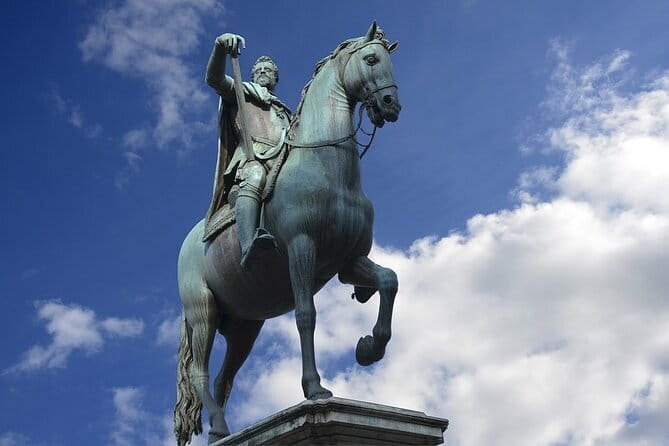
The Medici family gives you a practical way to organize Florence in your head. Instead of seeing a church, a palace, and a bridge as separate photo stops, you learn how one family helped shape the city’s politics, architecture, religion, and art.
The family began with banking power, then moved into civic influence and dynastic rule. Their name appears across Florence because they funded buildings, supported artists, occupied palaces, and used art to make their authority visible. That is the central idea this tour brings to life.
I especially like this approach for a first day in Florence. The walk does not ask you to memorize a long list of rulers. It shows you the streets and buildings where those decisions took shape. One particularly good guide can make the Medici crest, family connections, and political shifts easier to spot during the rest of your visit.
The tour is also useful if you have watched the Medici television series or read a little about the family. It puts names and events against real places. At the same time, this is still an introductory tour. If you already know Florence well, you may want a more specialized visit inside the Medici Chapels, Medici Palace, or Uffizi.
Other trips after dark in Florence:
- The Dark Side of Florence: Mysteries and Legends
★ 5.0 · 2,785 reviews - Florence: Dark Mysteries and Legends Guided Walking Tour
★ 4.6 · 1,081 reviews - Florence: Mysteries of the Medici Guided Walking Tour
★ 4.4 · 940 reviews
San Lorenzo and the Medici burial church
The walk begins near Caffè Scudieri in Piazza di San Giovanni at 12:15 pm, then reaches the Basilica di San Lorenzo. San Lorenzo is one of Florence’s largest churches and the burial place of principal Medici family members from Cosimo il Vecchio through Cosimo III.
This is a smart opening stop. Before looking at the Medici as art sponsors, you see them as a family concerned with memory and status. Burial inside an important church was not a minor choice. It placed the family at the heart of Florence’s religious and civic life.
The listed stop is about five minutes, so you should not expect a full church visit. Admission is not included. Your guide’s role here is to explain why San Lorenzo mattered and how the nearby market district fit into the city’s daily life.
Next comes the Biblioteca Medicea Laurenziana, or Laurentian Library. Pope Clement VII, a member of the Medici family, supported the library to signal that the family was more than a successful merchant dynasty. Its books and manuscripts belonged to the Medici private collection, while its architecture is associated with Michelangelo and Mannerism.
The library is an excellent example of the tour’s larger theme: power can be expressed through learning as well as through palaces. Again, the listed time is brief and admission is not included, so think of this as an exterior orientation rather than a library visit.
Medici Chapels and Palazzo Medici Riccardi
The Medici Chapels were built in the 16th and 17th centuries as additions to the earlier church. Their purpose was direct: to honor the Medici family, patrons of San Lorenzo and Grand Dukes of Tuscany.
The New Sacristy was designed by Michelangelo, which gives this stop special weight for anyone interested in sculpture or Renaissance architecture. You will hear how the family used religious space to present itself as powerful, pious, and worthy of remembrance.
Five minutes is enough to point out the chapels and explain their purpose, but not enough to examine the tombs, sculptures, and interior design at leisure. If these chapels are high on your list, plan a separate admission and allow much more time.
Palazzo Medici Riccardi follows. Cosimo de’ Medici commissioned the palace, built between 1444 and 1484. It is closely tied to the family’s rise from banking leaders to the most influential household in Florence.
This stop helps you picture the early Medici style. Their first great palace was not simply a private home. It sent a message about wealth and authority while remaining connected to the city around it. Your guide can also use the building to explain how Cosimo balanced public influence with a careful image of restraint.
The route gives you the story rather than a museum visit. Admission is not included, and the five-minute timing means you should not expect to tour the rooms.
The Duomo complex in a tight 15 minutes
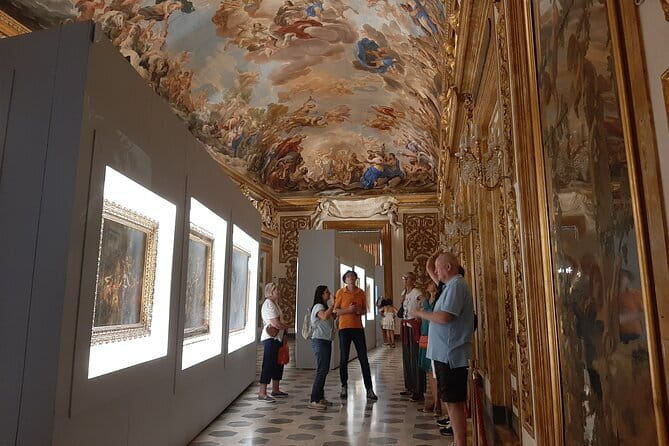
The route then reaches the Piazza del Duomo, where several listed stops are grouped close together. You see the Cathedral of Santa Maria del Fiore, the Baptistery of San Giovanni, Brunelleschi’s Cupola, and Giotto’s Campanile.
Florence Cathedral began in 1296 in the Gothic style, based on a design by Arnolfo di Cambio. Its white, green, and pink marble exterior is one of the city’s most recognizable sights. The cathedral, baptistery, and campanile form part of the UNESCO World Heritage historic center.
The Baptistery is one of Florence’s oldest buildings, constructed between 1059 and 1128 in the Florentine Romanesque style. Its position across from the cathedral makes the relationship between the buildings easy to understand. This is a place where your guide’s explanation can help you notice how Florence built a grand religious center over several centuries.
Brunelleschi’s dome is the architectural star of the group. It was once the largest dome in the world and remains the largest brick dome ever built. The challenge of constructing it without traditional full wooden centering is one of the great engineering stories of the Renaissance.
The Campanile, next to the cathedral and baptistery, adds another piece to the picture. Giotto designed it, and its sculptural decoration and colored marble make it a major example of Florentine Gothic architecture.
The itinerary lists the cathedral twice, once as the main cathedral stop and again as a second cathedral stop. In practice, you should read this as additional attention to the Duomo complex, not as two separate cathedral visits.
This part of the walk is valuable because it gives you context before you return to the square on your own. It is also where the schedule feels tightest. Four or five related sights, plus crowd movement and street noise, leave limited time for questions.
Same base, a different kind of day:
- Florence: Skip-The-Line Uffizi Gallery Timed Entry Ticket
★ 4.5 · 27,832 reviews - Tuscany Day Trip from Florence: Siena, San Gimignano, Pisa and Lunch at a Winery
★ 5.0 · 21,634 reviews - Florence: Timed Entrance Ticket to Michelangelo’s David
★ 4.6 · 16,983 reviews - Florence: Michelangelo’s David Skip-the-Line Entry Ticket
★ 4.5 · 12,764 reviews
Palazzo Vecchio and Florence’s public stage
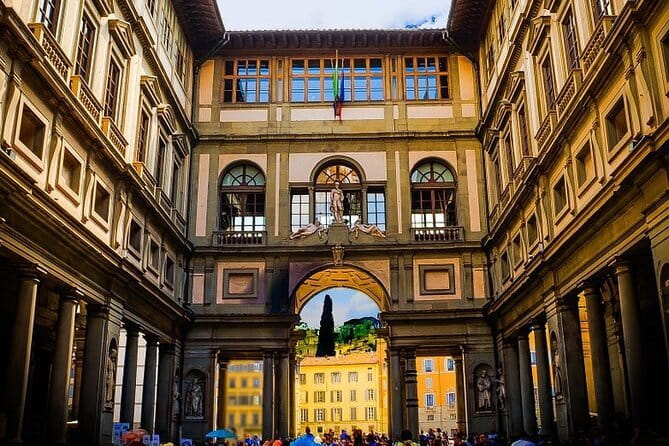
From the Duomo, the route continues toward Palazzo Vecchio and Piazza della Signoria. Palazzo Vecchio is Florence’s town hall, a fortress-like palace overlooking the square. Its position tells you something important about Florence: government, ceremony, sculpture, and public life were concentrated in the same small area.
The square contains a copy of Michelangelo’s David and the sculpture-filled Loggia dei Lanzi. It is one of the most important public spaces in the city and the gateway to the Uffizi.
I find this section especially useful because it shifts the Medici story from family buildings to public power. Florence was not shaped only inside private palaces. Its rulers also needed to control the city’s civic spaces and the images placed there.
The five-minute stop will not cover the interior rooms of Palazzo Vecchio. Admission is not included, so save a separate visit if you want the grand halls and painted chambers. For the walking tour, the exterior and the square provide enough material to explain how Florence displayed authority in public.
Ponte Vecchio and the route toward Palazzo Pitti
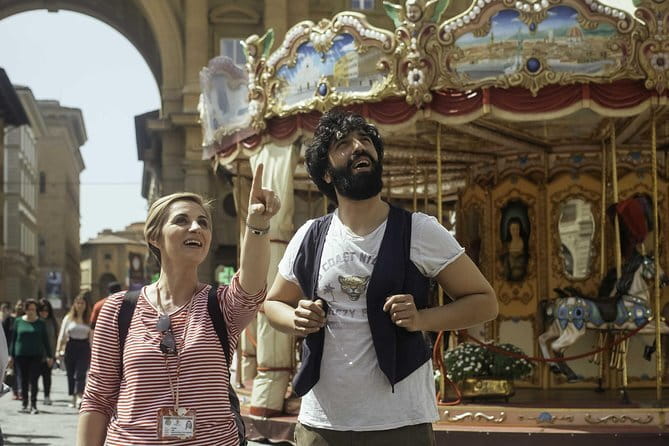
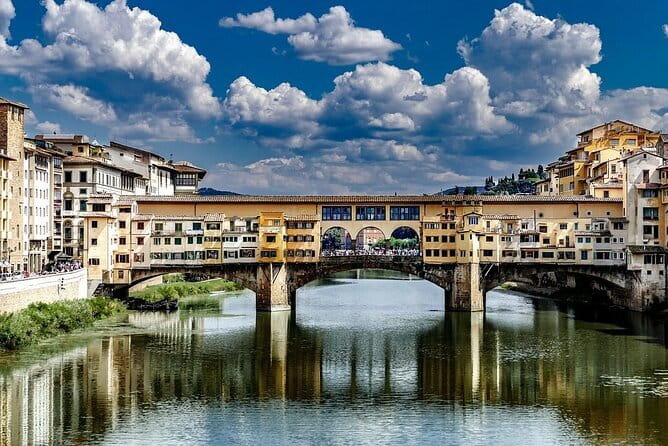
The walk reaches Ponte Vecchio, the medieval bridge over the Arno. It is famous for the small shops built along its length. Butchers, tanners, and farmers once occupied them. Today, jewelers and art dealers fill the bridge.
Ponte Vecchio is the only listed stop with free admission, though simply crossing the bridge is the main experience here. It is a natural place to pause because the bridge connects the historic center with the Oltrarno and offers a clear sense of how the Arno divides the city.
The endpoint is listed as Ponte Vecchio, but it can vary slightly within the surrounding area. Palazzo Pitti is included in the route as a Medici landmark, so your guide may discuss it in relation to the bridge and the Medici move across the river.
The Medici bought Palazzo Pitti in 1549, and it became the main residence of the ruling families of the Grand Duchy of Tuscany. Later generations filled it with paintings, dishes, jewelry, and luxury goods.
This is a strong final chapter for the family story. The Medici began as bankers associated with the city center. By the time they occupied Pitti, they were ruling dynasts with a vast court and an enormous collection of objects.
Again, the listed timing is only about five minutes, and admission is not included. You are getting the palace’s place in the story, not a tour of its galleries.
The Uffizi and the art built by power
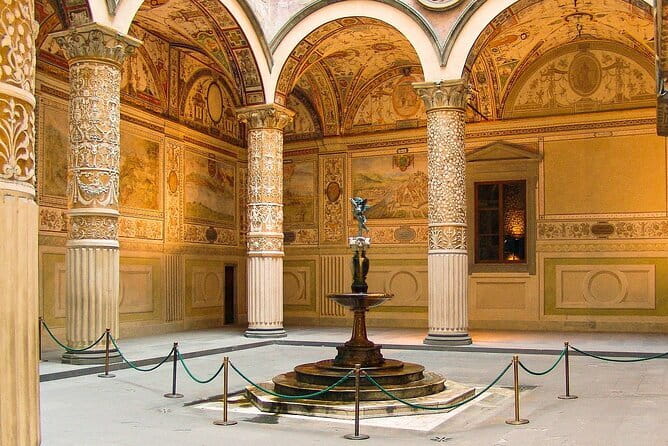
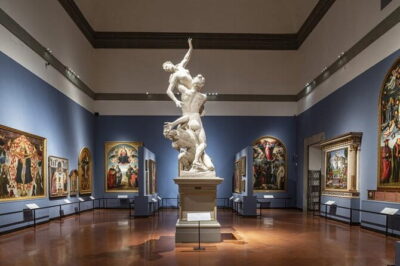
The final listed stop is the Uffizi Gallery, one of Italy’s most important museums and home to a major collection of Renaissance painting. Works by Michelangelo, Leonardo da Vinci, Raphael, Botticelli, and other leading artists are connected with the museum’s collection.
The Uffizi is where the Medici story reaches its clearest artistic payoff. Their patronage helped create the culture that makes Florence so famous, and the museum preserves many of the works associated with that period.
You should keep your expectations realistic. The tour does not include Uffizi admission, and five minutes cannot do justice to more than 80 halls of art spanning the 12th through 16th centuries. Think of this stop as a preview that helps you decide if you want to return for a separate museum visit.
If you plan to visit the Uffizi, this walking tour can make the paintings easier to place in context. You will already have heard how the Medici used art, architecture, and collecting to shape their public image.
What the guide and group size mean
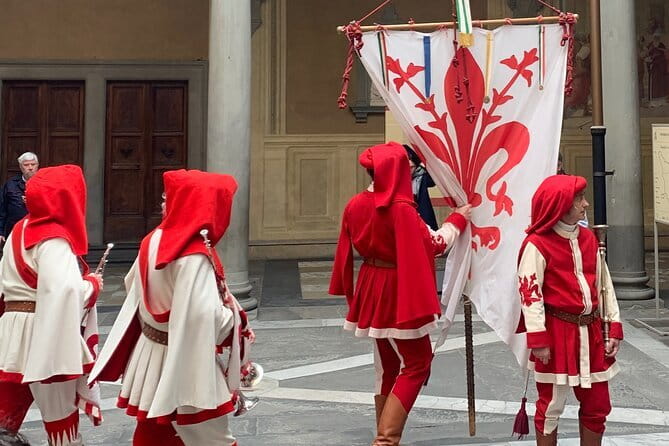
A licensed English-speaking guide leads the tour, and a whisper system is included. The group maximum is 15, which should feel more personal than a large city tour without the cost of a fully private guide.
The strongest guide experiences associated with this route include Manuel, Martina, Amanda, and Giacomo. Manuel is especially good at connecting small visual details to the larger story of Florence. Martina has a lively way of explaining the Medici crest and the family’s changing image. Amanda brings humor and a strong grasp of Medici politics, while Giacomo has been praised for answering questions and suggesting further things to do in Florence.
Your assigned guide may be someone else, so treat these names as examples of the standard you should hope for rather than a guarantee. The best guides on this route use stories, role-playing, humor, and small details instead of reciting dates.
The whisper system is meant to help with street noise, but it may not work perfectly for everyone. One older couple found the audio difficult while walking, especially when the guide spoke over traffic and city sounds. If hearing clearly matters to you, stay close to the guide and speak up if you miss part of an explanation.
Is $119.77 a fair price?
At $119.77 per person, this is not a cheap orientation walk. The value depends on what you want from it.
You are paying for a licensed guide, a small group, a focused Medici theme, and a route that links many major landmarks in 105 minutes. If you have limited time in Florence and want the city to make sense quickly, that can be worthwhile. The guide’s explanations are the main product, since entrance tickets are not included.
The price is harder to justify if you expect museum access, reserved entry, or long interior visits. None of the listed attractions, apart from crossing Ponte Vecchio, includes admission. You will need to budget separately for places such as the Medici Chapels, Palazzo Vecchio, Palazzo Pitti, the Uffizi, or the Laurentian Library.
Group discounts are available, and the experience is offered in English with a mobile ticket. It is booked, on average, 58 days ahead, so an important Florence visit should not be left until the last minute.
Who should book this Florence walk?
I would choose this tour for a first visit, especially if you have only a short time in the city. It gives you a map of central Florence and a story that ties together buildings you might otherwise see as unrelated.
It also suits families with older children. One guide found the material worked well for children around age 10 and up, and the Medici story has enough rivalry, ambition, money, and art to hold the attention of teenagers.
You should also consider it if you have seen the Medici series or already know the basic names. A good guide can add local details and show you things you would pass without noticing.
I would skip it if your main goal is extended museum time. The pace is brisk, the stops are short, and the tour does not include entry. For serious art fans, a dedicated Uffizi visit or Medici Chapels tour will provide much more time with the works themselves.
The route uses city streets and is described as suitable for most people, with public transportation nearby. Wear comfortable shoes, arrive at Caffè Scudieri in Piazza di San Giovanni before the 12:15 pm start, and leave room in your day for returning to any interior you want to explore properly.
My verdict: a strong first look at Medici Florence
I recommend Medici Legends & Renaissance Wonders if you want a well-organized introduction rather than a series of disconnected photo stops. Its greatest strength is the way it turns Florence into a story about one family’s rise, ambition, faith, and use of art.
Book it early if the timing suits you, especially because it is often reserved well ahead. Just remember what you are buying: a guided walk through the city, not a collection of museum admissions. If you accept that limit, the small group and strong storytelling can make $119.77 a fair investment in getting your bearings before exploring Florence on your own.
Free cancellation is available until 24 hours before the start time. Changes or cancellations inside that window are not refunded, and poor weather or failure to meet the minimum group size can lead to a new date or full refund.
FAQ
How long does the Medici Legends & Renaissance Wonders tour last?
The tour lasts approximately 1 hour and 45 minutes.
What time does the tour start?
It starts at 12:15 pm.
Where does the tour begin?
The meeting point is Caffè Scudieri Firenze at Piazza di San Giovanni, 19R, Florence.
Where does the tour end?
The listed endpoint is Ponte Vecchio. The exact ending spot can vary slightly within the indicated area.
Is the tour conducted in English?
Yes. The experience is offered in English.
How many people can join the group?
The group has a maximum of 15 participants.
Are attraction admission tickets included?
No. Admission tickets are not included for the listed churches, palaces, museums, library, or cathedral complex. Ponte Vecchio is listed with free admission.
What happens if I need to cancel?
You can cancel at least 24 hours before the start time for a full refund. Cancellations or changes made less than 24 hours before the start time are not refunded. If poor weather or an insufficient number of participants causes cancellation, you will be offered another date or a full refund.
Just added in Florence
- Wine Tasting Experience in Ponte Vecchio: Best Tuscany selection!★ 5.0 · 197 reviews
- Walking Food Tour of Florence with Tastings and Wine★ 5.0 · 518 reviews
- Wine Experience In Chianti Hills from Florence★ 4.5 · 195 reviews
- Florence Sunset Food Tour with Wine & Dine at a Tuscan farmhouse★ 5.0 · 194 reviews
- Uffizi and Accademia Small Group Guided Tour★ 4.5 · 449 reviews
- Val d’Orcia Brunello Wine Tour with Montalcino and Montepulciano★ 4.5 · 359 reviews
- Uffizi Gallery Timed Entry Admission Tickets★ 4.0 · 392 reviews
- Uffizi Gallery Small Group Tour with Guide★ 4.5 · 879 reviews
Ghost & Mystery Tours, compared.
The Dark Side of Florence: Mysteries and Legends
Read our review →
The Secrets to Learn Fresh Pasta and Tiramisù in a Glam Home
Read our review →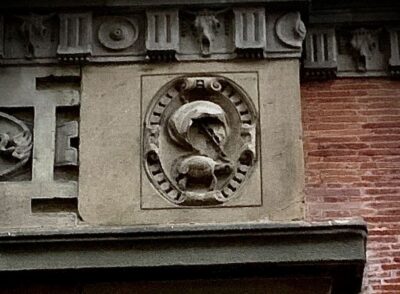
Dark Mysteries and Legends Guided Walking Tour
Read our review →
Rome by Night Walking Tour – Legends & Criminal Stories
Read our review →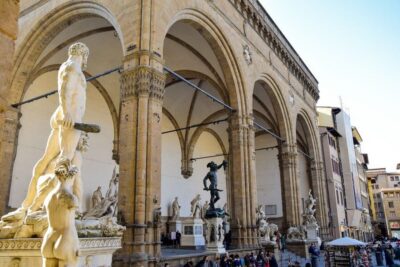
Skip-the-Line Accademia Guided Visit: David Secrets and Beyond
Read our review →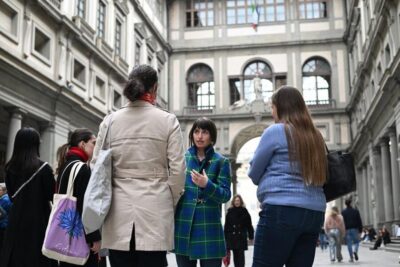
Guided Tour of Medici Family Secrets and Chapels
Read our review →Browse the lists this tour appears in