
Reviewed · MOUNT ETNA TOURS
Etna excursion to 3000 mt. with cable-car and jeep 4×4
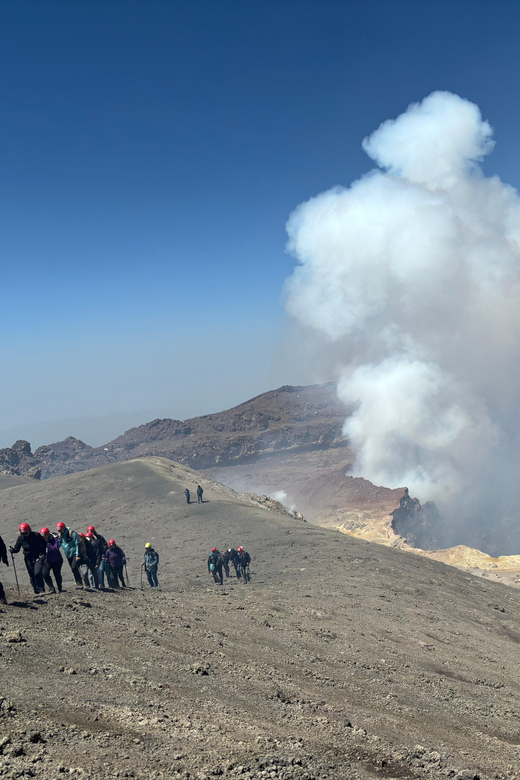
Etna’s upper slopes are a world of black volcanic gravel, wind, cold, and sudden grand views. This four-hour outing gets you close to the summit crater area at about 3,000 meters, with a cable-car ride, a 4×4 climb, and a guided walk past recent lava flows and a roughly 200-meter lava tunnel.
I like two things here: the guides, including Giuseppe, Tony, Daniele, and Mario, are praised for clear explanations and steady support, and the route gives you more than a quick photo stop. You see the South-East, North-East, Central, and Bocca Nuova crater areas, then look across Valle del Bove toward the Ionian coast.
The main catch is price. The advertised $47 covers the guided experience and equipment, but the cable car and 4×4 cost extra, with recent reports putting that added transport charge at about €70 per person. This is a strong Etna outing, but not a $47 day once all required costs are counted.
Key points to know before booking
- Recent volcanic activity: The route focuses on lava-flow sites connected with the South-East Crater, including August 2025 areas.
- Three-part ascent: You ride the cable car from 1,900 to 2,500 meters, take a 4×4 minibus to about 2,750 meters, then walk toward 3,000 meters.
- Four major crater areas: You may view the South-East, North-East, Central, and Bocca Nuova craters, subject to conditions.
- Real mountain walking: The hike is rated medium difficulty, with loose volcanic ground, slopes, and some scrambling or sliding on steeper sections.
- Equipment is supplied: Jackets, helmets, hiking boots, long socks, and walking sticks are available, but arrive early for the best shoe sizes.
- Weather rules the day: Wind, gas, snow, and ground conditions can change the route or starting side.
What the Etna outing really offers
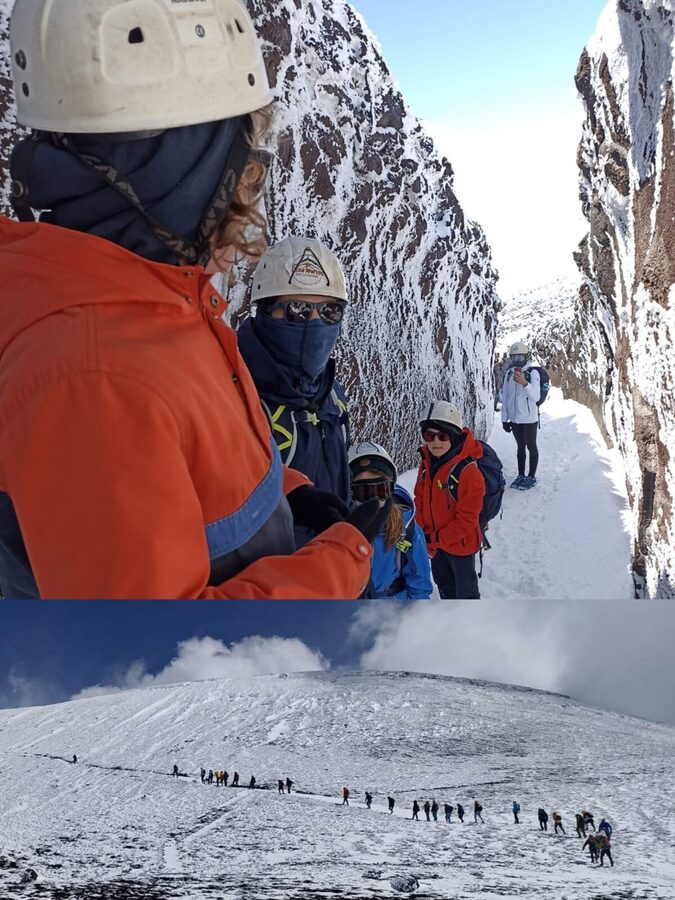
This is not a walk to the actual summit rim. It is a guided visit to Etna’s high summit area, reaching about 3,000 meters when weather and volcanic conditions allow.
That distinction matters. Etna’s upper craters are active and conditions can shift quickly. The guide may change the route, reduce the walking distance, or begin from the north instead of the south. You still get a close look at volcanic cones, ash, lava formations, and recent eruption sites, but the exact view is never guaranteed.
The experience is best understood as a high-altitude volcanic walk with mechanical transport at both ends. You avoid a long climb from the lower slopes, yet you still walk enough to feel the rough surface under your boots and see the mountain at close range.
The tour has a 4.6 rating from 550 reviews, and the strongest praise goes to the guides. Giuseppe is repeatedly singled out for humor, facts, and patience. Tony, Daniele, Mario, Simone, and Salvatore are also praised for clear instructions and personal help. That matters on Etna, where a good guide does more than point out a crater. You need someone who can manage the group, watch the weather, and explain why the ground looks the way it does.
Other Etna trips from Catania:
- Catania: Mount Etna Morning or Sunset Day Trip with Tasting
★ 4.8 · 4,028 reviews - Mount Etna: Guided Volcano Summit Hiking Tour with Cable Car
★ 4.7 · 3,784 reviews - Catania: Sunset Jeep Tour of Mount Etna and Lava Flow Caves
★ 4.8 · 2,113 reviews
Meeting at 1,900 meters and getting ready
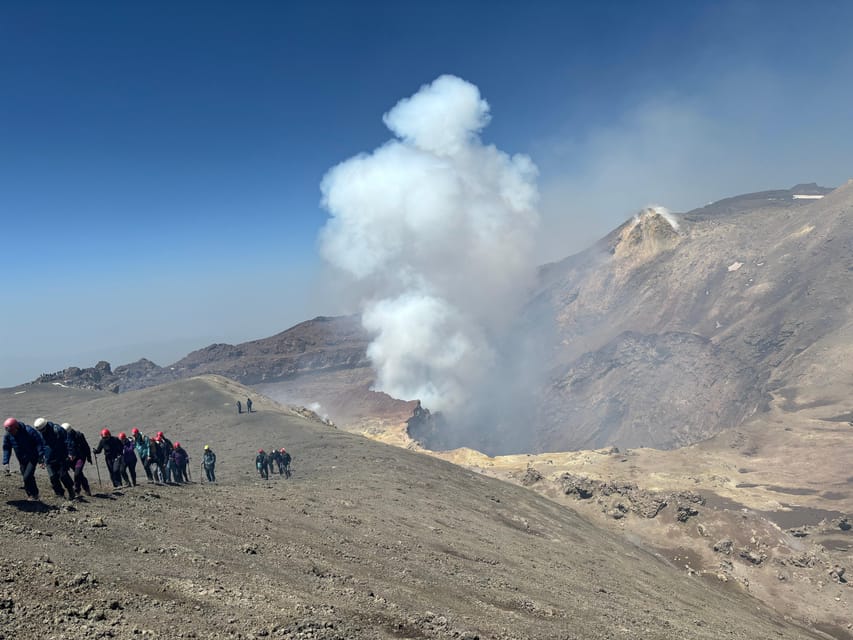
You meet at La Baita 3L Ski-Lab, near the Etna Touring mobile office and service center, at 9:30 a.m. The excursion itself begins once everyone has checked in and received equipment, so the departure can be later than the meeting time. The stated departure is 10:15 a.m.
Allow time for formalities and fitting boots. The equipment includes a helmet, jacket, hiking boots, long socks, and walking sticks. One useful tip is to arrive early, especially in busy periods, because popular shoe sizes can run short. You can also wear your own hiking shoes if they have good grip.
Bring long trousers, water, food, and some cash. Gloves are not listed among the supplied equipment, and one participant specifically wished they had been included. A light pair of gloves is a sensible addition, even in summer.
At 1,900 meters, the weather may feel pleasant. At 3,000 meters, it can be cold and windy. Reports of about 4 degrees in September are a useful warning. A jacket is provided, but warm layers and trousers still make the day more comfortable.
Cable car to 2,500 meters
The cable-car ride takes about 20 minutes. It lifts you above the lower tourist zone and gives you a fast change in altitude and scenery.
The ride is not included in the advertised tour price. You pay for the cable car and the 4×4 service on site, and recent reports put the combined return charge at approximately €70 per person. The precise fee can change, so check the current amount before setting out.
The cable car is valuable for more than convenience. It saves your energy for the higher walk, where the ground is loose and the air is thinner. You will not spend the morning slogging uphill from the base, but you should still expect the altitude to affect your pace.
4×4 minibus to the high starting point
At the upper cable-car station, a 4×4 minibus continues to roughly 2,750 meters. This ride takes about 20 minutes and brings you to the start of the main walk.
The vehicle is a practical part of the route, not an off-road thrill ride. Its purpose is to cross rough volcanic ground and place you close to the summit area. Once you get out, you walk with the guide toward the 3,000-meter mark.
This is also where the cold and wind can become more noticeable. Keep your jacket accessible rather than buried in a bag. Large luggage and baby strollers are not allowed, and you should carry only what you need for several hours outside.
Same base, a different kind of day:
- Mount Etna: Trek to 3000m with cable car and jeep
★ 4.7 · 1,978 reviews - Mount Etna: Summit Crater Trek with Cable Car
★ 4.8 · 1,875 reviews - Sicily: Etna and Alcantara Gorges Full-Day Tour with Lunch
★ 4.8 · 1,766 reviews - Mount Etna: Roundtrip Cable Car and 4×4 Bus Ticket
★ 4.3 · 1,602 reviews
Barbagallo Crater and the upper volcanic zone
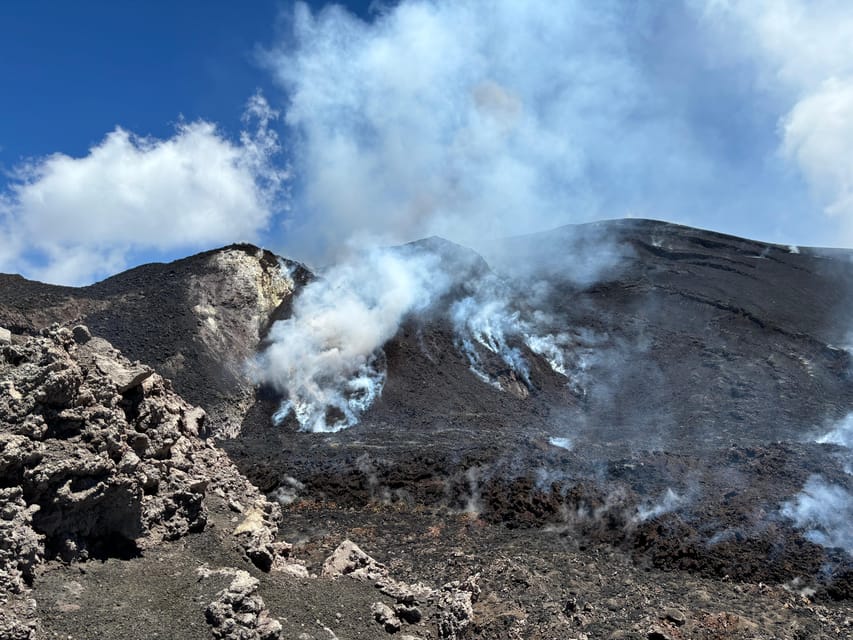
The Barbagallo Crater section receives about an hour, including a guided walk, photo stops, and views along the route. Here the appeal is the scale and variety of Etna’s upper slopes: dark ash, fresh-looking lava, older cones, and a broad view of the summit area.
The guide brings the geology to life by explaining the eruptions and the changes caused by the South-East Crater. Giuseppe is praised for combining facts with humor, while other guides are noted for explaining Etna’s past eruptions in several languages.
You can look toward the four main crater areas:
- South-East Crater
- North-East Crater
- Central Crater
- Bocca Nuova and Voragine, within the central crater area
Seeing these craters does not mean walking to their rims. Gas, wind, and official safety rules can limit access. An earlier experience had the top area closed because of gas conditions, which is a reminder that Etna decides how much of itself you get to see.
The recent lava-flow sites are a major reason to choose this outing. The route is designed to show areas linked with the South-East Crater and the August 2025 lava flows. Lava changes quickly in appearance as it cools, cracks, and weathers, so the guide’s explanation helps you understand what you are seeing rather than simply photographing black rock.
A 200-meter lava-flow tunnel
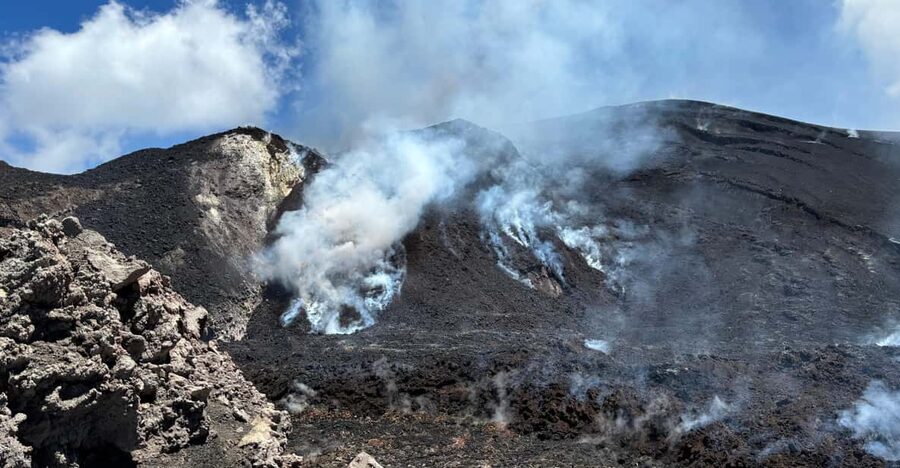
The route includes a walk through a lava-flow tunnel of about 200 meters. This is one of the most unusual parts of the day.
A lava tunnel forms when the outside of a lava flow cools and hardens while hotter lava continues moving beneath it. When the flow drains, a hollow passage can remain. Inside, you get a closer look at the shapes left by moving lava.
The tunnel is not a polished attraction. Expect uneven footing and a darker, more confined setting than the open upper slopes. Wear the supplied helmet and follow the guide’s instructions. The tunnel visit also gives the day a useful change of pace, moving you briefly from wide views and strong wind into a more enclosed volcanic space.
Walking toward 3,000 meters
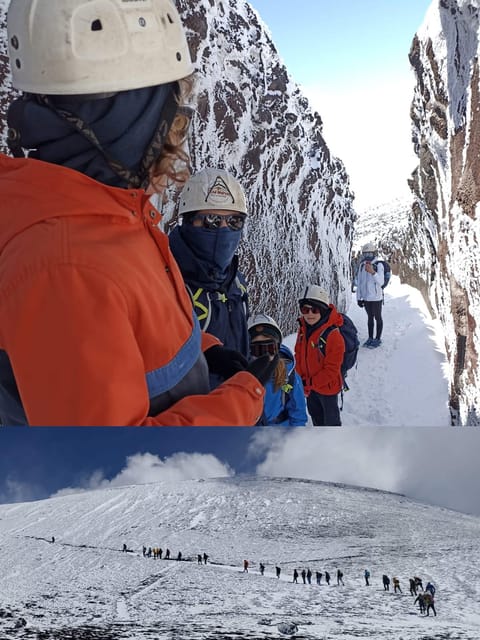
The main walk lasts around an hour, followed by about 40 minutes on foot during the descent. The exact timing can change, but you should plan on a genuine mountain hike rather than a short stroll.
The walking is classed as medium difficulty. Some people find it manageable without mountaineering experience, especially with a slow guide and regular pauses. Others find the loose surface and uphill sections harder than expected. One participant who was fit but 70 needed two walking sticks and did not complete the full climb, while another person described mild scrambling and sliding on the descent.
The supplied sticks are useful. If you normally use two poles, ask for two rather than trying to manage steep loose ground with one. The descent can be more demanding than the climb because volcanic gravel shifts beneath your boots.
Guides have been praised for keeping a steady pace and helping people who struggle. That support is important, but you should not book this if you have a low fitness level, a heart or respiratory condition, limited mobility, or difficulty walking on uneven slopes. Children under eight are not accepted.
Valle del Bove and the Ionian coast view
The route continues down through volcanic terrain toward Valle del Bove, with about an hour set aside for the visit, walking, and photo stops.
Valle del Bove is one of Etna’s most impressive natural features. From the high slopes, you look across a huge volcanic valley and out toward the Ionian coast. On a clear day, the view reaches toward Calabria and the Aeolian Islands.
This is the moment when the tour shifts from close-up geology to wide scenery. You have spent much of the day studying ash, cones, craters, and lava. Then the view opens across the sea, giving you a sense of how large Etna is in relation to eastern Sicily.
Visibility is never guaranteed. Wind and cloud can close in quickly at altitude, and the guide may alter the route for safety. Still, Valle del Bove adds a strong scenic finish and keeps the outing from feeling like a single-purpose crater visit.
Descending on foot and returning by cable car
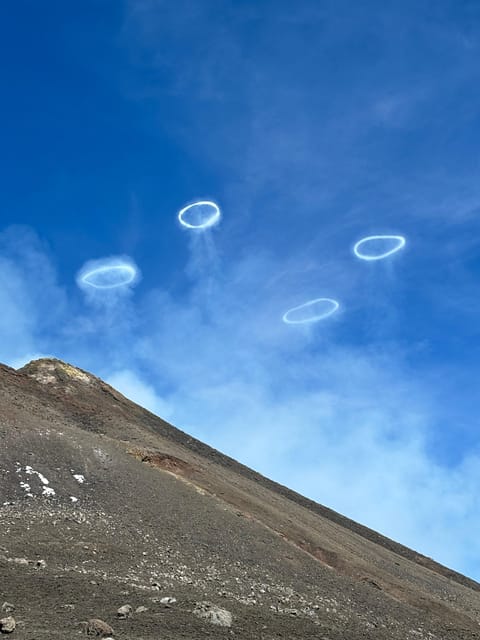
After the upper-area visit, you descend on foot across sites connected with other recent eruptions. This section gives you time to compare different lava formations and see how the mountain changes as you lose altitude.
The descent is where good footwear matters most. Loose ash and volcanic gravel can make your feet slide, and the route may involve sitting or sliding briefly on steeper parts. Hiking shoes with firm tread are worth bringing if you own them.
You return to the starting area by cable car. The total outing is advertised as about four hours, but the real clock can vary because equipment fitting, group pace, weather, and transport queues affect the day. One longer outing began around 10 a.m. and finished after 3 p.m., so avoid scheduling a tight afternoon appointment.
What you are really paying for
The $47 price looks low for a guided trip to 3,000 meters, but it is not the full cost. The cable car and 4×4 minibus are required and paid separately on site. Recent reports put those services at about €70 per person, and one report specifically warned that the advertised transport amount was outdated.
That makes the full cost closer to a substantial half-day excursion rather than a budget activity. The value depends on what you want. You are paying for a volcanological guide, safety management, route planning, equipment, and access to high areas you would not confidently reach alone.
The cost is easier to justify if you need boots, a jacket, socks, helmet, and walking sticks. It is also useful if you want explanations in English, Italian, or French and prefer a group that stays together. If you already have mountain gear and plan only to visit lower craters, a cheaper independent option might suit you better, though it will not provide the same guided access or route.
Carry cash. The card machine for the transport payment has reportedly been unreliable, and the nearby cash machine may run out. Confirm the current transport fee before the excursion so the final price does not catch you off guard.
Who will enjoy this Etna tour most
I would choose this for a reasonably fit person who wants close contact with Etna but does not want a full-day climb from the lower slopes. It suits adults who enjoy walking, volcanic geology, recent eruptions, and big coastal views.
It is also a good choice for visitors who want help with the practical side of the mountain. The guide handles the route, the group, and the explanations, while the equipment reduces the amount of gear you need to bring.
I would think twice if you dislike cold, wind, loose ground, or changing plans. Pregnancy, breathing problems, heart conditions, and mobility limits are specific reasons to choose another activity. The tour is also not ideal for anyone expecting a gentle sightseeing ride, since the hiking section can be tiring.
Free cancellation up to 24 hours before the start and reserve-now, pay-later booking add useful flexibility. The exact starting time can vary by season, and the operator may change the route or starting side according to wind and ground conditions.
Should you book it?
Book this Etna outing if you want a serious but manageable introduction to the high volcano, with recent lava sites, a lava tunnel, summit-area views, and a guide who keeps the group safe and informed. The most praised part is the human touch: guides such as Giuseppe, Tony, Daniele, and Mario explain the mountain clearly and help when the slopes become awkward.
Do not book it based on the $47 figure alone. Add the required cable-car and 4×4 charge, bring cash, dress for cold weather, and allow more than four exact hours if your schedule is tight. With those points understood, this is a strong-value choice for an active half-day on Etna.
FAQ
How high does the tour go?
The walking section reaches about 3,000 meters above sea level, subject to weather, wind, volcanic conditions, and access rules.
Are the cable car and 4×4 included?
No. The round-trip cable car and 4×4 minibus are paid separately on site. Recent reports place the combined cost at about €70 per person, though you should confirm the current fee.
What equipment is provided?
The tour provides helmets, jackets, hiking boots, long socks, and hiking sticks. Arrive early because popular boot sizes may not always be available.
How difficult is the walk?
It is a medium-difficulty hike for people used to walking or with a good fitness level. Loose volcanic ground, uphill sections, wind, and some mild scrambling can make the route tiring.
What languages are available?
The live guide service is available in English, Italian, and French.
Can the route change?
Yes. The guide may change the itinerary or the starting side, south or north, depending on the volcano’s ground and wind conditions. Weather and volcanic activity can also affect access to the upper areas.
Just added in Catania
- The Godfather Movie Tour★ 5.0 · 275 reviews
- Tour Etna & Wine Tasting★ 5.0 · 317 reviews
- The Original Catania Street Food and Market Tour by Streaty★ 5.0 · 345 reviews
- Syracuse, Ortigia and Noto walking tour from Catania★ 5.0 · 273 reviews
- Etna and Alcantara Gorges Excursion★ 4.5 · 256 reviews
- Etna, Wine and Alcantara Tour – From Taormina★ 5.0 · 464 reviews
- Mt Etna and Wine tasting tour from Catania★ 5.0 · 282 reviews
- Etna Tour in 4×4★ 5.0 · 583 reviews
Mount Etna Tours, compared.
Mount Etna Morning or Sunset Day Trip with Tasting
Read our review →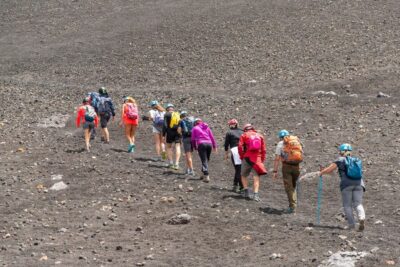
Mount Etna: Guided Volcano Summit Hiking Tour with Cable Car
Read our review →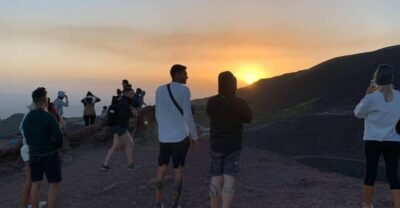
Sunset Jeep Tour of Mount Etna and Lava Flow Caves
Read our review →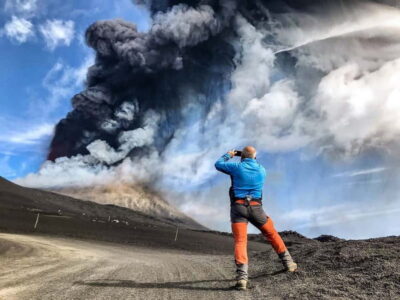
Mount Etna: Trek to 3000m with cable car and jeep
Read our review →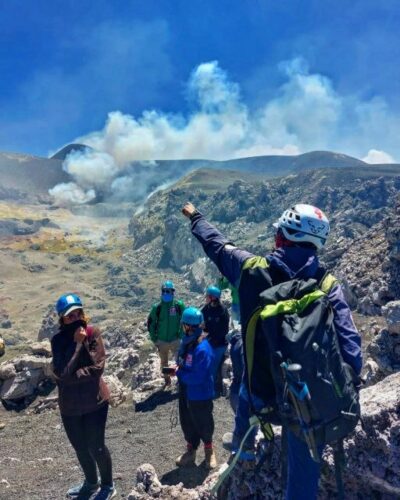
Mount Etna: Summit Crater Trek with Cable Car
Read our review →
Etna and Alcantara Gorges Full-Day Tour with Lunch
Read our review →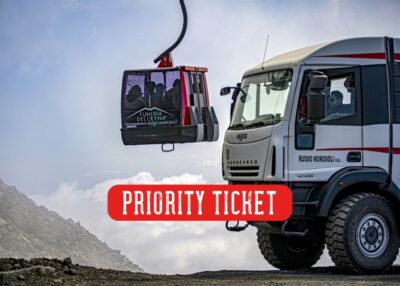
Mount Etna: Roundtrip Cable Car and 4×4 Bus Ticket
Read our review →
Browse the lists this tour appears in