
Reviewed · TOURS IN LECCE
Discovering Lecce
Lecce’s beauty comes from its theatrical Baroque stonework, and this walking tour gives you a quick, clear way to read the city. Lorenzo, a local guide with a background in art, links carved saints, Roman ruins, war, religion, and daily life without turning the walk into a lecture.
I like the small group of no more than 15 people, which makes it easier to hear and ask questions. I also like the unhurried route from the Roman Theater to Santa Croce, plus the chance of a coffee stop for Caffè Leccese and cake. The main drawback is that the churches and museums are viewed from outside, and entrance fees are not included.
Key points at a glance
- Lorenzo’s local perspective: Expect clear English, easy humor, and stories tied to Lecce’s art and past.
- Four central landmarks: The route covers Piazza del Duomo, the Roman Theater, Piazza Sant’Oronzo, and Santa Croce.
- Baroque architecture in context: You learn why Lecce’s pale stone became so richly carved and decorated.
- A relaxed two-hour pace: The walk suits first-time visitors who want an overview without a full-day commitment.
- Coffee may be part of the experience: Previous tours have included Caffè Leccese and a pastry stop at 00 Doppiozero.
- Exterior visits only: Plan extra time and money if you want to enter churches or museums afterward.
Lecce’s Baroque story begins in Piazza del Duomo
The tour starts at the Accademia di Belle Arti di Lecce on Via Giuseppe Libertini. From there, the route reaches Piazza del Duomo, one of the city’s most striking spaces.
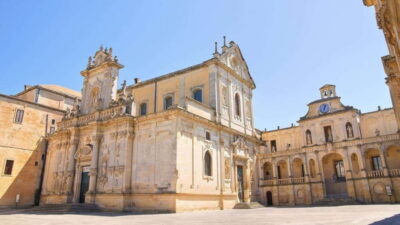
The square is enclosed in a way that feels almost theatrical. It was reshaped in the Baroque period, and the result is less an open civic plaza than a carefully framed stage set. That comparison helps explain the design: each building contributes to a single visual scene.
The bell tower is the first detail likely to catch your eye. Built in the late 17th century by Giuseppe Zimbalo, it rises above the square and is topped by a majolica dome. Its height gives the piazza a strong vertical marker, while the pale local stone helps the many carved details remain readable in the bright southern Italian light.
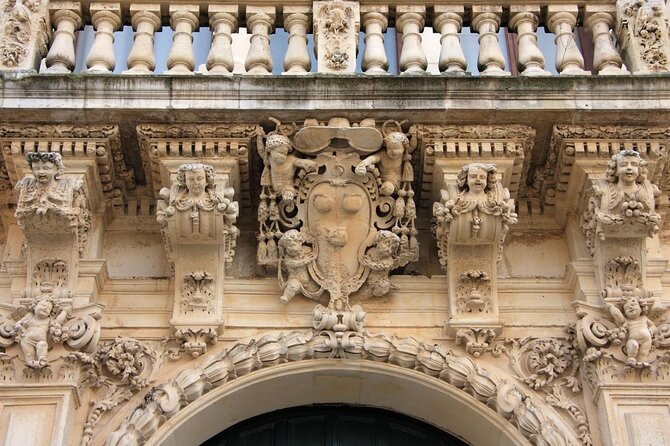
The Cathedral occupies the center of the composition. Its facade features a balustrade, flowers, angels, and pointed forms, along with a statue of Sant’Oronzo, Lecce’s protector. The decoration can look excessive if you see it without context. With Lorenzo’s explanation, you get a better sense of how architecture, faith, civic pride, and competition between religious institutions shaped the city.
The Episcopio adds another layer, with its portico and propylaea attributed to Emanuele Manieri. Across the square, the Palazzo del Seminario brings a different surface treatment, including rustication and an eclectic Baroque style associated with Giuseppe Cino.
You spend about 20 minutes here, outside. That time is enough to compare the buildings and hear the main story, but it is not enough for a detailed study of every carving. I see that as a fair trade for a tour designed to cover several parts of central Lecce.
If you want to enter the Cathedral or other buildings, you’ll need to return on your own and pay any required admission. The tour price does not cover church or museum tickets.
Other days out people book in Lecce:
- Lecce: Baroque Architecture and Underground Walking Tour
★ 4.7 · 842 reviews - Small group tour of the caves of Santa Maria di Leuca
★ 5.0 · 806 reviews - 3 Hour Group Tour by Boat to the Caves of Santa Maria di Leuca
★ 5.0 · 472 reviews
The Roman Theater brings ancient Lecce into view
The Roman Theater is a useful change of pace after the Baroque drama of the Duomo. Instead of towering facades and crowded decoration, you look down toward the remains of an ancient performance space.
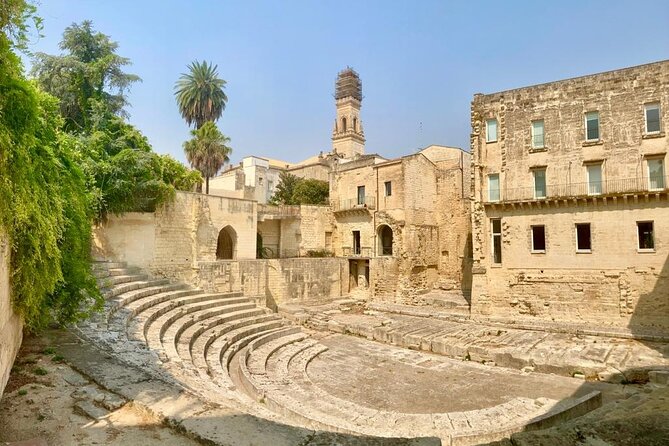
The theater dates from the Augustan age. Over time, it was buried, then brought back to light through excavation in the 19th century. Its orchestra, proscenium, terraces, and surrounding gardens create a quiet archaeological pocket in the middle of the old city.
You view the site from outside for about 15 minutes. That limitation matters. This is not a full archaeological visit, and you should not expect the time or access needed to examine every surviving feature. Still, the stop gives you a useful sense of Lecce’s long timeline. The city was not created by the Baroque builders alone. Roman remains sit beneath and beside the later streets.
I like this stop because it keeps the tour from becoming a single-style architecture walk. You move from ancient theater design to Catholic Baroque decoration in a short distance. That contrast makes both periods easier to understand.
Piazza Sant’Oronzo connects Roman, Venetian, and modern Lecce
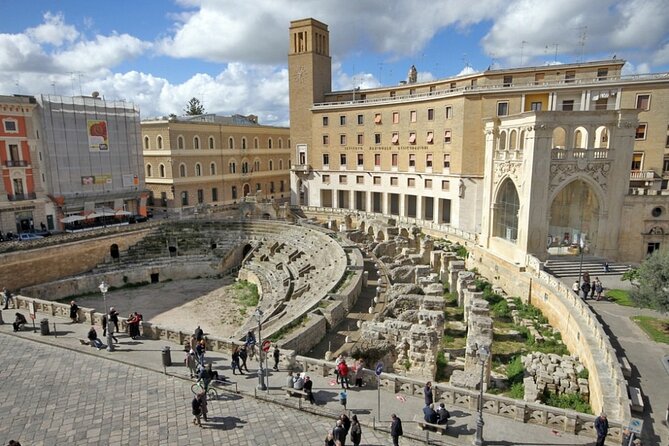
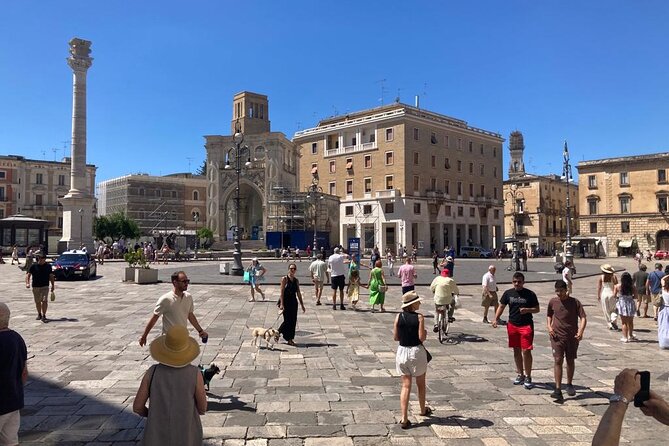
Next comes Piazza Sant’Oronzo, described as the heart of the city. This is a broader civic space, and the story here shifts toward commerce, public life, and the many powers that shaped Lecce.
The square was once known as Piazza dei Mercadanti. Its buildings preserve links to the influence of Venice, including the Palazzo del Sedile and the adjoining Church of Saint Mark. The Palazzo del Sedile served as a place for exhibitions and city assemblies, giving the square a practical public role beyond its decorative appeal.
The Roman Amphitheater is the key sight. Only part of it has been revealed, leaving ancient stonework set among later buildings. Around it, you can spot Baroque, Art Nouveau, Rationalist, and Venetian influences. That mixture is one of the most useful features of the walk. You are not just looking at isolated monuments. You are seeing how a city changes layer by layer.
This stop lasts about 20 minutes and admission is free. You can expect a good overview of the square, but not a lengthy archaeological presentation. If you want a deeper look at the amphitheater, you may need to set aside additional time after the tour.
Lorenzo’s style seems especially useful here. His approach, based on the available information about the experience, combines art history with local stories and humor. That helps when a square contains too many dates, rulers, architectural styles, and symbols to absorb at once.
Santa Croce delivers the grand finale
The walk ends at the Basilica of Santa Croce on Via Umberto I. Its facade is one of Lecce’s defining Baroque works, packed with symbolic decoration and theatrical detail.
The design refers to the Battle of Lepanto and presents a religious vision of Christian Europe’s triumph. You do not need to know every historical detail to appreciate the facade, but the background gives the sculpture more meaning. Saints, figures, animals, plants, and ornamental forms work together as part of a larger religious message.
This is another exterior visit, lasting about 20 minutes. The basilica is a strong final stop because it gathers many of the themes introduced earlier: faith, political power, local stone, symbolic art, and the competitive display of wealth and devotion.
The facade can be visually overwhelming. That is where a guide helps. Lorenzo’s role is not simply to point at the building, but to explain what you are seeing and why the design took this form. You can then decide if you want to return later for an interior visit. Entrance is not included in the tour.
Finishing here also makes practical sense. You end in the historic center rather than being returned to the starting point, leaving you free to continue exploring Lecce on foot.
Same base, a different kind of day:
- Snorkelling-Tour in Porto Cesareo with typical aperitif
★ 5.0 · 452 reviews - Lecce: City Highlights Guided Tour by Bike
★ 4.8 · 362 reviews - Tour to 4 Towns of Salento: Otranto, Leuca, Gallipoli, Galatina
★ 5.0 · 360 reviews - Cooking class, dinner and wine tasting near Lecce
★ 5.0 · 350 reviews
Lorenzo’s guiding style makes the short route work
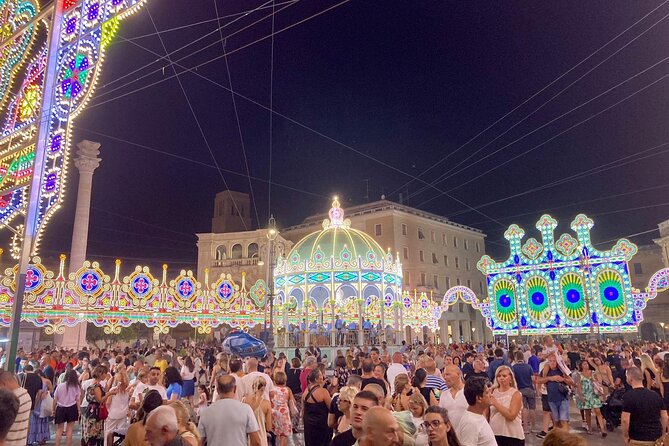
The strongest part of this experience is the guide. Lorenzo is repeatedly described as friendly, funny, passionate, and clear in English. His background in art helps him explain Baroque architecture without burying you in technical terms.
You can expect an animated presentation, but not a frantic one. The tour is described as relaxed and easy paced, with time for the guide to speak to members of the group. That matters in a walking tour, especially when a landmark has many details competing for your attention.
His humor is another plus. A little wit helps with subjects such as medieval Catholicism, religious conflict, architectural symbolism, and the long development of the city. You still get substance, but the information is easier to remember.
The group limit is 15 people. That is small enough for a more personal feel and large enough to keep the price at $35.09 per person reasonable. The value is strongest if you want a well-organized introduction rather than a private tour or a detailed museum visit.
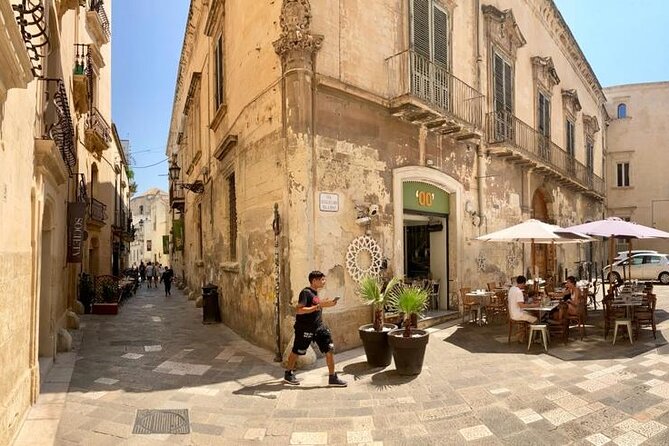
You also get coffee or tea included. Several accounts of the experience describe an added stop at 00 Doppiozero for cake and iced almond coffee, known locally as Caffè Leccese. Since the stop is not spelled out as a fixed itinerary item, treat it as a possible bonus rather than a guarantee. Still, it fits the tour well. A short break with a local drink can make the walk feel connected to everyday Lecce, not just its monuments.
What the $35.09 price really buys you
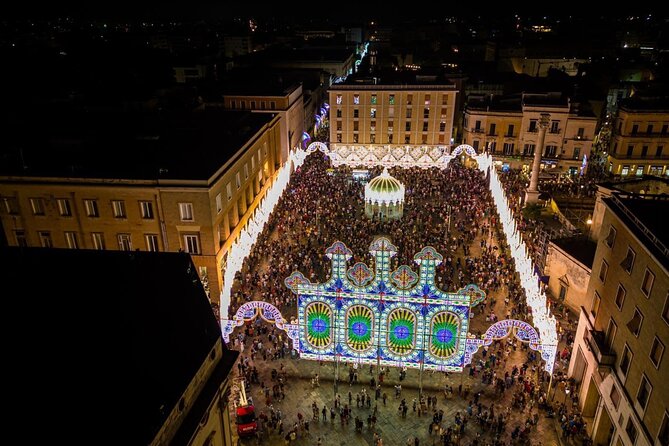
At $35.09, this is a moderate price for a two-hour English-language walking tour with a maximum of 15 people. You are paying mainly for structure and interpretation.
You could walk between these sights on your own without paying for admission to the outdoor stops. The difference is that you would have to build the route, identify the architectural details, and piece together the Roman, Venetian, religious, and Baroque stories yourself.
The tour also saves you from treating Lecce as a collection of pretty facades. A guide can show you how the Roman Theater relates to the later city, why Piazza del Duomo was designed as a controlled visual space, and how Santa Croce expresses religious and political ideas through sculpture.
The value drops if you want extensive interior access. No church or museum entrance is included, and the main visits are outside. In that case, use the tour as your orientation, then budget extra time and admission fees for the buildings you most want to see.
For many people, that is the right setup. A short guided walk first, followed by independent visits, lets you spend your attention where it matters most.
Timing, meeting point, and practical details
The tour lasts about two hours. The listed stops account for roughly 75 minutes of scheduled viewing, with the rest allowing for walking, explanation, and the overall flow of the route.
You meet at the Accademia di Belle Arti di Lecce, Via Giuseppe Libertini 3. The tour ends at the Basilica of the Holy Cross, Via Umberto I 1. Since the start and finish differ, you should plan your next activity from Santa Croce rather than expecting to return to the academy.
The experience is offered in English and uses a mobile ticket. Confirmation arrives when you book. Most people can participate, and service animals are allowed.
The walk requires good weather. If poor weather cancels it, you are offered another date or a full refund. The same applies if the minimum number of participants is not reached. You can cancel for a full refund up to 24 hours before the start time, but changes or cancellations inside that window are not accepted.
The tour is often booked well ahead, with an average booking time of 49 days in advance. That does not guarantee every date will sell out, but it is a useful reason to reserve early if your Lecce schedule is fixed.
Who will get the most from this Lecce walk
I would choose this tour if you are visiting Lecce for the first time and want the main landmarks explained in one compact outing. It is also a good fit if architecture interests you but you prefer stories and plain explanations over a formal academic lecture.
The walk suits you especially well if:
- You want an English-speaking guide with local roots.
- You have about two hours and want to see several central sights.
- You enjoy Baroque art but need help interpreting its symbols.
- You want a small group rather than a large crowd.
- You like a relaxed pace and the possibility of a coffee break.
- You plan to return independently to the churches or museums that interest you most.
It may be less suitable if you want to enter every major building during the tour, focus mainly on archaeology, or spend a long time at one monument. The Roman Theater and Roman Amphitheater receive short outdoor visits, and Santa Croce is viewed from outside.
I would also keep weather in mind. The tour is outdoors, so rain or poor conditions can affect the experience. A flexible morning or afternoon gives you more room to adjust if the date changes.
Should you book Discovering Lecce?
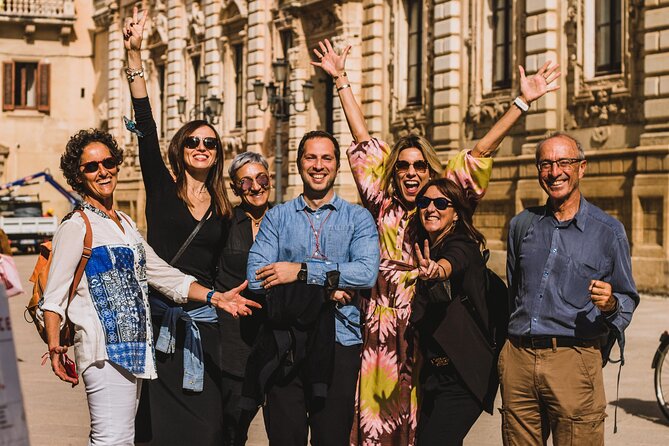
Yes, if you want a friendly introduction to Lecce that combines Baroque art, Roman remains, local history, and a little food culture. Lorenzo is the main reason this short route works: he brings humor, art knowledge, and local feeling to buildings that can otherwise blur into a mass of pale stone and elaborate carving.
Book it with realistic expectations. You are getting a guided orientation, not a series of long interior visits. At $35.09, the price is fair for a two-hour walk with a small group, coffee or tea, and a strong guide. Afterward, use your new bearings to revisit Santa Croce, the Cathedral, or the archaeological sites at your own pace.
FAQ
How long does Discovering Lecce last?
The tour lasts approximately two hours.
What language is the tour offered in?
The tour is offered in English.
How much does the tour cost?
The listed price is $35.09 per person.
Where does the tour begin?
The meeting point is the Accademia di Belle Arti di Lecce, Via Giuseppe Libertini 3, Lecce.
Where does the tour end?
The tour ends at the Basilica of the Holy Cross, Via Umberto I 1, Lecce.
Which places are included in the route?
The route includes Piazza del Duomo, the Roman Theater of Lecce, Piazza Sant’Oronzo, and the Basilica of Santa Croce.
Are entrance tickets included?
No. Entrance tickets to churches and museums are not included. The listed visits are mainly outside, and Piazza Sant’Oronzo is free.
Is coffee included?
Coffee or tea is included. A stop with Caffè Leccese and cake has also been part of some tours, but the extra stop should not be treated as guaranteed.
How many people can join the tour?
The tour has a maximum of 15 participants.
Can I cancel for a refund?
Yes. You can cancel at least 24 hours before the start time for a full refund. Cancellations or changes made less than 24 hours before the start are not accepted.
Just added in Lecce
- Tour of Lecce with a visit to the basement of the ancient synagogue★ 5.0 · 258 reviews
- Ostuni, Alberobello and Polignano a Mare. Departing from Lecce★ 5.0 · 195 reviews
- Tour to 4 Towns of Salento: Otranto, Leuca, Gallipoli, Galatina★ 5.0 · 360 reviews
- Orecchiette Cooking Class and Wine Pairing in Lecce★ 4.5 · 205 reviews
- Cooking class, dinner and wine tasting near Lecce★ 5.0 · 350 reviews
- Porto Selvaggio kayak tour + cliff diving + cold spring immersion★ 5.0 · 227 reviews
- Mini-cruise tour to the Caves of Santa Maria di Leuca★ 5.0 · 250 reviews
- Strolling through Lecce★ 5.0 · 289 reviews
Tours in Lecce, compared.
Baroque Architecture and Underground Walking Tour
Read our review →
Small group tour of the caves of Santa Maria di Leuca
Read our review →
3 Hour Group Tour by Boat to the Caves of Santa Maria di Leuca
Read our review →Snorkelling-Tour in Porto Cesareo with typical aperitif
Read our review →
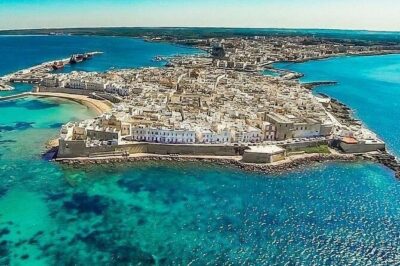
Tour to 4 Towns of Salento: Otranto, Leuca, Gallipoli, Galatina
Read our review →
Cooking class, dinner and wine tasting near Lecce
Read our review →
Browse the lists this tour appears in