
Reviewed · ALBEROBELLO, MATERA & THE TRULLI TOWNS
Alberobello: History Walking Tour
Alberobello is the sort of place that looks almost too neat to be real: gray stone cones, whitewashed walls, and narrow lanes lined with houses called trulli. I like this tour because it begins with a wide view from the Belvedere terrace, then takes you into both Rione Monti and Aia Piccola. You get the postcard scene and the everyday side of town.
I also like the chance to step inside a traditional trullo, where the unusual round rooms and thick stone construction make sense. Guides including Francesco, Mario, Silvia, Floriana, and Alessandro have been praised for clear explanations, warm local contact, and useful food suggestions. The main consideration is that this is a walking tour with no transfers, and the minimum booking is two people.
Key points to know before you book
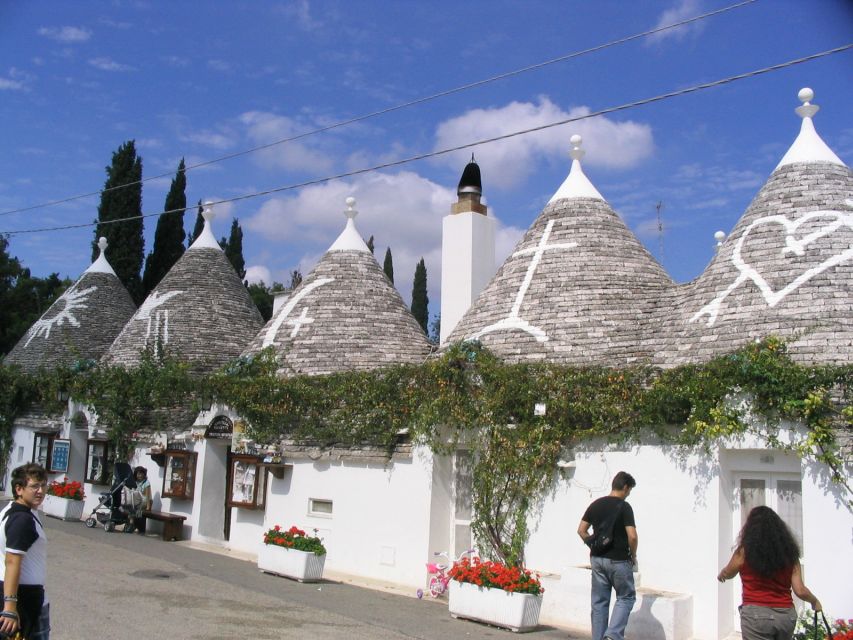
- See two very different districts: Compare the shop-lined Rione Monti with the quieter historic quarter of Aia Piccola.
- Start with the Belvedere view: This gives you a quick visual introduction to Alberobello and its unusual roofline.
- Enter a real trullo: You are not limited to looking at the buildings from the street.
- Learn why the houses were built this way: The guide explains the local building method, including the use of stone without cement.
- Finish at San Antonio Church: Its trullo shape makes it a fitting final stop.
- Expect a personal guide-led walk: English, French, Spanish, and Italian are available, with private groups offered.
Why Alberobello’s trulli are worth a guided walk
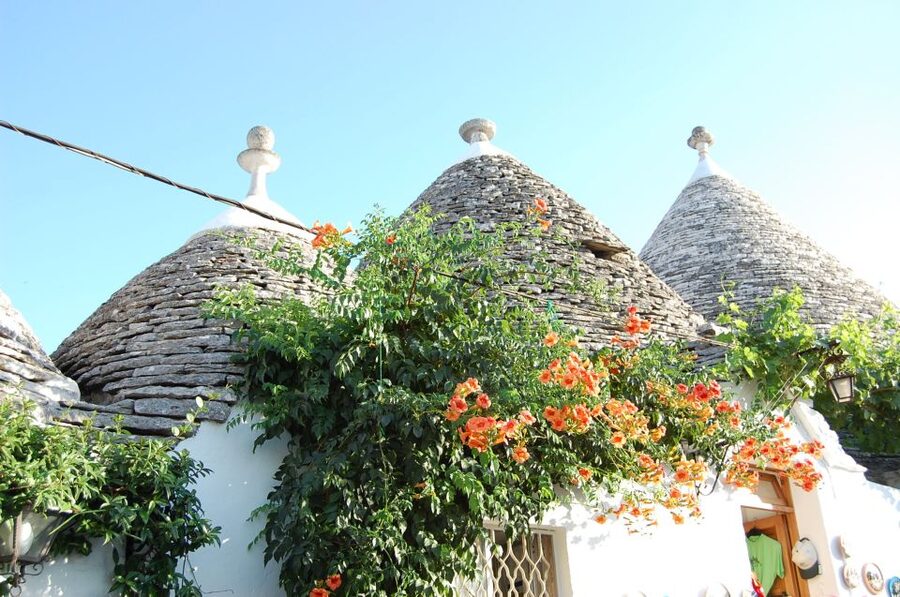
You can walk through Alberobello on your own and take plenty of photographs. The problem is that the buildings can begin to look alike. A guide gives the cones, symbols, stones, and lanes a clear purpose.
The most useful part of the explanation is the building method. The trulli were made from local rock, with stones arranged without cement. That detail changes the way you look at the town. Instead of seeing a row of charming white houses, you start noticing how the walls, roofs, and openings work together.
This tour also helps you separate the picture-perfect side of Alberobello from its older residential character. Rione Monti is the district most visitors picture first, with its thick concentration of trulli and small lanes. Aia Piccola offers a different feel, with historic homes that help show Alberobello as more than a scenic photo stop.
I value that balance. A short visit can easily become a walk through shops and viewpoints. With a local guide, you get more context and a better sense of how people used these homes.
Other old stone towns within reach of Bari:
- Polignano a Mare: Speedboat Cruise to Caves with Aperitif
★ 4.8 · 3,382 reviews - Polignano a Mare: Cave Boat Tour with Aperitif
★ 4.7 · 1,891 reviews - Polignano a Mare: Boat Trip, Swim & Cave with Aperitif
★ 4.8 · 1,300 reviews
Belvedere terrace: the right place to begin
The tour begins at the Belvedere terrace, where you can look across Alberobello’s distinctive roofs. This is a smart opening stop because the town’s layout makes much more sense from above.
From the terrace, the trulli form a sea of pale walls and pointed roofs. The view also gives you a useful orientation before you enter the narrow lanes. Your guide introduces the story of the UNESCO World Heritage Site here, so you begin with context rather than a string of disconnected facts.
Allow yourself a moment to look closely. The roofs may seem identical at first, but you will notice differences in size, stone pattern, and decoration. The guide can then connect those visual details to the way the houses were built and used.
The terrace is also a practical meeting point for a walking tour because it lets the group gather before moving into tighter streets. The exact meeting place can vary according to the option you book, so check your confirmation carefully.
Rione Monti and its cone-shaped streets
Rione Monti is the district most closely tied to Alberobello’s famous image. Here, you walk through lanes packed with trulli, looking up at their conical roofs and white walls.
This is the more visitor-focused part of the walk. You might find shops and local products along the route, and the area can feel more polished than Aia Piccola. That is not a reason to skip it. Rione Monti gives you the concentrated visual experience that brought Alberobello to international attention.
The value of the guide is strongest in places like this. Without help, you may photograph a doorway and move on. With an explanation, you can look at the construction, the roof symbols, and the shape of the rooms with more purpose.
Several guides have been praised for making this section lively rather than overly formal. Dominicio was described as a strong storyteller, while Mario was singled out for making the history of the trulli both clear and amusing. Those details matter because a compact town can feel repetitive if the commentary is flat.
Expect to walk along little alleys rather than broad city streets. Wear shoes that feel secure on stone surfaces, and keep your attention on the guide when the lanes become crowded. The tour lasts about one and a half to two hours, so it is long enough to explain the town without taking up your whole day.
Aia Piccola and the quieter side of town
Aia Piccola offers a useful contrast with Rione Monti. This district is part of the historic Alberobello protected as a UNESCO World Heritage Site, and its trulli help you picture the town as a place where people lived, not simply a collection of unusual buildings.
The quieter setting gives your guide room to discuss how the houses are arranged and how the neighborhood developed. Roberta, one of the guides, has explained why local people began building trulli from rocks without cement and how the architecture works. That kind of detail is exactly what makes this part of the tour worthwhile.
Aia Piccola may appeal most if you want more than a quick photograph. The lanes and houses let you compare roof forms, walls, and entrances at close range. You also get a better sense of scale. From a distance, a trullo looks like a small cone. Inside and among the lanes, you see how much structure is packed into its thick walls.
The pace here should feel more thoughtful than rushed. Listen for the practical details. Ask how the rooms are organized, what the stone construction means, and how the houses differ from one another. The guides are there to answer questions, and the strongest comments about the tour focus on exactly this personal exchange.
Other history to see in Bari:
- Venice: St. Mark Basilica Ticket, Audioguide+History Gallery
★ 3.9 · 4,780 reviews - Venice’s Best: Basilica, Doge’s Palace, Gondola & History Gallery
★ 4.5 · 2,478 reviews - Historic Milan Tour with Skip-the-Line Last Supper Ticket
★ 4.5 · 1,976 reviews - Venice: City Center Historical Guided Walking Tour
★ 4.2 · 1,873 reviews
Inside a traditional trullo
The indoor visit is one of the tour’s best features. You do not just admire the exteriors. You enter a local home and see how a trullo is composed.
This matters because the outside shape can be misleading. The round or cone-covered form is striking, but the interior shows how the building functions as a home. Thick stone walls, compact rooms, and the unusual roof structure become easier to understand once you are standing inside.
The visit also creates a human connection. Alberobello can feel like a stage set if you only see the tourist streets. Entering a traditional house brings the town back to everyday life. The experience is less about collecting another photograph and more about seeing how local architecture shaped domestic space.
The exact home and guide may vary. Comments about Francesco describe entry into historic houses with careful explanations of individual details, while Alessandro was praised for arranging visits with local residents. Treat this as a meaningful part of the tour, but do not expect every booking to follow precisely the same conversation or home visit.
Some guides may also include local product tasting or suggestions for lunch. These extras are not listed as a formal inclusion, so I would see them as possible additions rather than guaranteed features. If food matters to you, ask your guide what is available on your date.
San Antonio Church, a fitting final stop
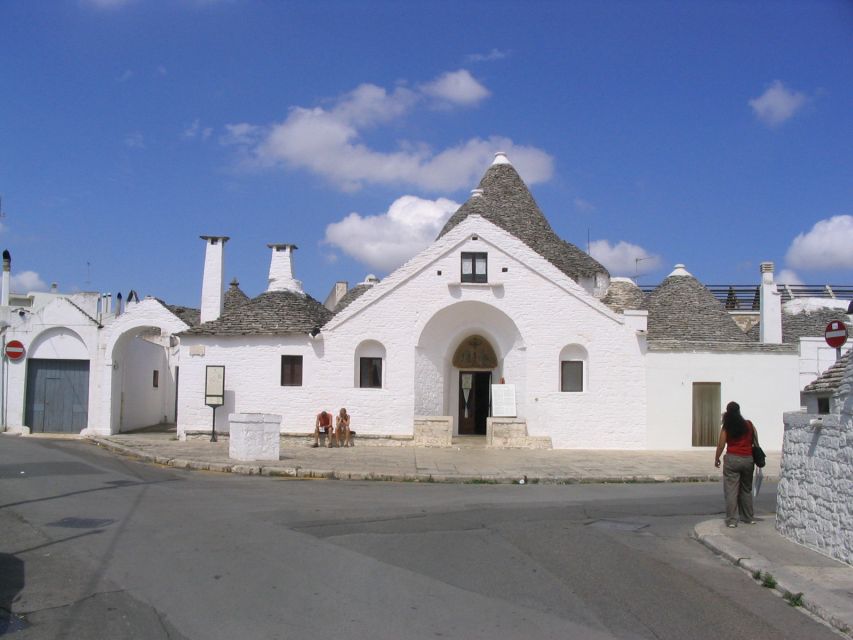
The walk through the trulli leads to the Church of San Antonio, built in the shape of a trullo. It is an unusual sight and a fitting stop after you have spent time learning how the houses are formed.
The church gives the architecture a different purpose. You have seen trulli as homes, shops, and historic structures. Here, the familiar cone becomes part of a religious building. That contrast helps tie the tour together.
Do not expect a large cathedral-style visit. The attraction is the form itself and the way it fits Alberobello’s architectural identity. Your guide can point out what makes the church distinctive and place it within the wider walk through the town.
This final stop also works well because it comes after the denser streets of Rione Monti and the residential character of Aia Piccola. By then, you should have seen the main types of trulli the tour is designed to explain.
How much value do you get for $40?
At $40 per person, this tour is not the cheapest way to walk around Alberobello. You can see the streets and roofs without paying for a guide. The question is what you want from your time there.
I think the price is reasonable if you care about the story behind the buildings. The tour includes a licensed guide, a structured walk through both major districts, the Belvedere view, the church, and entry into a traditional trullo. That is more useful than a simple orientation stroll.
The value improves if you are visiting Alberobello for only part of a day. In roughly two hours, you get a clear introduction and can then return to the lanes or continue elsewhere in Apulia with a better understanding of what you saw.
A private group is available if you want a more personal pace or have specific questions. A shared group may be the better choice if you mainly want the standard route at the listed price. The experience requires at least two participants to operate, so solo bookers should check availability before making firm plans.
Children under 18 go free, which can make the tour a better deal for families. The walk is also available in English, French, Spanish, and Italian, so choose the language in which you will follow architectural details most easily.
What the guide adds to the experience
The guide quality matters here more than fancy equipment or added transport. Alberobello is small enough to explore, but its story is not obvious from the street.
The strongest guide comments focus on four things:
- How and why the trulli were built from stone without cement
- What the cone roofs and walls reveal about the buildings
- How Rione Monti differs from Aia Piccola
- How local people use and preserve the houses today
Francesco has been praised for strong English, detailed explanations, local visits, and food tasting. Mario is noted for clear explanations and humor. Silvia and Floriana are described as warm, informative guides, while Alessandro is praised for patience and thoughtful local contact.
These names are useful when you are comparing guide options, but you cannot assume a specific person will lead your departure unless your booking confirms it. The main point is that the experience depends on live commentary, not an audio recording or a self-guided map.
A guide can also adjust the conversation to your interests. If you care about construction, ask about the stones and roof. If you care about daily life, ask about the interior layout and local residents. If you want food advice, ask where to eat after the walk. One guide is specifically praised for lunch suggestions.
Practical details for planning your visit
The tour lasts between one and a half and two hours. Starting times vary, so check availability before planning a train connection, restaurant booking, or onward trip.
Transfers are not included. You need to reach the meeting point yourself, and the meeting point can change depending on the option you select. The activity finishes back at the meeting point, which makes it easier to continue exploring on foot afterward.
The route includes narrow alleys and several districts, so comfortable shoes are a sensible choice. The supplied details do not specify accessibility conditions, so ask the provider directly if you need information about surfaces, steps, or mobility needs.
Cancellation is free up to 24 hours before the tour for a full refund. You can also reserve now and pay later, which is useful if your Apulia plans are still moving around.
Because the minimum is two participants, check that the tour is running before you build your whole day around it. A private group is available if that better suits your party.
Who should book this Alberobello walk?
I would recommend it to first-time visitors who want to understand the trulli rather than simply photograph them. It is also a good fit for families, since children under 18 are free and the unusual houses can hold their attention better than a standard museum visit.
You will get the most from it if you enjoy local architecture, short walking tours, and conversations with a guide. The indoor trullo visit is especially valuable for anyone who wants to know how these striking buildings work as homes.
You may not need it if you have already taken a detailed Alberobello tour, have several hours to wander slowly on your own, or prefer complete independence. Rione Monti can feel tourist-focused, and the tour follows a set route rather than letting you choose every lane.
Should you book it?
Book this tour if you want the main sights explained in a compact, personal walk. The Belvedere terrace, Rione Monti, Aia Piccola, San Antonio Church, and a traditional home give you a well-rounded look at Alberobello.
The strongest reason to book is the guide. A good explanation turns the trulli from pretty cones into clever stone homes with a distinct local story. At $40, the tour offers solid value if you want that context, especially when you have limited time or are visiting with children.
Skip it only if you prefer to wander without a schedule or already know the architecture well. For most first visits, I would choose the guided walk, then use the rest of the day to return to whichever district caught your eye.
FAQ
How long does the Alberobello history walking tour last?
The tour lasts approximately one and a half to two hours. Starting times vary, so check availability when choosing a date.
What parts of Alberobello does the tour visit?
The route includes the Belvedere terrace, Rione Monti, Aia Piccola, and the trullo-shaped Church of San Antonio.
Can I enter a traditional trullo?
Yes. The tour includes a visit to a local home, where you can see how a traditional trullo is arranged and constructed.
What languages are available?
The live tour guide is available in English, French, Spanish, and Italian.
Is this a private tour?
A private group option is available. The standard booking details can vary, so select the group type when checking availability.
Are children allowed to join for free?
Yes. The tour is free for children under 18.
Is transportation included?
No. Transfers are not included. You must make your own way to the meeting point, and the activity ends back there.
More walking tours in Bari
- Bari: Guided Walking Tour
★ 4.7 · 744 reviews - Bari: Pasta Experience Walking Tour
★ 4.7 · 660 reviews - Bari Walking City Tour
★ 4.5 · 511 reviews - Bari: Walking Street Food Tour
★ 4.7 · 458 reviews
Just added in Bari
- UNESCO’s Alberobello and Matera from Bari★ 4.5 · 271 reviews
- Bari Vecchia Group Tour in Italian★ 5.0 · 241 reviews
- Alberobello and Matera Bus Tour, from Bari★ 4.5 · 250 reviews
- Polignano a Mare boat tour emotions, caves, diving and appetizers★ 5.0 · 1,022 reviews
- The Original Street Food Walking Tour in Bari★ 4.5 · 226 reviews
- Boat tour of the Polignano a Mare caves with aperitif★ 4.5 · 595 reviews
- Boat trip to the Polignano a Mare caves★ 5.0 · 395 reviews
- Bari Walking Tour with Pasta Experience★ 4.5 · 270 reviews
Alberobello, Matera & the Trulli Towns, compared.

Sassi Tour with Cave House and Rupestrian Church
Read our review →
Polignano a Mare: Speedboat Cruise to Caves with Aperitif
Read our review →
Polignano a Mare: Cave Boat Tour with Aperitif
Read our review →
Discover Matera, the ancient city – English tour
Read our review →
Polignano a Mare: Boat Trip, Swim & Cave with Aperitif
Read our review →
Polignano a Mare boat tour emotions, caves, diving and appetizers
Read our review →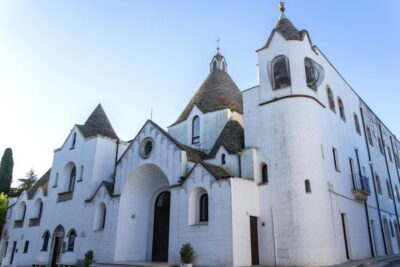
Browse the lists this tour appears in