
Reviewed · CATACOMBS & UNDERGROUND TOURS
Catania: Underground Catania Tickets and Guided Tour
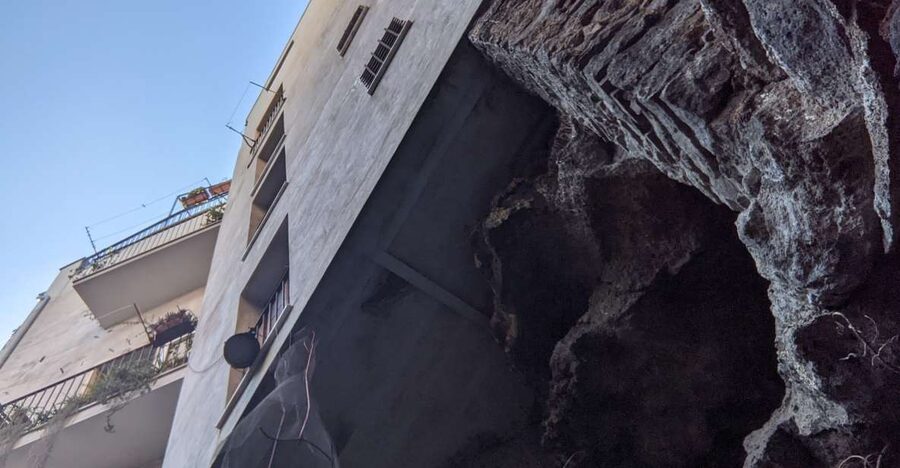
Catania is a city built in layers, and this tour takes you below the polished Baroque streets to see those layers for yourself. You may walk over Roman ruins, lava tunnels, old churches, and the underground Amenano river without knowing they are there.
I like the mix of natural and human history: one stop shows Etna’s lava, another explains Roman Catania, and others reveal the unsettling remains beneath churches. I also like the route through central Catania, especially the walk along Via Etnea, where you get grand palaces and Baroque churches between the underground stops.
The main caution is the walking. You will climb several steps, some uneven or damp, and large groups can make the guide harder to hear in echoing spaces. Check the language when booking, too. Italian tours have sometimes included English explanations, but that can make the pace slower.
Key points at a glance
- Four underground sites: Visit a lava cave, Roman remains, an Amenano-related passage, and underground church spaces.
- Etna beneath the city: See how eruptions and lava flows helped shape Catania, including a prehistoric cave.
- Up to 15 meters below ground: The tour reaches places far below the modern pavement.
- A walking route through central Catania: Move between sites along Via Etnea, with Baroque architecture above you.
- Strong guide-led experience: Guides such as Oreste have explained the archaeology, art, disasters, and city stories with energy and humor.
- Bring proper shoes: Expect steps, irregular footing, and some wet surfaces.
Why underground Catania tells the city’s story so well
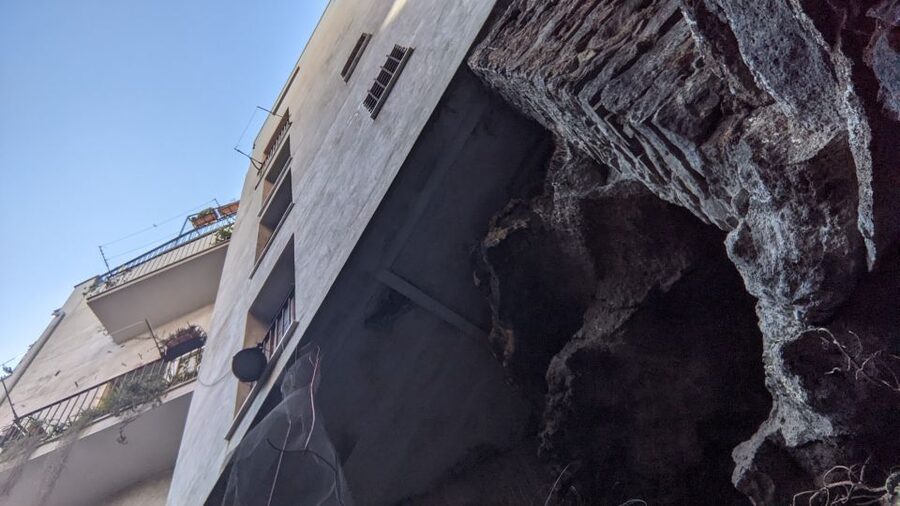
Catania can look like a grand late-Baroque city at street level. Its broad streets, aristocratic palaces, and churches reflect the rebuilding that followed destructive eruptions and earthquakes. But below that surface, you find a much older Catania.
This 2.5-hour tour makes that point in a practical way. Instead of placing all the history in one museum, it takes you from site to site. You see how lava covered earlier buildings, how Roman structures became part of later neighborhoods, and how churches were built over older spaces.
I like this approach because the city above and below stay connected. You may begin beside the remains of the Black Amphitheater, a Roman building that once held around 15,000 people, then walk along Via Etnea past churches and palaces before descending again. The contrast helps you read Catania as a living archaeological cross-section rather than a collection of separate monuments.
The tour also makes sense for first-time visitors who want more than the usual central-city walk. Some of the underground locations are behind locked doors or are not obvious from the pavement. You are not simply looking at another church facade. You are seeing what the building was built over, what lava buried, and what older communities left behind.
Other things to see below Catania:
- Naples: Naples Underground Entry Ticket and Guided Tour
★ 4.4 · 21,781 reviews - Colosseum: Underground and Ancient Rome Tour
★ 4.7 · 12,691 reviews - Naples: Catacombs of San Gennaro Entry Ticket & Guided Tour
★ 4.6 · 7,941 reviews
Starting beside the Black Amphitheater
The meeting point is generally in front of the ruins of Catania’s Black Amphitheater, though the precise meeting point can vary with the option booked. This is a useful starting place because the Roman structure immediately sets the theme: modern Catania sits on top of an older city.
The amphitheater was a huge public building, with room for about 15,000 people. You do not spend the whole tour here, but beginning beside it gives the guide a firm way to explain Roman Catania and the changes that came later.
From here, the tour becomes a walking route through the center. You move between the different underground locations rather than riding in a vehicle. That means you see the ordinary streets between the attractions, including Via Etnea and its late-Baroque architecture.
This portion is valuable because it gives you orientation. The guide can point out the buildings and streets above the spaces you will later visit below. It also means the tour is not only a series of descents and explanations. You get a compact introduction to central Catania along the way.
Allow some energy for the full route. The tour lasts around two and a half hours, and the walking between sites adds to the physical effort. You might find the pace comfortable, but it is not a seated museum visit.
Seeing Etna’s lava in a prehistoric cave
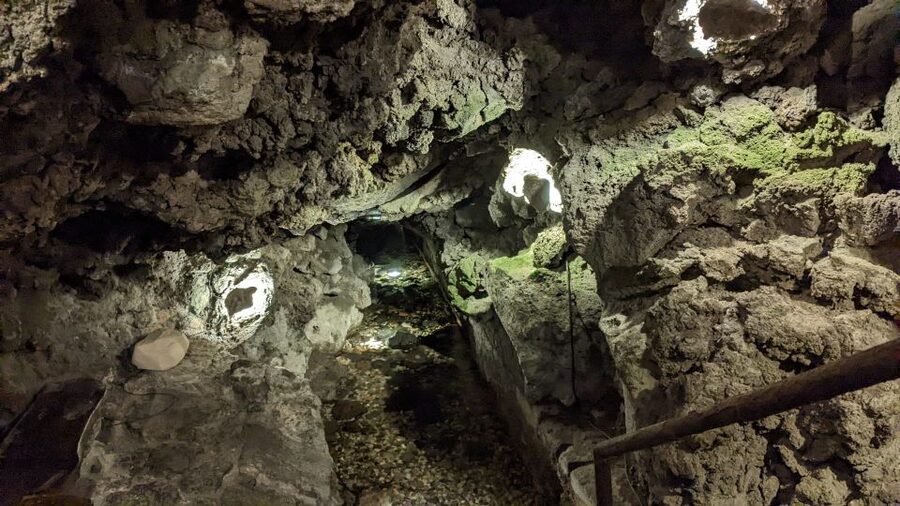
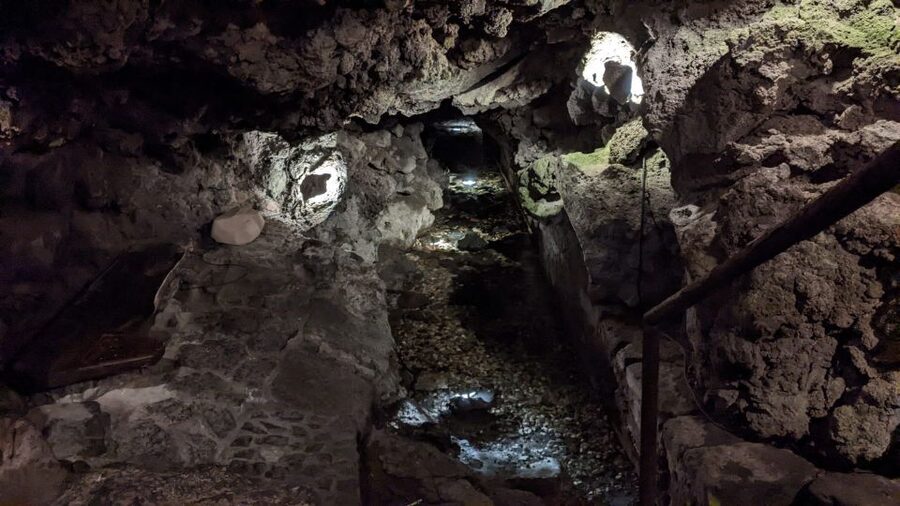
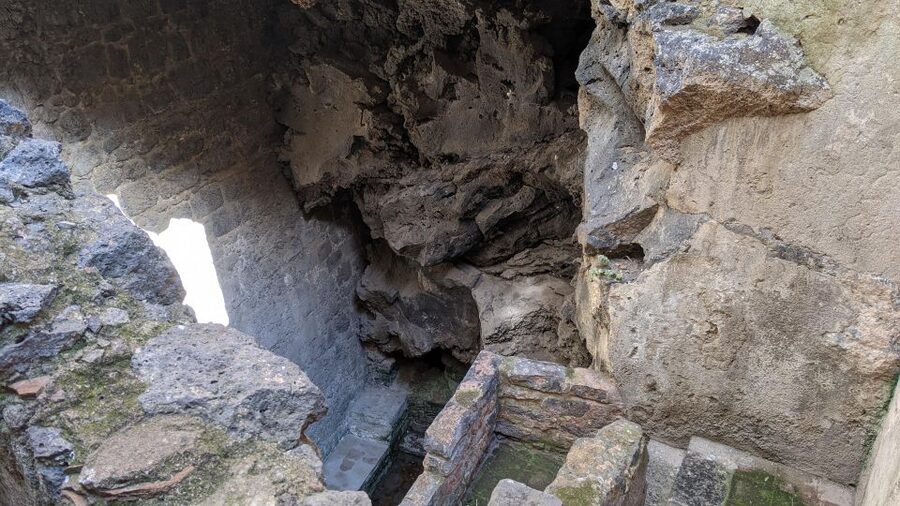
One of the most memorable parts is the prehistoric lava cave. Here the story moves from architecture to geology. Etna’s eruptions are not a distant backdrop to Catania. Lava has repeatedly altered the city, covered older areas, and affected where people could live and build.
The cave helps make that force easier to understand. Instead of hearing only about eruptions in abstract terms, you are standing inside a space formed by volcanic activity. The guide explains how lava flows shaped the ground below the city and how later construction took place on top of those flows.
This is also one of the better stops for a hot day. The underground areas are cooler than the streets, and one account of the tour notes a short drink stop along the route. Still, do not treat the cave as a place for casual sandals. The footing can be irregular, and some areas may be damp.
The volcanic stop works best if you are interested in how nature and urban life interact. If your main interest is medieval art or church decoration, the later stops may appeal more. For most people, though, the cave gives the tour its strongest sense of place. Catania is not merely a city near a volcano. It is a city repeatedly reshaped by one.
Following the Amenano beneath the streets
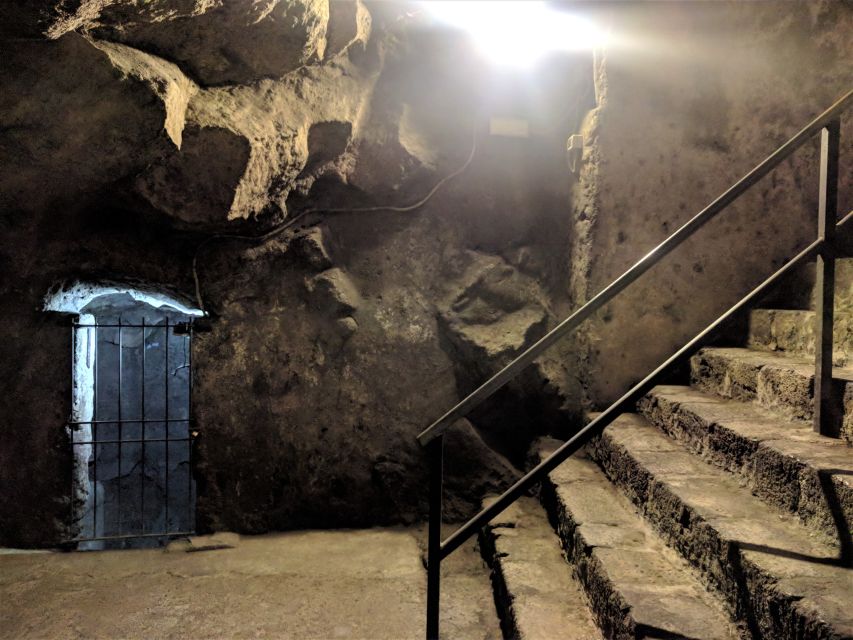
The Amenano is an underground river associated with the springs beneath Catania. The tour follows this water into a cave, taking you into a part of the city that is especially easy to miss from above.
At street level, the river is not always obvious. Underground, the guide can show how water moved beneath the city and how natural springs became part of Catania’s story. This stop adds a different mood from the lava cave. The lava explains the city’s solid foundation, while the Amenano brings movement, sound, and water into the picture.
Expect an enclosed setting, so this is not ideal if you have claustrophobia. Acoustics can also be tricky. In a damp cave, voices may echo, and people at the back of a large group can have trouble hearing every detail.
That is one reason I would try to stay near the guide. The explanations are central to the experience, especially when the physical remains are dark or difficult to interpret on their own. The guide links the water, the streets, and the buildings above, turning a short underground passage into a lesson about how Catania developed.
A few more things to do in Catania
- Mount Etna: Roundtrip Cable Car and 4×4 Bus Ticket
★ 4.3 · 1,602 reviews - Mount Etna: Return Funivia dell’Etna Cable Car Ticket
★ 4.0 · 240 reviews - Vatican: Museums & Sistine Chapel Entrance Ticket
★ 4.5 · 144,003 reviews - Milan: Cathedral and Duomo’s Terraces Entrance Ticket
★ 4.6 · 61,054 reviews
Entering Roman remains below modern Catania
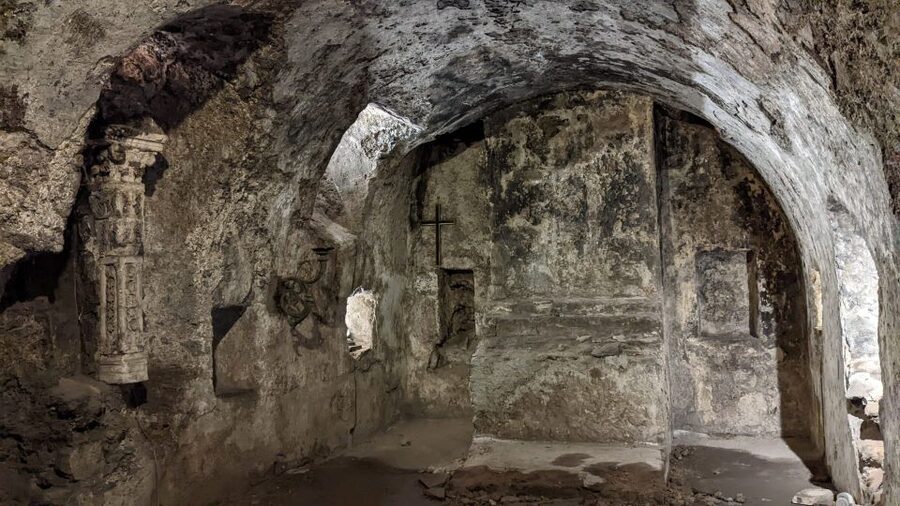
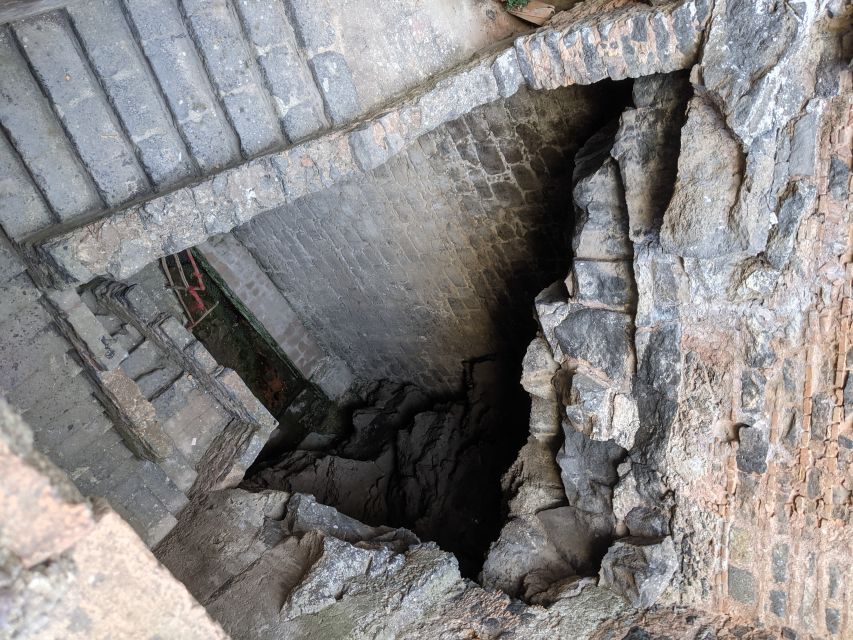
The Roman stop gives you a direct look at the city’s ancient past. Depending on the route and current access, this may include Roman baths or another Roman monument. The important point is that you are not only seeing Roman ruins in an open archaeological park. You are seeing them incorporated into the modern city.
The Roman remains also show how Catania’s buildings changed function over time. Later structures, streets, and churches grew around older foundations. The layers are not always tidy. That is part of the interest.
Your guide’s explanation matters here. Without context, a wall or stone chamber can look like a dark basement. With the right story, you begin to understand its age, purpose, and relationship to the city above.
The tour includes entry to four underground places, and the Roman site is one reason the price feels fair. A normal stroll through Catania can reveal impressive exteriors, but it will not usually get you into these lower levels. One of the Roman attractions is normally a paid site, while some of the other spaces are not open for casual sightseeing.
Church crypts, relics, and uneasy stories
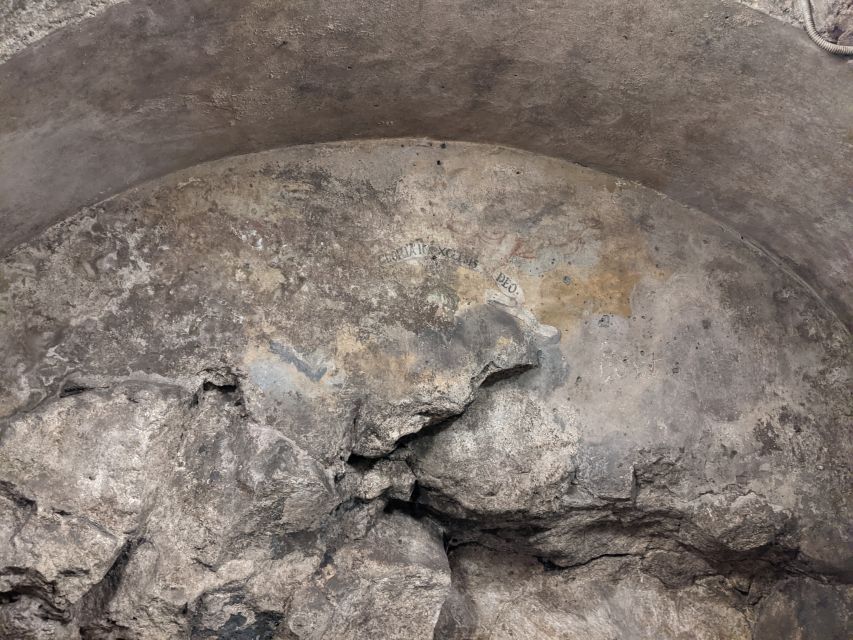
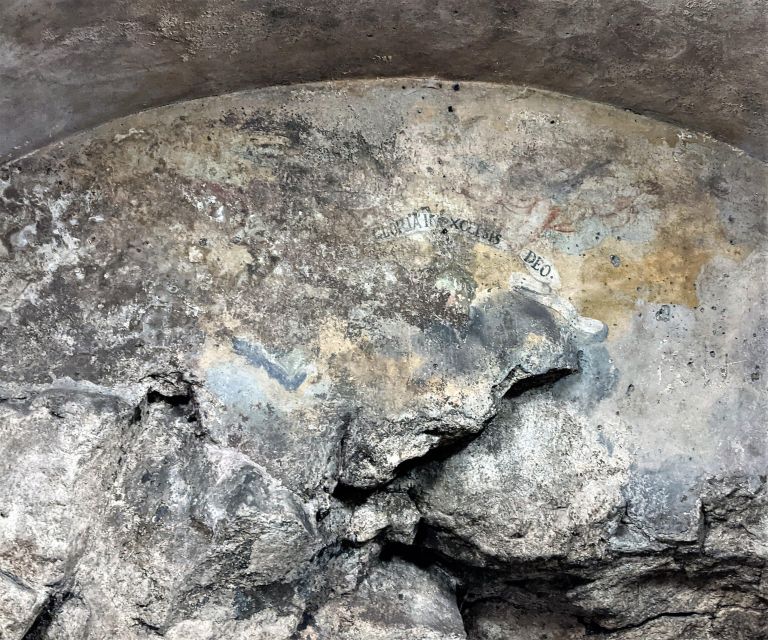
The church-related stops add the most human drama. One cave is beneath a church and is linked with the early keeping of Saint Agatha’s relics. Another is beneath the damaged Church of Saint Euplius, described as having been bombed.
These spaces are not simply religious rooms. They show how worship, disaster, memory, and rebuilding overlap in Catania. The guide may point out frescoes, explain changes in religious practice, and describe the buildings’ connections to different periods of the city.
The late-Baroque setting above ground makes the descent more striking. You may first see a handsome church facade, then go below it into a plain, confined, or damaged space. That physical change gives weight to the stories of earthquakes, eruptions, war, and rebuilding.
I would not call these stops frightening in a theatrical sense, but they can feel eerie. The low light, old masonry, and stories of relics and destruction create a serious mood. If you prefer only bright, polished attractions, this may not be your favorite outing. If you like archaeology and the less polished side of urban history, these are likely to be the strongest stops.
The guide’s personality makes a difference. Oreste has led this tour with a lively mix of archaeology, art history, and local stories. Several booking options have used guides who switch between Italian and English, and the best guides keep the explanations clear without turning the visit into a dry lecture.
What the walking route adds
The route between the sites is not wasted time. You walk through central Catania, particularly along Via Etnea, while the guide explains what you are seeing above ground.
This is useful because the underground sites can otherwise feel disconnected. A Roman wall, a lava cave, and a church chamber belong to different periods, but the walk ties them to the present city. You see aristocratic palaces and late-Baroque churches while thinking about what may be below the pavement.
There is a practical downside. Catania’s central streets can be busy, and a large group may stretch out while crossing or moving along Via Etnea. One guide was praised for being easy to follow in crowded streets, but group size can vary.
The tour may include close to 30 people, and bilingual explanations take longer. In echoing underground rooms, it may also be difficult to hear from the back. If you want the most personal experience, choose a time with a smaller group when possible and stand close to the guide.
Price, time, and what you receive
At about $29 per person, the tour is good value if you want access to several sites rather than one attraction. The price includes entry to four underground locations and a live guide in Italian or English, depending on the option and availability.
The value comes from the combination. You receive a guided city walk, four admissions, specialist interpretation, and access to places you might not find or enter on your own. Two of the spaces are described as unavailable for ordinary open sightseeing, which adds real value beyond the ticket cost.
It is less compelling if you dislike walking, steps, or enclosed spaces. You are paying for access and explanation, not comfort. There is no hotel pickup or drop-off, so you make your own way to the meeting point in central Catania.
The tour runs rain or shine. Only severe conditions that make a site unusable are likely to cause a cancellation, and an inaccessible site may be replaced with another underground location chosen by the organizer. That flexibility is helpful, but it means the exact four stops can depend on access on the day.
Free cancellation is available up to 24 hours before the start, and you can reserve now and pay later. Those terms are useful if your Sicily plans depend on weather or Etna conditions.
How to prepare for the descent
Wear sturdy shoes with a good grip. You will climb several steps, and some may be uneven or wet. Large bags and luggage are not allowed, so arrive with only what you need.
The tour is not suitable for wheelchair users, electric wheelchair users, or people with significant mobility impairments. It is also a poor fit if you have claustrophobia or motion sickness. The stated weight limit is 280 pounds, or 127 kilograms.
You should also check the language carefully. The activity is offered in Italian and English, but some departures have been primarily Italian. When English-speaking participants joined an Italian tour, guides including Oreste sometimes translated the explanations into English, which was generous but naturally made the tour longer.
If every detail in English matters to you, book a clearly marked English departure. If you are comfortable with a bilingual tour, the language issue may be manageable, especially when the group is small.
Who will enjoy this Catania tour most
I would recommend it most to people who like archaeology, geology, churches, and the physical evidence of disasters. You do not need specialist knowledge. The guide explains the main ideas as you go, and the range of stops keeps the subject from becoming too narrow.
It also suits repeat visitors. Even people from Catania have used the tour to reach locations they had never seen. That tells you something useful: this is not simply a basic introduction for first-time tourists.
Families with older children may enjoy the sense of going below the city, but the steps and enclosed spaces need consideration. Young children may find the historical explanations long, especially if the guide is working in two languages.
I would skip it if your time in Catania is very limited and you have not yet seen the city’s main squares and churches. The tour passes through the center, but it is not a replacement for a first orientation walk. It is best as a second layer, after or alongside the main sights.
Should you book Underground Catania?
Book it if you want to understand why Catania looks the way it does. The tour connects Etna’s eruptions, Roman construction, the Amenano springs, religious life, and repeated destruction in one compact route.
The strongest reasons to go are the four-site format, access to places you would likely miss, and the quality of the guide-led storytelling. The main tradeoffs are uneven steps, enclosed rooms, possible group noise, and slower pacing when Italian and English are both used.
At $29, I consider it a worthwhile use of half a day for history-minded visitors. Wear good shoes, check the tour language, stay near the guide, and expect Catania to make more sense after you have seen what lies below it.
FAQ
How long does the Underground Catania tour last?
The tour lasts approximately 2.5 hours, including the walking between the underground sites.
How many underground places are included?
Entry to four different underground places is included. The exact sites may change if one location is inaccessible or unavailable.
Which languages are available?
The activity is offered in Italian and English. Some departures may be primarily in Italian, with the guide providing English explanations when possible, so check the selected option carefully.
Is hotel pickup included?
No. Hotel pickup and drop-off are not included, and you must make your own way to the meeting point.
Is the tour suitable for wheelchair users?
No. The tour is not suitable for wheelchair users, electric wheelchair users, or people with mobility impairments because of the steps and uneven surfaces.
Can I cancel if my plans change?
Yes. You can cancel up to 24 hours in advance for a full refund. The reserve-now, pay-later option is also available.
Just added in Catania
- Tour Etna & Wine Tasting★ 5.0 · 317 reviews
- The Godfather Movie Tour★ 5.0 · 275 reviews
- The Original Catania Street Food and Market Tour by Streaty★ 5.0 · 345 reviews
- Etna and Alcantara Gorges Excursion★ 4.5 · 256 reviews
- Etna, Wine and Alcantara Tour – From Taormina★ 5.0 · 464 reviews
- Syracuse, Ortigia and Noto walking tour from Catania★ 5.0 · 273 reviews
- Mt Etna and Wine tasting tour from Catania★ 5.0 · 282 reviews
- Etna Tour in 4×4★ 5.0 · 583 reviews
Catacombs & Underground Tours, compared.
Naples Underground Entry Ticket and Guided Tour
Read our review →
Colosseum: Underground and Ancient Rome Tour
Read our review →
Catacombs of San Gennaro Entry Ticket & Guided Tour
Read our review →
Crypts and Catacombs Underground Tour with Transfers
Read our review →
Expert Guided Tour of Colosseum Arena OR Underground, and Forum
Read our review →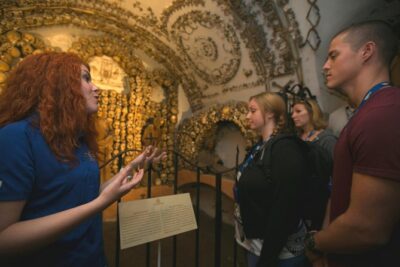
The Original Roman Crypts and Catacombs Tour with Transfers
Read our review →
Colosseum Underground Small Group Guided Tour
Read our review →Browse the lists this tour appears in