
Reviewed · WALKING TOURS
Experience Florence’s Art and Architecture on a Walking Tour
Florence is compact, but its story is not. In a little over two hours, this walking tour links Santa Maria Novella, the Duomo, Orsanmichele, Piazza della Signoria, and Santa Croce, giving you a useful first look at the city without asking you to spend museum money.
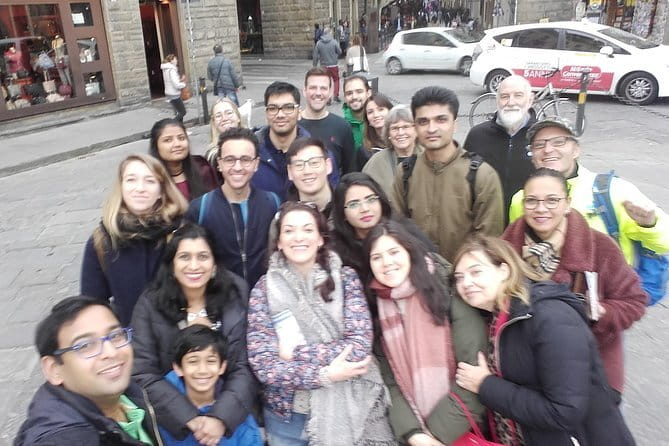
I like two things right away: the route covers Florence’s essential sights in a sensible loop, and the guides add small details, including wine windows and less obvious streets, that you could easily miss on your own. Guides named Ludi, Natalia, Ludovica, and Ryan have been praised for clear explanations, good local tips, and a pace that keeps the group together.
The main concern is sound. Most groups are meant to stay near 20 people, but one August group grew past 40, and some people could not hear the guide even with a small speaker. If you need every word, stay close and speak up early. This is also a tip-based tour, so the low booking price is not the whole cost.
Key points to know before you book
- Seven major stops in about 2 hours 15 minutes: The route takes in Santa Maria Novella, the Duomo, Orsanmichele, Piazza della Signoria, and Santa Croce.
- A strong first-morning orientation: You finish near Santa Croce with a clear sense of where Florence’s central sights fit together.
- Guides with different strengths: Ludi is praised for local tips and offbeat details, while Natalia receives high marks for art, Medici history, and a warm manner.
- A tiny booking price, plus a tip: The listed cost is $3.63 per person, but the tour operates on the familiar pay-what-you-think-it-is-worth model.
- Sound can affect the experience: The guide may use a mini-speaker, but there are no stated headsets, and a large group can make listening difficult.
- No interior tour of the main monuments: The stops focus on exterior architecture and stories. Admission to the cathedral complex is not included.
Starting at Santa Maria Novella
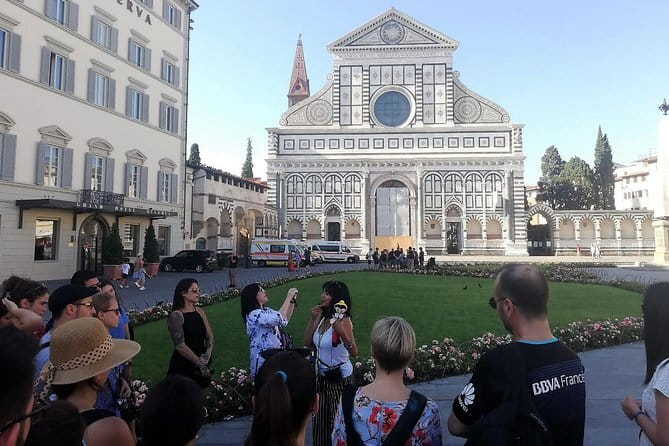
Meet at 10:30 a.m. in front of the Basilica of Santa Maria Novella, at Piazza di Santa Maria Novella 4n. This is a practical starting point near public transportation and close to Florence’s main railway station, though the exact meeting area can feel busy with people coming and going.
The basilica gives the tour an immediate visual lesson. Its famous facade introduces the balance of colored marble and careful geometry that appears again and again in Florence. You spend about 10 minutes here, hearing about the church’s story before moving into the city center.
Do not expect an extended church visit at this stop. The admission is free, but the tour is built around an outdoor explanation rather than time inside the basilica. If Santa Maria Novella is high on your list, plan a separate visit when you can look around without keeping up with the group.
Other walks around Florence:
- Florence: Guided Walking Tour
★ 4.5 · 3,334 reviews - Skip the line: Uffizi and Accademia Small Group Walking Tour
★ 4.5 · 3,135 reviews - Florence: Guided Walking Tour
★ 4.6 · 1,602 reviews
Via de’ Tornabuoni and Florence’s grand streets
The route then heads along Via de’ Tornabuoni, one of Florence’s best-known shopping streets. The point is not simply window-shopping. This stretch helps explain how the city’s old wealth, grand palaces, and modern retail life occupy the same narrow center.
You will pass Piazza Antinori, Palazzo Strozzi, and Piazza Santa Trinita. The guide connects the buildings and squares with Florence’s changing social and artistic life. Palazzo Strozzi is especially useful as a landmark because it shows how a powerful Florentine family expressed status through architecture.
This section also gives you a break from the biggest crowds around the Duomo. One of the appealing features of the route is that it does not rush from postcard to postcard. You get some of the main streets, but also a feel for how the center is laid out between them.
Piazza della Repubblica and the Roman city
At Piazza della Repubblica, the tour pauses for about five minutes to explain Florence as a Roman settlement. The square is broad and open, a sharp contrast to the tight medieval streets nearby.
This is a short stop, but it provides useful context. Florence did not begin with the Medici or the Renaissance. The city’s layers include Roman planning, medieval power, merchant wealth, and later changes that reshaped the center.
The square can be noisy and full of movement, so this is another place where your position matters. Stand near the guide rather than at the back of the group. The tour leader may be speaking while people are passing through, and hearing is a recurring practical issue on this walk.
The Duomo: Florence’s essential view
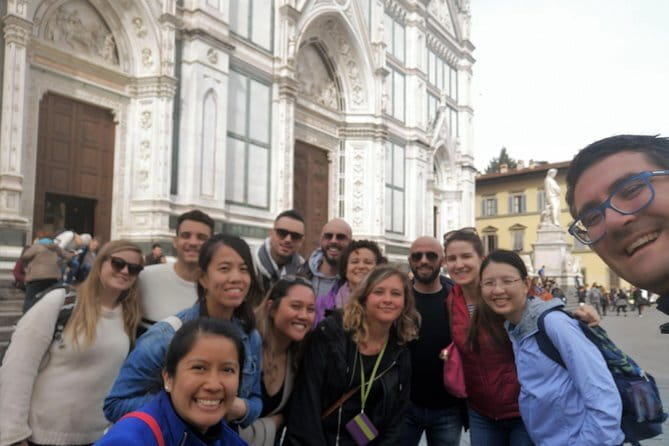
The Cathedral of Santa Maria del Fiore is the visual high point of the morning. The stop includes the cathedral, the Baptistery, Giotto’s Campanile, and Brunelleschi’s dome. You spend about 10 minutes here, enough for an explanation and photographs, but not enough for an interior visit or a climb.
The value of a guide is clear at this spot. It is easy to look at the marble facade and enormous dome without understanding the rivalries, engineering problems, and civic pride behind them. A good explanation turns a famous view into a sequence of decisions made by builders, artists, and Florentine leaders.
The cathedral stop has a firm limit. Admission is not included, and this experience does not function as a skip-the-line entry tour. If you plan to enter the cathedral complex, book that separately and allow extra time. Do not count on fitting a full interior visit into this walking tour.
For a first visit, I like seeing the Duomo from the outside before deciding how much of your day to give it. The tour helps you understand what you are looking at, then leaves you free to return for a longer visit.
Same base, a different kind of day:
- Florence: Skip-The-Line Uffizi Gallery Timed Entry Ticket
★ 4.5 · 27,832 reviews - Tuscany Day Trip from Florence: Siena, San Gimignano, Pisa and Lunch at a Winery
★ 5.0 · 21,634 reviews - Florence: Timed Entrance Ticket to Michelangelo’s David
★ 4.6 · 16,983 reviews - Florence: Michelangelo’s David Skip-the-Line Entry Ticket
★ 4.5 · 12,764 reviews
Orsanmichele and sculpture in the street
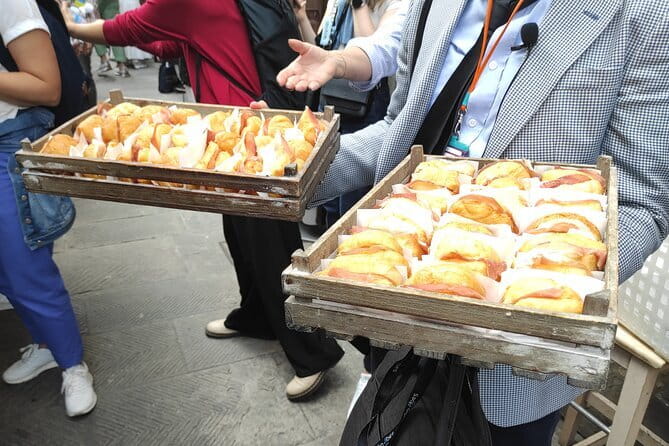
Church and Museum of Orsanmichele is a more unusual stop. The building began with a practical civic role before becoming a church, and its exterior is lined with sculpture connected to Florence’s guilds and leading artists.
The guide points out work associated with Donatello, Ghiberti, Giambologna, Brunelleschi, Verrocchio, Sangallo, and Orcagna. That list alone shows why this stop matters. Florence’s art is not confined to major museums. Important sculpture appears on the buildings you pass while walking to lunch.
The tour allows about 10 minutes here. Admission is listed as free, but the schedule suggests an exterior-focused stop rather than a detailed museum visit. If you are an art specialist, you will want more time. If you are trying to understand how art shaped everyday public space, this is an efficient introduction.
Piazza della Signoria, where Florence gets dramatic
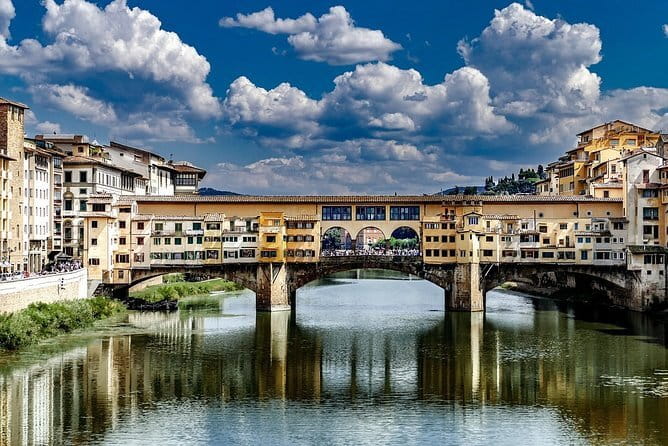
Piazza della Signoria receives the longest stop, about 15 minutes. That makes sense. This square gathers Palazzo Vecchio, the Uffizi, the Loggia dei Lanzi, and the route toward Ponte Vecchio in one powerful view.
The guide covers familiar names and symbols, including the Tower of Arnolfo, Michelangelo’s David, the Marzocco, Cosimo de’ Medici, and Cellini’s Perseus. The real David is in the Accademia, but the square’s copy helps explain how the statue became a civic symbol. The surrounding sculptures turn the square into an open-air lesson in political messaging.
This is also where a strong guide can make the Medici story feel less like a list of names. Natalia has been praised for explaining Florence’s art, politics, and Medici connections in a clear way. Ludi has also received high marks for presenting local history with real enthusiasm.
You will probably want photographs here, and the group makes that possible, but do not expect a long pause at every statue. The tour has a lot to cover. Take your main pictures, listen for the explanation, and return later if you want to study the details.
Santa Croce and the monument to Dante
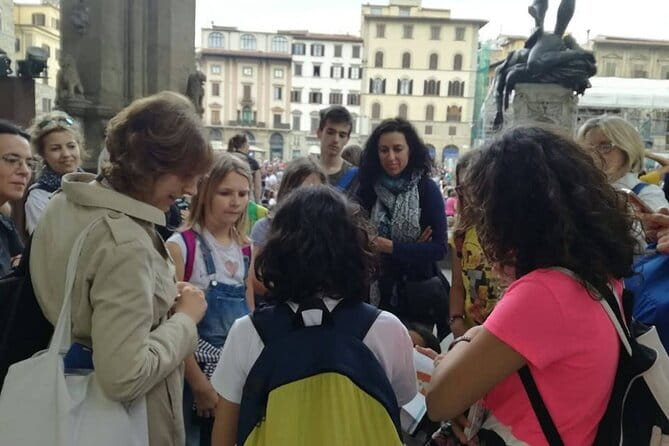
The final stop is the Basilica of Santa Croce, where the tour ends in Piazza di Santa Croce. The basilica is associated with major Florentine figures and contains an important monument to Dante, giving the final section a literary and civic note after the art and political stories of the earlier stops.
Ending here is useful. Santa Croce is a natural place to continue exploring, stop for food, or visit the basilica separately. The official end point is in front of the church at Piazza di Santa Croce 18R, so you are not left in an unclear side street.
The tour allows about 10 minutes for Santa Croce. As at the Duomo and Santa Maria Novella, treat this as an introduction rather than a full church visit. If you want to go inside, check opening arrangements separately and return after the walking tour.
The guides make the difference
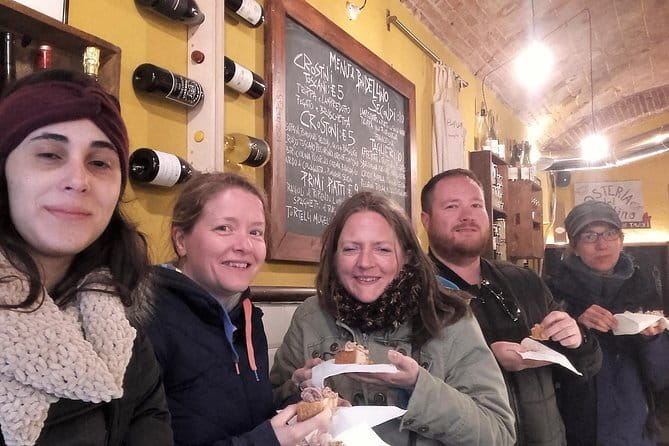
This experience depends heavily on the person leading it. The strongest feedback centers on Ludi, Natalia, and Ludovica, with repeated praise for clear English, local knowledge, patience, and an engaging manner.
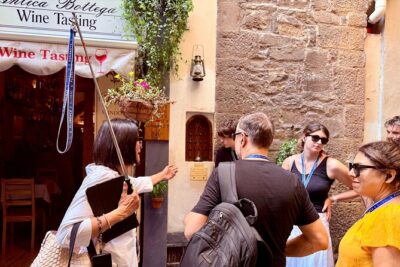
Ludi is especially useful if you want more than the standard list of monuments. Her tips have included food, toilets, viewpoints, quieter streets, and Florence’s small wine windows. These openings in old buildings are easy to miss, and they are exactly the sort of detail that gives a walking tour personality.
Natalia is a good match for you if art and Medici history are your main interests. She has been described as friendly, patient, and well informed, with a talent for connecting with the group. Ludovica has been praised for taking a less predictable route and offering information that differed from what people had heard on other city tours.
The guide may need to adjust for heat, crowds, or city events. One tour continued smoothly during an annual marathon, and another found shaded places on a very hot day. Those small choices matter in Florence, especially when you are standing on stone streets under the summer sun.
Group size, sound, and walking pace
The stated maximum is 20 people, which is a reasonable size for a city walk. It gives you a better chance of hearing, asking a question, and staying with the guide than a large coach-style group.
Still, the actual group size can vary. One account describes a group of more than 40 during a busy August period, and the guide’s mini-speaker was not enough for everyone. The provider has indicated that groups normally stay around 20 to 25, but large unscheduled groups can occur.
My practical advice is simple: arrive on time, stay close to the guide, and tell the guide at once if you cannot hear. Do not wait until the Duomo. There are no stated personal headsets, so your position in the group can make a real difference.
The route lasts around 2 hours 15 minutes and covers several central sights on foot. The pace is meant to be efficient, not leisurely. You should be comfortable walking and standing for the duration. Most people can participate, and service animals are allowed.
What the $3.63 price really means
At $3.63, the booking price is unusually low for a guided city walk. It makes the tour easy to add to a Florence itinerary, especially if you want orientation before spending money on museums and church admissions.
But this is not a traditional fully paid tour at that price. The experience follows a tip-based format, where you decide what the guide’s work was worth at the end. The advertised amount gets you into the group, but you should budget for a tip if the tour serves its purpose.
That arrangement can be excellent value. For very little upfront cost, you get more than a map: you get a route, explanations, city context, and practical advice. It also means you should not judge the tour as if it included private guiding, museum tickets, or audio equipment.
The price does not include admission to the cathedral complex, and the listed stops are primarily outside. That is not a flaw if you want orientation. It is a limitation if you expected a guided tour inside Florence’s main monuments.
Who should book this Florence walk?
I would choose this tour on a first morning in Florence, especially if you want to understand the city before choosing which interiors to visit. It suits solo visitors, couples, and small groups who like history but do not want a full-day commitment.
It is also useful for a short stay. The route reaches the main central sights quickly, and the ending at Santa Croce leaves you well placed to continue on foot. If you have already taken several Florence tours, the route may still offer fresh details through the quieter streets and wine-window sightings, though the major landmarks will naturally be familiar.
You may want another option if you need guaranteed audio clarity, a fully private experience, or detailed time inside each church and museum. The same applies if standing in a large group is difficult for you. The tour’s low price does not solve those practical limits.
Cancellation and booking details
You receive confirmation at booking. Free cancellation is available up to 24 hours before the 10:30 a.m. start time for a full refund. Changes or cancellations inside that 24-hour window are not accepted for a refund.
The walk depends on good weather and a minimum number of participants. If the provider cancels for either reason, you are offered another date or experience, or a full refund.
Should you book it?
Book this walk if you want a fast, inexpensive introduction to central Florence with a real guide rather than a phone map. The route is well chosen, the city’s major art and architecture appear in a logical order, and guides such as Ludi and Natalia add the sort of local advice you can use for the rest of your stay.
Go in with the right expectations. This is a tip-based orientation walk, not an interior museum tour. Stay close so you can hear, allow for a group that may occasionally be larger than planned, and keep a separate plan for the Duomo or Santa Croce interiors. For the price, it is a smart way to get your bearings quickly.
FAQ
Where does the Florence walking tour start?
It starts at Piazza di Santa Maria Novella 4n, in front of the Basilica of Santa Maria Novella, at 10:30 a.m.
Where does the tour end?
The walk ends at Piazza di Santa Croce 18R, in front of the Basilica of Santa Croce.
How long does the walking tour last?
The tour lasts approximately 2 hours 15 minutes.
Is admission to the cathedral included?
No. Admission to the Cathedral of Santa Maria del Fiore is not included. The tour covers the cathedral, Baptistery, Giotto’s Campanile, and Brunelleschi’s dome as sightseeing stops.
What language is the tour offered in?
The tour is offered in English.
How many people can join the tour?
The stated maximum is 20 participants. The provider notes that groups are normally limited to about 20 to 25 people, although larger groups have occurred during especially busy periods.
Just added in Florence
- Wine Tasting Experience in Ponte Vecchio: Best Tuscany selection!★ 5.0 · 197 reviews
- Walking Food Tour of Florence with Tastings and Wine★ 5.0 · 518 reviews
- Wine Experience In Chianti Hills from Florence★ 4.5 · 195 reviews
- Florence Sunset Food Tour with Wine & Dine at a Tuscan farmhouse★ 5.0 · 194 reviews
- Uffizi and Accademia Small Group Guided Tour★ 4.5 · 449 reviews
- Val d’Orcia Brunello Wine Tour with Montalcino and Montepulciano★ 4.5 · 359 reviews
- Uffizi Gallery Timed Entry Admission Tickets★ 4.0 · 392 reviews
- Uffizi Gallery Small Group Tour with Guide★ 4.5 · 879 reviews
Walking Tours, compared.
Guided Walking Tour & Last Supper Visit with Ticket
Read our review →
Rialto Bridge & Offbeat Unusual Venice Walking Tour
Read our review →
Private 3 hrs Venice Tour: St Mark’s, Walking tour & Boat tour
Read our review →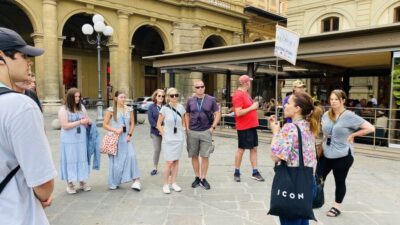
Skip the line: Uffizi and Accademia Small Group Walking Tour
Read our review →Browse the lists this tour appears in