
Reviewed · DUOMO & CATHEDRAL TOURS
Siena: Walking Tour and Skip-the-Line Duomo Tickets
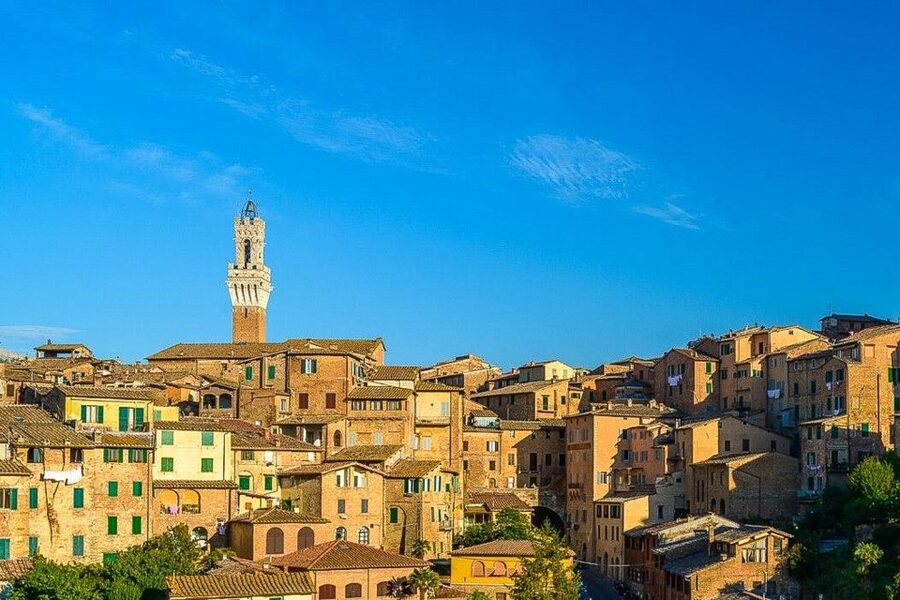
Siena’s real story is not only in its cathedral. It lives in the Contrade, the fiercely loyal neighborhood districts that spend much of the year preparing for the Palio, a bareback horse race around Piazza del Campo. This tour connects that living tradition with Gothic palaces, St. Catherine’s church, and the city’s remarkable Duomo.
I like two things right away: the guide gives you a useful orientation before you start exploring alone, and the skip-the-line Duomo entry can save serious time in a busy season. Guides such as Elio, Claudia, Giorgia, Julia, and Ambra have been praised for clear explanations, humor, and a real connection to Siena.
The tradeoff is pace. Two hours is enough for a strong introduction, not a leisurely study of every church and palace. Some groups have also been larger than ideal for Siena’s narrow streets, and the supplied audio headsets may be hard to hear in noisy places.
Key points to know before booking
- The Palio and Contrade give the walk a local focus: You learn why Siena’s neighborhoods still matter so much today.
- The Duomo comes at the end: Save time and energy for one of Italy’s great churches, filled with work by Donatello, Michelangelo, Bernini, and others.
- The guides make the difference: Elio, Claudia, Giorgia, Julia, Ambra, and Elena have all been praised for warmth, humor, and strong knowledge of Siena.
- The meeting point is simple: Meet at Piazza San Domenico, beneath the large tree in front of the church.
- Dress for church entry: Cover your shoulders, and wear knee-length shorts or skirts. Sleeveless shirts, short skirts, and bare feet are not allowed.
- Expect cobblestones and stairs or uneven footing: This tour is not suitable for people with mobility impairments.
Starting at Piazza San Domenico
The tour begins at Piazza San Domenico, under the large tree in front of the church. This is a practical meeting point because the Basilica di San Domenico is one of Siena’s major landmarks, and it sets the tone for the walk.
You start with Siena’s religious and civic identity rather than a quick list of photo stops. The basilica is closely linked with St. Catherine of Siena, the patron saint of Italy. Your guide explains her place in the city and why Siena’s religious life became such an important part of its public story.
This opening also helps you understand the city’s scale. Siena is compact in its historic center, but it is not flat or especially easy underfoot. Narrow lanes, sloping streets, and smooth cobblestones reward comfortable walking shoes. I would not treat this as a quick stroll in a level piazza.
Guides vary by departure, but several names appear often: Elio, Claudia, Giorgia, Julia, Elena, and Ambra. The strongest part of the guiding style is the blend of facts and personal feeling. Claudia, for example, is from Siena and has been praised for explaining the city with obvious pride. Elio is known for a playful style and plenty of jokes, while Julia is often noted for clear speaking and patient answers.
That matters because Siena’s story can become a blur of dates, saints, rival families, and artistic names. A good guide gives you a thread to follow. You are not simply looking at old stone. You are learning how the city’s religion, banking, neighborhoods, and festivals fit together.
More Cathedral Tours in Siena
- Siena: Siena Cathedral and Piccolomini Library Entry Ticket
★ 4.5 · 3,462 reviews - Siena: Cathedral Complex Pass with Audio Guide (OPA SI PASS)
★ 4.4 · 2,773 reviews - Skip the Line: Siena Duomo and City Walking Tour
★ 5.0 · 689 reviews
Walking Siena’s medieval streets
From San Domenico, the route moves through the historic center, a UNESCO World Heritage Site. This is the part of the experience where the city itself becomes the attraction. You walk narrow lanes and see Gothic buildings that still shape daily life, rather than moving from one isolated monument to another.
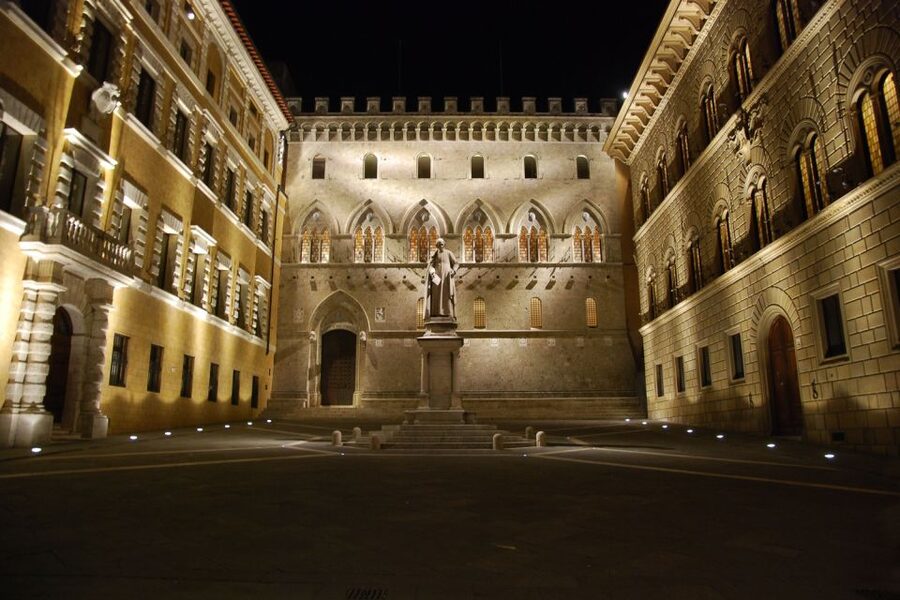
The guide points out Palazzo Tolomei, an imposing private Gothic building, and Palazzo Salimbeni, home to the world’s oldest bank. The bank is a useful reminder that medieval Siena was not only a religious center. Trade and finance helped make the city powerful, and the grand palaces reflect that wealth.
I like this context because it gives the architecture a purpose. You begin to see why the city’s public buildings are so large and decorated, and why Siena competed so intensely with Florence. You also get a look at the main square and its fountain before reaching Piazza del Campo, Siena’s famous central space.
The walk is not a museum tour with every object labeled. It is more like a guided reading of the streets. A doorway, a palace facade, or a neighborhood emblem can lead into a story about old rivalries and local pride. The guide also discusses Sienese food traditions, which gives you useful ideas for eating after the tour.
Several guides have offered restaurant and gelato suggestions at the end of the walk. That can be valuable because Siena’s central streets include plenty of places aimed at passing visitors. Still, treat any recommendation as a starting point and use your own judgment.
Piazza del Campo and the world of the Contrade
Piazza del Campo is the emotional center of the tour. This is where the Palio takes place, a dramatic horse race run bareback around the square. The race itself lasts only a short time, but the traditions around it occupy much of the year.
Your guide explains the Contrade, Siena’s neighborhood districts. Each has its own identity and waits for the chance to take part in the Palio. The Contrade are not just old administrative divisions for a history lesson. They remain tied to local belonging, ceremony, and competition.
This is one of the tour’s most useful subjects because it helps you read details you might otherwise miss. A symbol, banner, or neighborhood name can carry meaning that is not obvious to an outsider. The guides also explain how the Palio connects the city’s past with its present.
The square can be crowded, and a group of more than 30 people may feel large in tight spaces. One useful feature is the headset system, which lets you hear the guide while standing in a busy square or moving through an interior. Audio quality has not always been perfect, though. Some people have found the earpieces difficult to hear, especially when English is not their first language.
The best approach is to stay near the guide, check that your receiver works before leaving the meeting point, and speak up if you cannot hear. That small bit of preparation can make the difference between following the story and catching only fragments.
Inside the Basilica di San Domenico
The Basilica di San Domenico is more than the first stop on the route. It introduces St. Catherine and gives you a chance to connect Siena’s religious life with the buildings around it.
The guide explains St. Catherine’s importance to Siena and to Italy. This part may appeal most if you enjoy learning how saints, civic identity, and local traditions overlap. If your priority is art, you may wish the tour spent more time in the Duomo instead. One person specifically preferred more cathedral time and less time at the bank and St. Catherine’s church.
That is a fair criticism, since the Duomo contains the most concentrated collection of major artworks on this route. Still, the basilica gives necessary background. Without it, the later discussion of Siena’s religious identity and local customs would feel thinner.
The church is also a quieter change of pace after the streets. Remember that church clothing rules apply throughout the tour. You need covered shoulders and knee-length pants or skirts. A shawl or another shoulder covering is a practical item to carry, especially in warm weather.
Other great churches in Siena:
- Siena: 3h Private City Walking Tour with Optional Cathedral
★ 4.7 · 392 reviews - Siena Walking Tour with Cathedral and Crypt & Museum Option
★ 4.9 · 380 reviews - Discover Siena: Guided Walking Tour and Cathedral Visit
★ 4.3 · 314 reviews - Milan: Cathedral and Duomo’s Terraces Entrance Ticket
★ 4.6 · 61,054 reviews
The Siena Duomo and its marble floor
The tour ends at the Cathedral of Santa Maria della Scala, usually called the Duomo of Siena. This is the part that makes the ticket worthwhile for many people, particularly during crowded periods.
The skip-the-line ticket means you do not have to rely on the ordinary ticket queue. One person reported avoiding a line that appeared likely to take around two and a half hours. Queues change by date and time, so you should not assume that exact wait, but fast-track entry is a real benefit when demand is high.
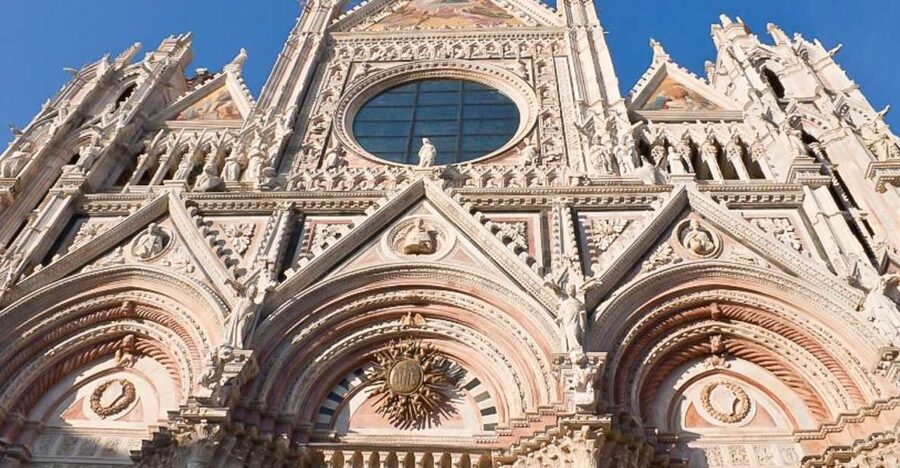
Inside, your guide introduces the chapels and major works by Donatello, Michelangelo, Bernini, and other artists. The building is not a neutral container for art. Its striped marble, sculpture, carved details, and devotional spaces create a unified display of centuries of religious art.
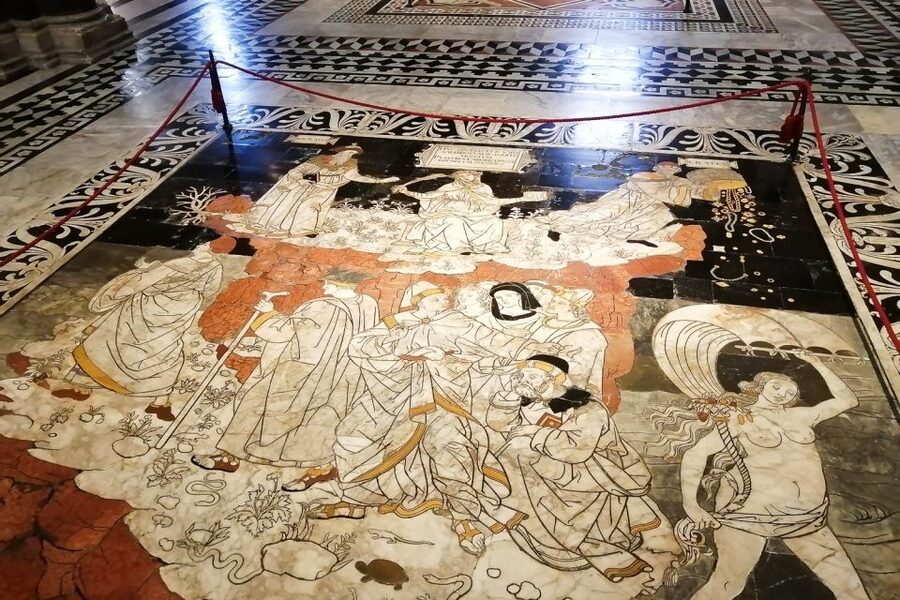
The floor is a particular highlight. Much of it is covered for protection at certain times, but visitors can sometimes see large sections. One person described the uncovered marble panels as a favorite part of the visit. Ask your guide what is visible on your date, since access and display conditions can change.
The cathedral deserves more time than two hours can provide. The good news is that the Duomo is the final stop, and one participant was able to continue looking around after the guided portion ended. Confirm the exact arrangement with your guide on the day, since the included ticket and post-tour access may depend on current entry rules.
If you are an art lover, consider this tour an introduction rather than a complete cathedral visit. You will see the major ideas and learn what to look for, then you may want to return for a slower look.
Is $47 a fair price for two hours?
At $47 per person, this is not the cheapest way to walk around Siena. You are paying for two things: a live English-speaking guide and skip-the-line admission to the Duomo.
The value is strongest if you have limited time in Siena. Several people used the walk as their first activity and then knew which places deserved another look. That is a smart way to use it. You get an overview of the city, learn how the Contrade work, and finish at the building most likely to require advance planning.
The price feels less attractive if you already know Siena well or want a long, slow visit inside the cathedral. Two hours goes quickly. The route covers a lot, and the guide has to keep the group moving.
I would compare the price with the likely cost of buying cathedral entry and trying to arrange a separate guide. The exact value depends on the queue that day, but the ticket can pay off during busy periods. If the line is short and you prefer wandering alone, you may find the guided portion less essential.
Pace, group size, and practical comfort
Most people describe the pace as steady rather than rushed. The guide needs to keep the group on schedule, but several praised the time allowed for questions and photographs. You should still expect a fairly full two hours, with little room for extended stops.
Group size can affect the experience. A larger group is harder to keep together in narrow lanes and makes it more difficult to stand close to a guide inside a church. The headsets help, but they do not solve every problem. If you are sensitive to group tours, this is worth considering before booking.
Rain does not necessarily ruin the walk. The route includes churches and covered interiors, and guides have kept people engaged in wet weather. Still, bring suitable clothing and shoes with good grip. Siena’s stone streets can be uncomfortable when wet.
The tour does not include hotel pickup, so you must reach Piazza San Domenico yourself. Build in time to find the large tree in front of the church. The meeting point is specific, but the surrounding streets can feel confusing if you are new to Siena.
Free cancellation up to 24 hours before the start and the option to reserve now and pay later make the booking less rigid. Those policies are helpful if your Tuscany plans may change.
Who will get the most from this tour?
I would choose this for a first visit, a short stay, or a day when you want Siena to make sense quickly. It suits you especially well if you like local traditions, city history, and art but do not want to research every building before arriving.
It is also a good match if you want help with the Duomo. The building can be overwhelming without a plan, and a guide can direct your attention to the artists, chapels, and floor panels that matter most.
You may want something else if you have limited mobility, dislike cobblestones, or prefer to spend most of your time inside one museum. The tour covers several locations and requires walking through the historic center. It is also not designed as a slow, highly detailed cathedral study.
The guide is a major part of the value. Names change by departure, but the strongest guides bring humor and personal connection. Elio’s light touch, Claudia’s local pride, Giorgia’s detail, Julia’s clarity, and Ambra’s stories about the Palio all fit the kind of guiding that makes Siena easier to remember.
Should you book the Siena walking tour?
Book it if you have two hours, want a clear introduction to Siena, and value fast entry to the Duomo. The best reason to go is the combination of local Palio culture and major art, not simply a checklist of buildings.
Skip it if you want complete freedom, need a fully accessible route, or plan to spend half a day studying the cathedral alone. For most first-time visitors, though, $47 is a reasonable price for a lively orientation, a local English-speaking guide, and a ticket that may save a long wait. Wear proper church clothing, bring good shoes, and ask for a working headset before the group sets off.
FAQ
How long is the Siena walking tour?
The guided experience lasts two hours, including the walk through Siena and the Duomo visit.
What is included in the price?
The price includes a two-hour guided tour with an authorized English-speaking local guide and skip-the-line entrance to the Duomo or Cathedral.
Where does the tour meet?
Meet at Piazza San Domenico, under the large tree in front of the church.
What should I wear to enter the churches?
You need covered shoulders and knee-length pants or skirts. Short skirts, sleeveless shirts, and bare feet are not allowed.
Is the tour suitable for people with mobility impairments?
No. The tour involves walking on Siena’s cobblestone streets and is not suitable for people with mobility impairments.
Can I cancel or pay later?
You can cancel up to 24 hours before the tour for a full refund. You can also reserve now and pay later.
More walking tours in Siena
- Milan: Guided Walking Tour & Last Supper Visit with Ticket
★ 4.7 · 5,409 reviews - Naples: Street Food Walking Tour with Local Guide
★ 4.8 · 4,256 reviews - Venice Walking Tour and Gondola Ride
★ 3.5 · 3,630 reviews - Venice: Rialto Bridge & Offbeat Unusual Venice Walking Tour
★ 4.2 · 3,538 reviews
Just added in Siena
- From Siena: Pienza and Montepulciano Small-Group Tour★ 4.9 · 220 reviews
- Siena: Pasta and Tiramisu Cooking Class with Wine★ 4.8 · 274 reviews
- Siena: Educational Wine Tour & Tasting★ 5.0 · 203 reviews
- Discover Siena: Guided Walking Tour and Cathedral Visit★ 4.3 · 314 reviews
- Siena Walking Tour with Cathedral and Crypt & Museum Option★ 4.9 · 380 reviews
- Siena: San Gimignano, Chianti & Montalcino Small-Group Tour★ 4.6 · 195 reviews
- Montepulciano: Winery Tour and Tasting★ 4.6 · 187 reviews
- Montalcino: Guided Winery Tour and Wine Tasting★ 4.8 · 200 reviews
Duomo & Cathedral Tours, compared.
Cathedral and Duomo’s Terraces Entrance Ticket
Read our review →
Reserved Entrance to Leaning Tower of Pisa & Cathedral
Read our review →
Cathedral & Brunelleschi’s Dome Ticket & Audio App
Read our review →
Milan Cathedral: Duomo Terraces Ticket (No Church Access)
Read our review →
Milan Cathedral Direct Entrance – Terrace Excluded
Read our review →
Fast-Track Milan Cathedral and Terraces Guided Tour
Read our review →
Milan’s Must See: Half-Day Tour of Last Supper, Duomo & La Scala
Read our review →Browse the lists this tour appears in