
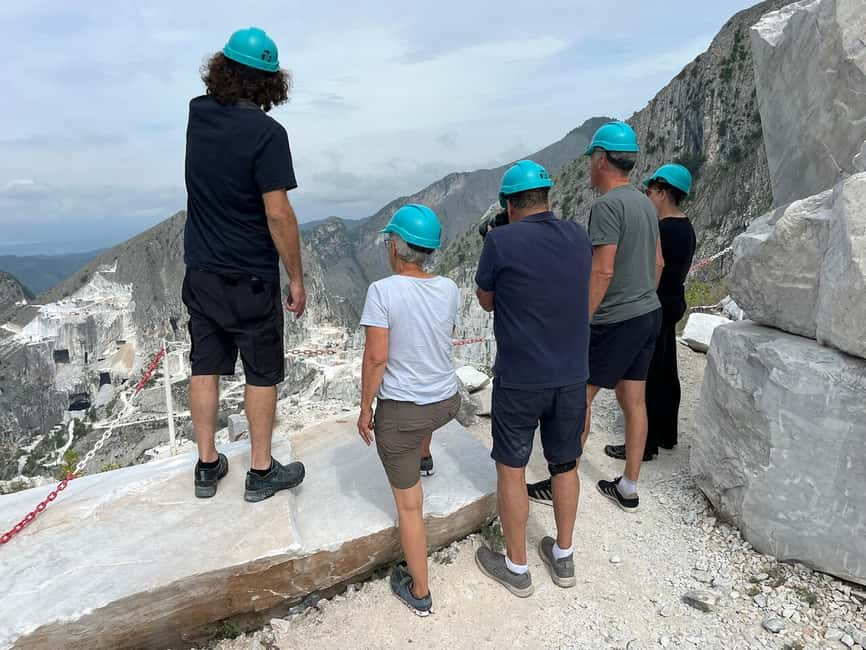
Reviewed · CHIANTI & TUSCAN COUNTRYSIDE TOURS
From Tuscany Carrara: Marble Quarries Tour by Jeep
Carrara’s marble quarries are not a distant photo backdrop. You ride into them by Jeep, following steep, twisting roads toward open cuts and underground workings as high as 1,000 meters above sea level. I like the close look at machinery and excavation, and I like that the trip ends with a slice of Lardo di Colonnata, cured in marble basins.
The main consideration is comfort. The roads are narrow and steep, and the ride can be dusty and bumpy. You should bring water, and this is not a good fit if you are pregnant, have back problems, or use a wheelchair.
Key points to know before you book

- You enter an active marble world: The Jeep reaches open-air quarries and a distinctive underground quarry, not just a roadside viewpoint.
- The Colonnata Valley is the star route: Hairpin bends and high mountain roads lead to broad views over the white cuts in the rock.
- The story reaches back to Ancient Rome: Your guide explains marble used for the Pantheon, Trajan’s Column, and Renaissance sculpture.
- The ride is practical, not polished: Dust and quarry roads are part of the setting, so wear sensible clothes and shoes.
- Lardo di Colonnata is part of the experience: The brief tasting introduces a local product cured in marble bowls.
- English and Italian are available: Guides such as Luca, Lucca, and Marco have led engaging trips, with clear explanations and patient answers.
Why Carrara marble is worth seeing at the source
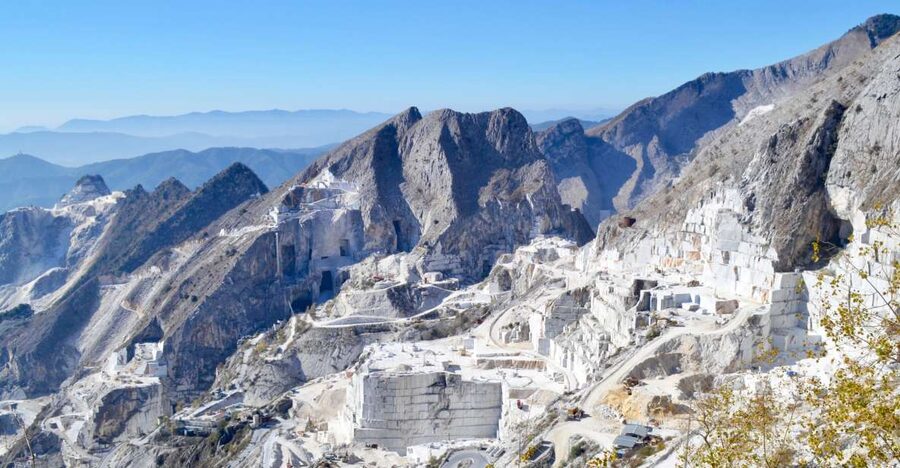
Carrara marble has been quarried for more than 2,000 years. In Rome, this stone helped shape major monuments, including the Pantheon and Trajan’s Column. During the Renaissance, the same mountain supplied marble for sculpture and architecture across Italy.
Seeing a finished statue or church facade tells you little about the work behind it. Here, you see the mountain cut open, the white stone exposed, and the roads built to move enormous blocks downhill. That change in scale is what makes the visit memorable.
The marble is not presented as a museum piece. It is part of a working tradition, with machinery, extraction methods, haul roads, and people still connected to the trade. Your guide explains both the old methods and the modern process, so you can compare hand labor and newer equipment rather than hearing only a simple story about the past.
I find that useful because the quarries can look almost abstract from a distance. The white scars on the slopes may seem like snow or pale rock. Once you understand how blocks are cut and carried away, the view becomes much easier to read.
Other days in the Tuscan hills from Italy:
- Tuscany Day Trip from Florence: Siena, San Gimignano, Pisa and Lunch at a Winery
★ 5.0 · 21,634 reviews - Florence: Pisa, Siena and San Gimignano Day Trip with Lunch
★ 4.6 · 9,771 reviews - Florence: Pisa, Siena, San Gimignano, and Chianti Experience
★ 4.5 · 8,393 reviews
The Jeep ride into the Colonnata Valley
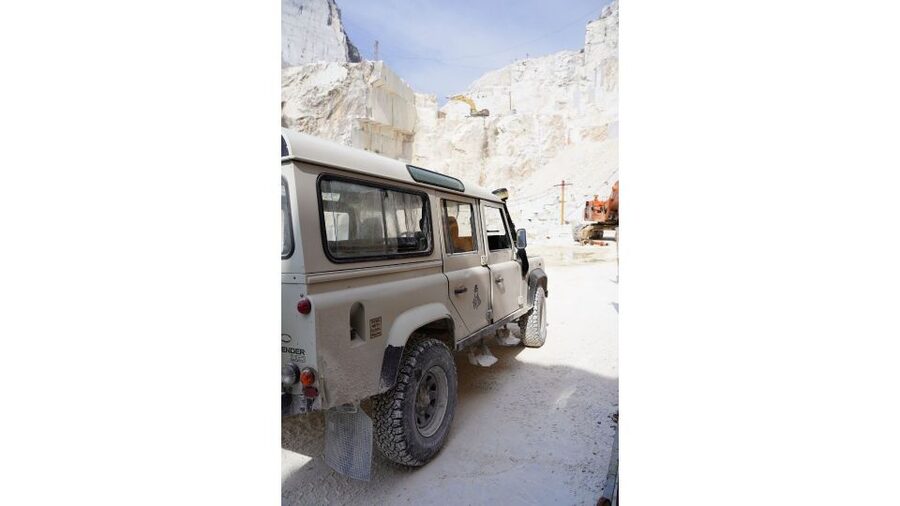
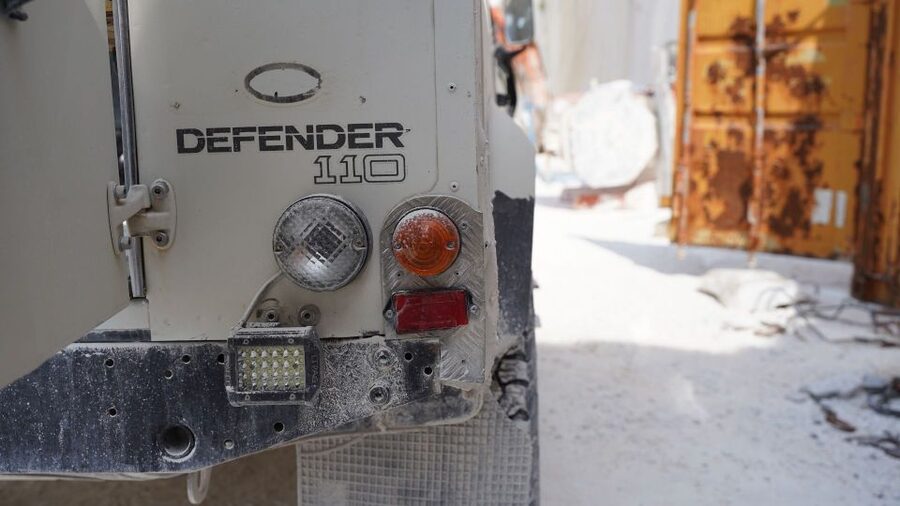
The meeting point is near the marble obelisk in front of the stadium and the bus stop at Stadio dei Marmi, 4 Olimpionici Azzurri. Look for a Defender with an orange sign. From Carrara Avenza railway station, the meeting point is about 10 minutes away by bus, using routes L51, L52, L53, L54, or L70 toward Carrara Ospedale.
If you arrive by car, the guide helps with parking. That is a useful touch in an area where quarry traffic, steep roads, and limited parking can make a casual arrival more stressful.
Once you meet the guide, you board a Jeep or SUV. The vehicle matters here. The route includes steep inclines, hairpin turns, and rough quarry roads that are not suited to an ordinary city car. Guides such as Lucca have been praised for handling the turns smoothly while explaining the mountain and the marble trade.
The ride itself is part of the lesson. You do not simply stop at a viewpoint, take a picture, and leave. The road carries you into the working area, where the white stone appears at different heights and from different angles.
Expect a practical vehicle rather than a spotless sightseeing coach. Quarry dust is hard to avoid, and one account specifically noted that the Jeep interior could have been cleaner. Wear clothes and shoes that can tolerate dust. The ride is comfortable enough for many people, but anyone with back trouble should take the restriction seriously.
Open-air quarries and high mountain views
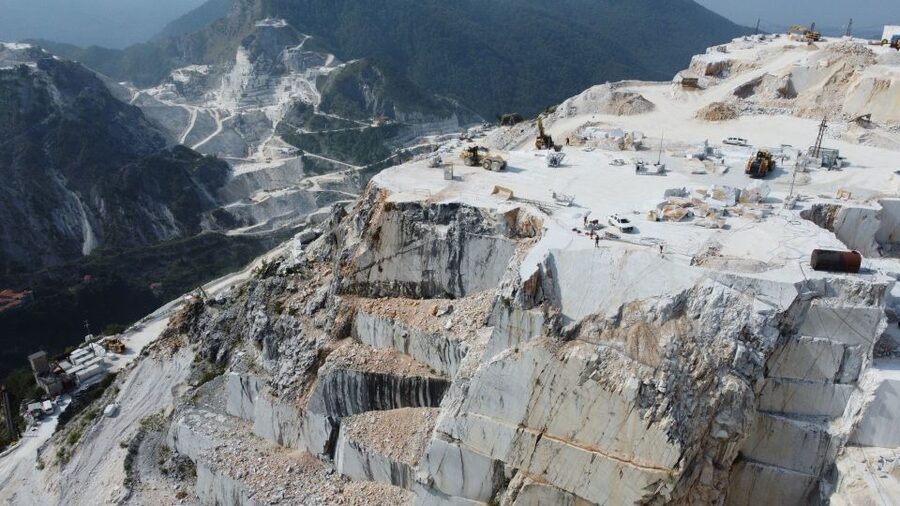
The first major part of the visit centers on the Colonnata Valley. You follow winding roads toward active quarries, with the vehicle climbing to sites as high as 1,000 meters above sea level.
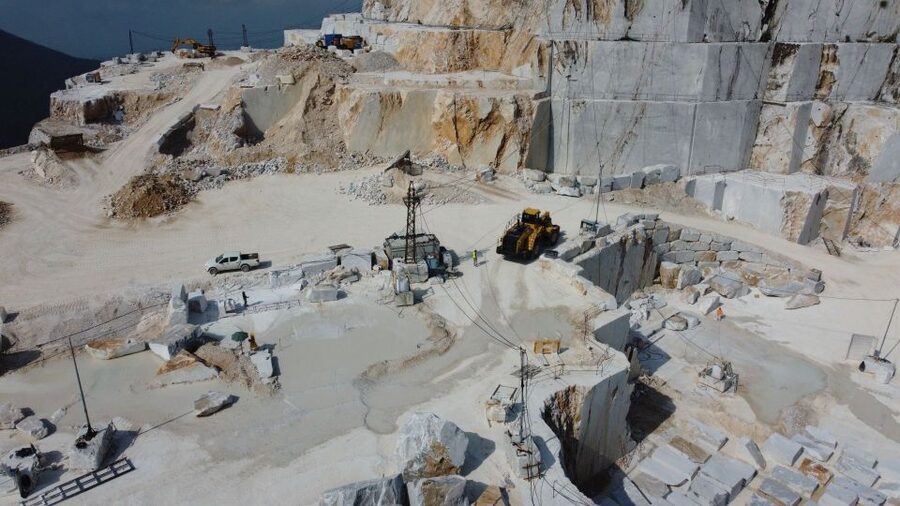
At these heights, the scale of the cuts becomes clear. Terraced quarry faces show how the mountain has been removed in stages. The pale rock catches the light, while machinery and access roads give the view a human scale.
One stop provides a panoramic view of a terraced quarry in the Miseglia Valley. Have your camera ready, but do not let the photo stop become the whole point. The guide’s explanation helps you understand why terraces are made, how the mountain is approached, and how the old and modern extraction systems differ.
The views are impressive, but they are also industrial. You may see exposed rock, work areas, roads, and equipment rather than untouched nature. That is precisely why this trip is different from a standard Tuscan countryside outing. You are seeing a place shaped by labor and demand, not a carefully preserved scenic overlook.
The guide’s role makes a real difference here. Luca, Lucca, and Marco are names associated with clear explanations, good humor, and patience with questions and photography. The tour is available in English and Italian, and one German-speaking group received its explanation in German, though German is not listed among the standard languages. Ask questions as you go. The route gives you plenty to look at, but the story is what ties the stops together.
Inside an underground marble quarry
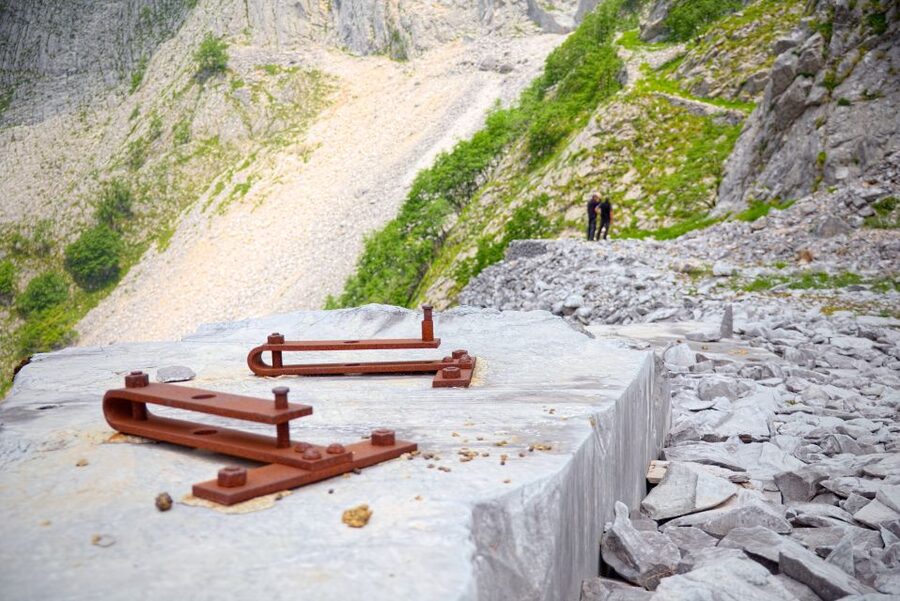
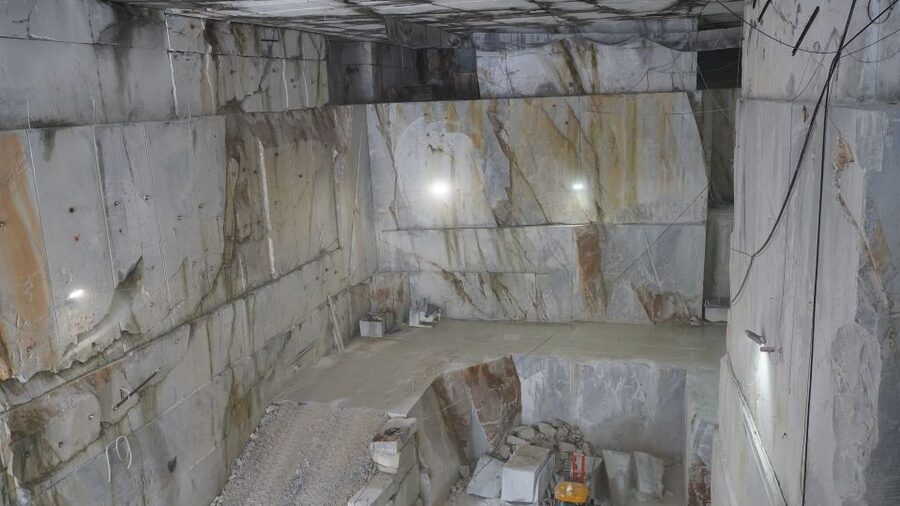
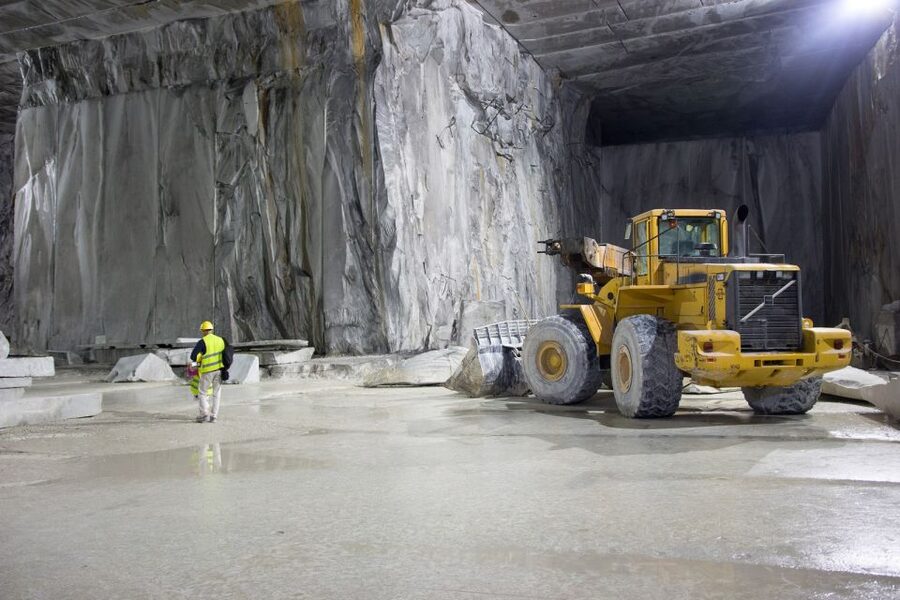
The most unusual part of the trip is the visit to an underground quarry. Rather than seeing only the open cuts on the mountain, you go through a tunnel and into a working space inside the marble.
This changes your sense of the material. Outside, marble appears as a huge white wall or terrace. Inside, you see the rock enclosing the road and the working areas. The tunnel can extend for more than a kilometer according to the tour description in the supplied information, giving you a striking sense of how much stone lies within the mountain.
You also see machinery and places connected with current quarry work. That detail is important. The visit is not only about historic stone used by Roman builders or Renaissance artists. It shows how the trade continues today.
The underground section may be the main reason to choose this outing over a quick drive through the area. It provides access to a side of Carrara that you would not normally see from public roads. At the same time, do not expect a polished museum tour. This is a working quarry setting, and the experience is built around the guide’s explanations, the vehicle, and the site itself.
Photography is welcome, and guides have been patient while people take pictures. Still, the route has a fixed duration of about 2.5 hours, so you should keep moving with the group rather than treating every stop as a long photo session.
Same base, a different kind of day:
- Vatican: Museums & Sistine Chapel Entrance Ticket
★ 4.5 · 144,003 reviews - Vatican Museums & Sistine Chapel Tour with Optional Basilica
★ 4.3 · 67,413 reviews - Colosseum, Roman Forum & Palatine Guided Tour
★ 4.7 · 63,148 reviews - Milan: Cathedral and Duomo’s Terraces Entrance Ticket
★ 4.6 · 61,054 reviews
What you learn about old and modern excavation
The guide explains how marble was extracted in earlier periods and how modern equipment has changed the work. The value of this section is not just technical information. It shows why quarry roads are so steep, why the mountain has those broad terraces, and why a Jeep is needed to reach some of the sites.
The tour also connects the stone to places you may already have seen elsewhere in Italy. Marble from Carrara helped build the Pantheon and Trajan’s Column in Ancient Rome, and it became central to Renaissance sculpture. That connection gives the mountain a wider meaning. You are not looking at an isolated local industry. You are looking at one of the sources behind famous Italian buildings and art.
I would pay close attention when the guide explains the contrast between older hand methods and modern excavation. The white mountain can look simple from the road, but the process of cutting, separating, moving, and shaping the stone is complicated. A good guide turns the quarry from a dramatic view into a place you can understand.
Some groups have been especially pleased with the guides’ ability to answer extra questions without rushing. That matters because people arrive with different interests. You may care most about Roman construction, Renaissance sculpture, machinery, geology, or the lives of quarry workers. The guide can help connect the route to the part that interests you most.
The Lardo di Colonnata tasting
On the way back, the Jeep stops in Colonnata for a short tasting of Lardo di Colonnata IGP. The tasting takes about 10 minutes, so think of it as a local food introduction rather than a full meal.
Lardo is cured pork fat, traditionally aged in marble bowls. That makes it a fitting finish to a marble tour: the same stone that was cut from the mountain is also part of a long-standing local food tradition.
You receive a taste of the product, but water is not included. Bring your own bottle, especially if you are visiting in warm weather or taking the tour after a morning of walking.
The food stop also breaks up the quarry ride. After steep roads, dust, and technical explanations, a small local specialty gives the outing a more human and regional finish. If you do not enjoy rich cured products, keep your expectations modest. The tasting is brief and specific, not a broad sampling of Tuscan food.
Timing, transport, and the real value of $78.17
The price is $78.17 per person for about 2.5 hours. That is not the cheapest way to see the Carrara area, but the cost covers more than a transfer to a viewpoint. You are paying for a four-wheel-drive vehicle, an expert local guide, access to open-air and underground quarry areas, and the Lardo di Colonnata tasting.
The value depends on how you would otherwise see Carrara. If you plan to rent a car and only photograph the mountains from below, this trip gives you much closer access and removes the problem of navigating steep quarry roads. If you already have a private vehicle and detailed local access, the price may feel less attractive.
The tour is compact. The main guided visit in Colonnata takes about 1.5 hours, with shorter vehicle sections and a 10-minute food stop. That makes it easy to fit into a day based in Carrara, especially if you want time for other Tuscan towns or the coast.
You can reserve now and pay later, and cancellation is free up to 24 hours before departure. Those terms help if your schedule is still changing. The tour operates in bad weather when conditions are safe, so do not assume rain automatically cancels the outing.
Who should take this marble quarry tour
I would choose this trip if you enjoy working places, unusual transport, and stories tied to famous buildings and art. It suits anyone who wants more than a standard Tuscan food or church visit.
It is also a strong choice for photographers. You get terraced quarry views, mountain roads, exposed marble, machinery, and underground scenes. The guides are used to allowing time for pictures, though the tour still moves on a schedule.
Families with older children may enjoy the Jeep and the machinery, but the provided information does not specify a minimum age. Ask before booking if that matters for your group.
This is not suitable for pregnant women, people with back problems, or wheelchair users. The steep, twisting roads and vehicle ride also make it a poor choice if you need a very smooth or highly accessible outing.
Bring water, sturdy shoes, and clothing you do not mind getting dusty. The guide can help with parking, and the activity returns to the starting point at Stadio dei Marmi.
Should you book it?
Book this Carrara Jeep tour if you want to see where famous Italian marble actually comes from, especially if the underground quarry and working machinery appeal to you. The combination of high mountain roads, active extraction sites, Roman and Renaissance connections, and Lardo di Colonnata gives the short trip real variety.
Skip it if you dislike rough vehicle rides, industrial settings, or short food tastings. For the right visitor, though, the $78.17 price buys access and context that are difficult to get by simply driving past the mountain. It is a focused, hands-on way to understand Carrara in half a day.
FAQ
How long does the Carrara marble quarry tour last?
The activity lasts about 2.5 hours. The guided visit around Colonnata takes about 1.5 hours, and the Lardo di Colonnata tasting lasts about 10 minutes.
Where does the tour start?
It starts at Stadio dei Marmi, 4 Olimpionici Azzurri, near the marble obelisk in front of the stadium and the bus stop. Look for a Defender with an orange sign.
How can I reach the meeting point from Carrara Avenza railway station?
The meeting point is about 10 minutes from Carrara Avenza Train Station. Bus routes L51, L52, L53, L54, and L70 travel toward Carrara Ospedale.
What languages are available?
The live tour guide speaks English or Italian. German explanations have also been provided for a group when the circumstances allowed, but German is not listed as a standard tour language.
Is the food tasting included?
Yes. The tour includes a tasting of Lardo di Colonnata IGP, a cured pork product traditionally aged in marble bowls.
Is water included?
No. Bring your own water.
Does the tour operate in bad weather?
The tour can operate in bad weather as long as conditions are safe.
Is the tour accessible to everyone?
No. It is not suitable for pregnant women, people with back problems, or wheelchair users.
Just added in Italy
- Highlights and hidden gems of Milan Bike Tour★ 5.0 · 491 reviews
- Milan Gourmet Tour: A Premium Tasting Experience by Do Eat Better★ 5.0 · 241 reviews
- Private Milan Food Walking Tour of Brera★ 5.0 · 217 reviews
- Leonardo3 The World of Leonardo: Tickets for the Interactive Exhibition★ 4.0 · 220 reviews
- Da Vinci’s Last Supper and Santa Maria delle Grazie Church Tour★ 4.5 · 218 reviews
- Learn to Cook Italian Recipes with an Italian Chef★ 5.0 · 283 reviews
- La Scala Theatre and Museum Tour in Milan With Private Guide★ 3.5 · 384 reviews
- Milan Last Supper and S. Maria delle Grazie Skip the Line Tour★ 5.0 · 1,031 reviews
Chianti & Tuscan Countryside Tours, compared.
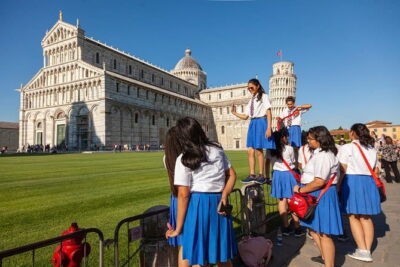
Tuscany Day Trip from Florence: Siena, San Gimignano, Pisa and Lunch at a Winery
Read our review →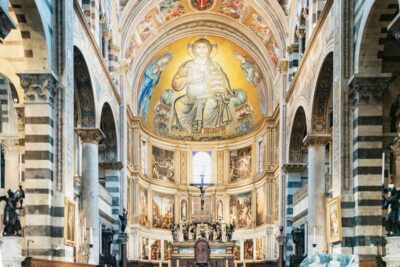
Pisa, Siena, San Gimignano, and Chianti Experience
Read our review →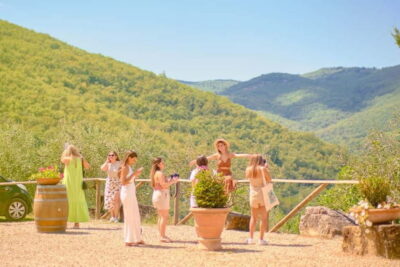
Pisa, Siena and San Gimignano Day Trip with Lunch & Wine Pairing
Read our review →
Tuscany & Montepulciano Day Trip with Lunch & Wine Tasting
Read our review →
Siena, San Gimignano, Pisa & Lunch at Winery
Read our review →
San Gimignano, Siena, Monteriggioni, Chianti Day Trip with Lunch & Wine Tasting
Read our review →
Pisa, Siena, S. Gimignano, Chianti Wine & Lunch
Read our review →Browse the lists this tour appears in